





Josh Nevett
2027 Lamborghini Temerario review: Quick drive
Lamborghini's latest junior supercar was built to be driven hard. So we paid a visit to the exotic brand's homeland and did just that.
4 Minutes Ago
Lamborghini's latest junior supercar was built to be driven hard. So we paid a visit to the exotic brand's homeland and did just that.
If this is the car for you, we’ll compare offers from trusted dealers, handle the back and forth and manage your purchase from enquiry to delivery.
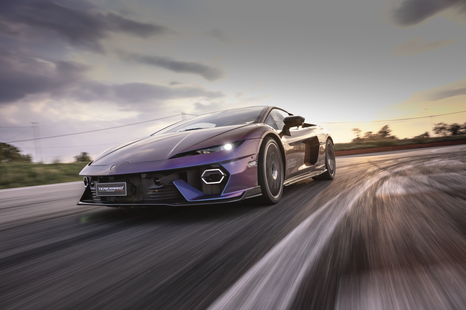
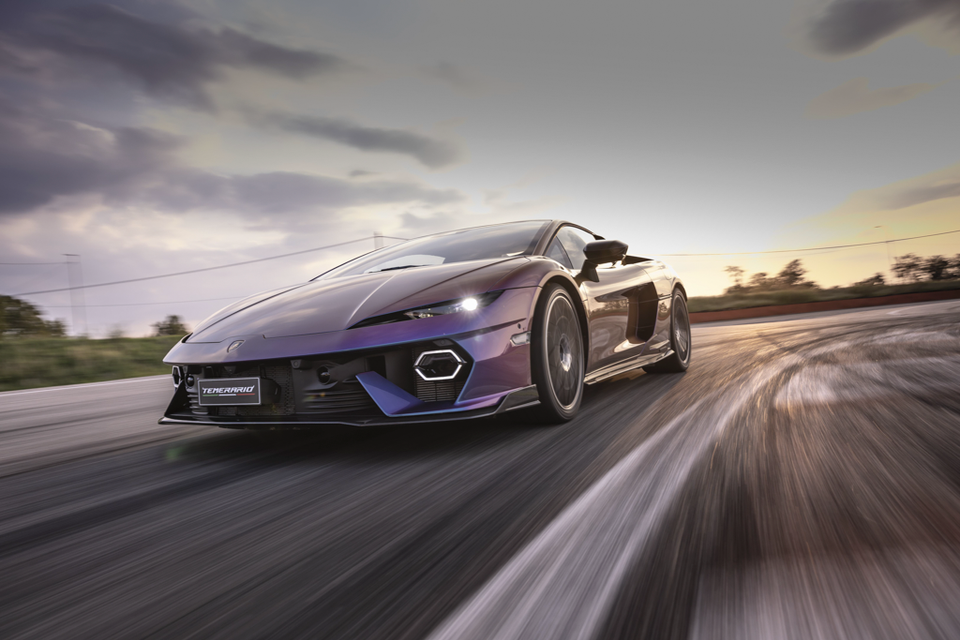
Like Gordon Ramsay taking a job at a local cafe, the Temerario seems rather over-qualified to serve as Lamborghini's entry-level 'super-sports car'.
The headline figures are proof enough. Armed with an all-new twin-turbocharged V8 hybrid powertrain, the Temerario produces a mammoth 677kW of power – 207kW (or an entire Hyundai i30 N's worth) more than the Huracán Evo it replaced, and still 102kW up on the most extreme version of Lamborghini's previous-generation flagship, the Aventador.
Oh, and it's the highest-revving model ever produced by the famed Italian automaker, topping out at a bonkers 10,250rpm.
Despite carrying some weight, the Temerario has even been shown to out-sprint the Revuelto – its current big brother – in the real world.
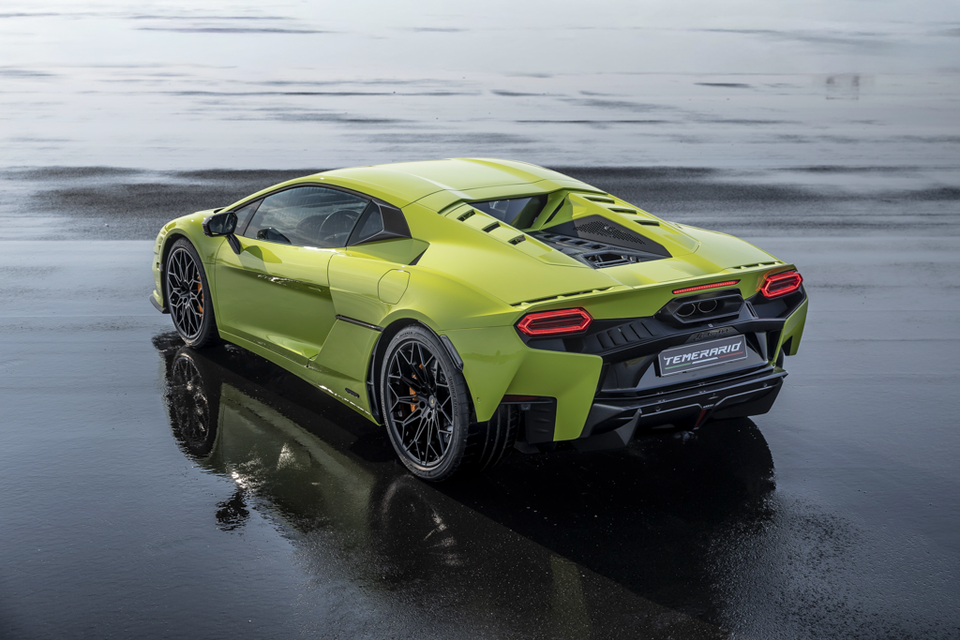
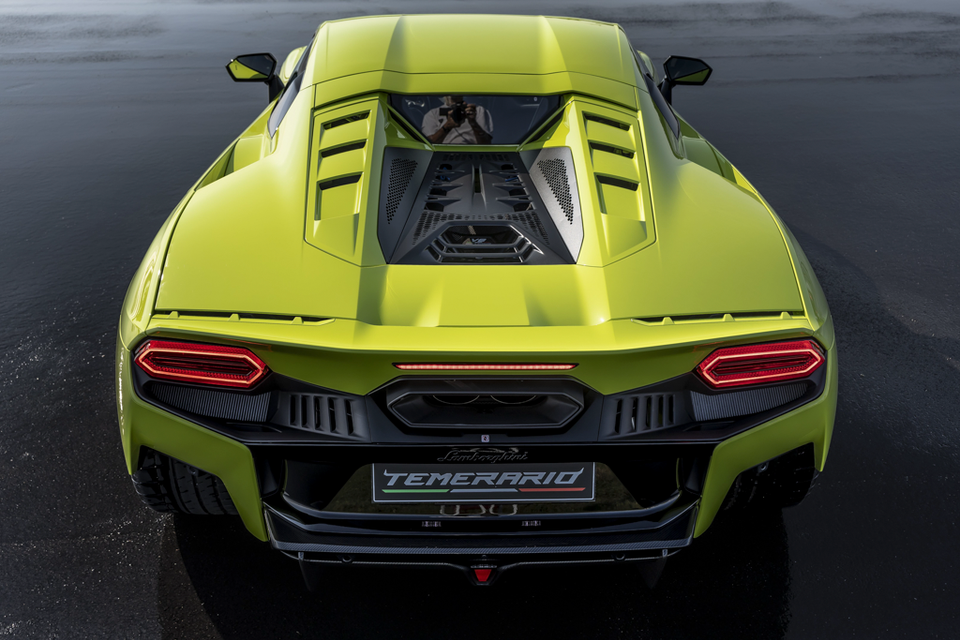
It also ticks the requisite boxes for dramatic exterior styling and a purposeful cockpit, as any product of Sant'Agata should.
So, at least on face value, the Temerario is a baby Lambo in positioning alone. And to some extent, the sticker price reflects that.
But, just as a few Michelin stars don't guarantee Mr Ramsay can brew a decent latte, numbers alone don't prove the Temerario's worth.
So to see how it handles the pressures of a racetrack, we headed to the Vairano Proving Ground in Milan, Italy for a day of drifting, drag racing and dynamic driving.
Gulp. For all its cutting-edge tech and exotic appeal, the Temerario is very, very expensive.
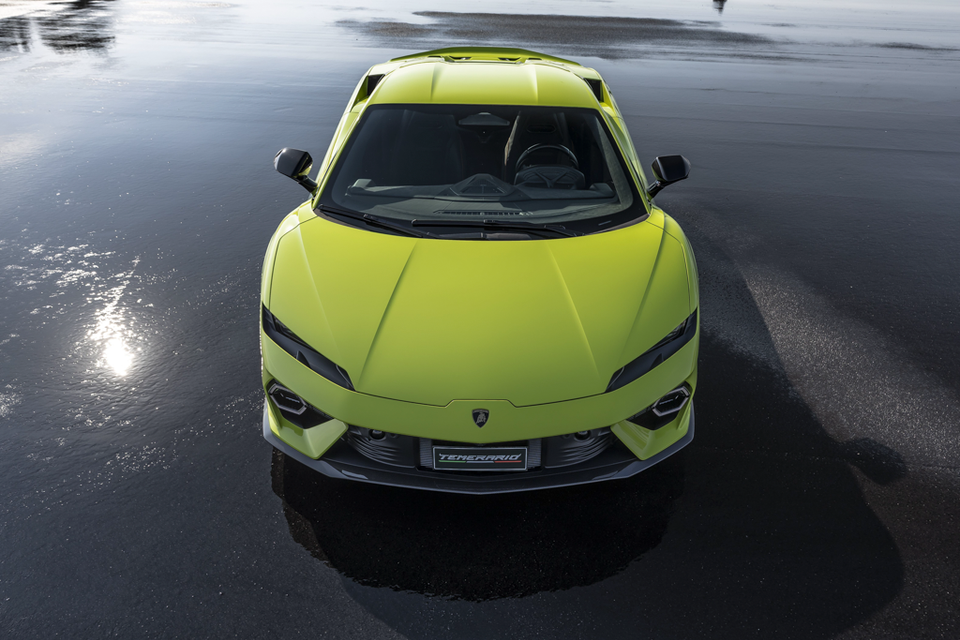
| Model | Price before on-road costs |
|---|---|
| 2027 Lamborghini Temerario | $613,885 |
Bog-standard, without any of the many options you're almost certain to select, it wears a price tag of $613,885... before on-road costs. With a few niceties, you're looking at well north of $800,000 on the road.
To put that into perspective, a late Huracán Evo AWD asked around $155,000 less, while the Temerario also starts above key rivals including the Ferrari 296 GTB ($604,000 before on-road costs), McLaren 750S ($580,163 excluding ORCs), and Porsche 911 Turbo S ($577,300 plus ORCs). The Chevrolet Corvette E-Ray, a similarly edgy high-performance hybrid supercar, can be had for as little as $292,900 plus ORCs.
To see how the Lamborghini Temerario lines up against the competition, check out our comparison tool
I'll tell you, but first we need to talk about the process of getting into/out of the Temerario – a highly relevant aspect of supercar ownership.
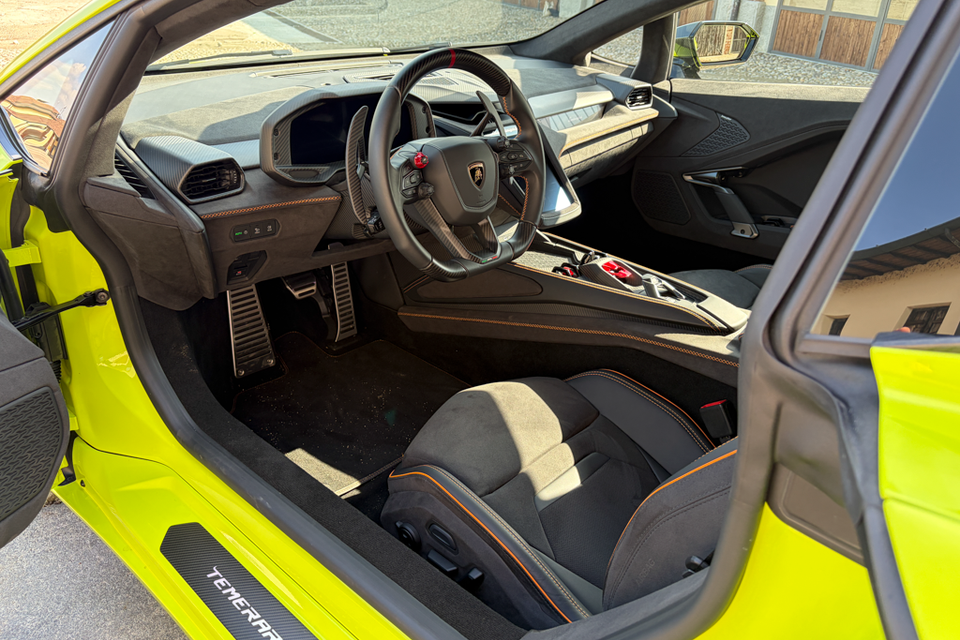
The good news? The Temerario is said to be easier to enter and exit than the old Huracán. The bad news? Even so, it's still a very low, very unconventional vehicle, so ingress requires some care. I – a 185cm tall 28-year-old – didn't climb in so much as lower myself down into the cabin, desperately protecting an ailing back that belongs in someone twice my age.
All that effort is well worth it, though, as the Temerario screams supercar from the driver's seat.
Your bum sits inches from the road, the windscreen is shallow, the side windows are narrow, and the view out is more letterbox than panorama.
That said, it doesn't feel particularly cramped inside. The Temerario offers 34mm more headroom and additional shoulder room compared with the Huracán, and there's enough space for a driver of my dimensions to get comfortable, although just how comfortable depends somewhat on which seats you choose.
Standard are 18-way power-adjustable 'comfort' seats with in-built heating and ventilation. They're soft, wide and forgiving – traits not typically associated with Lamborghini – but sit too high for taller types, weakening the connection between car and driver.
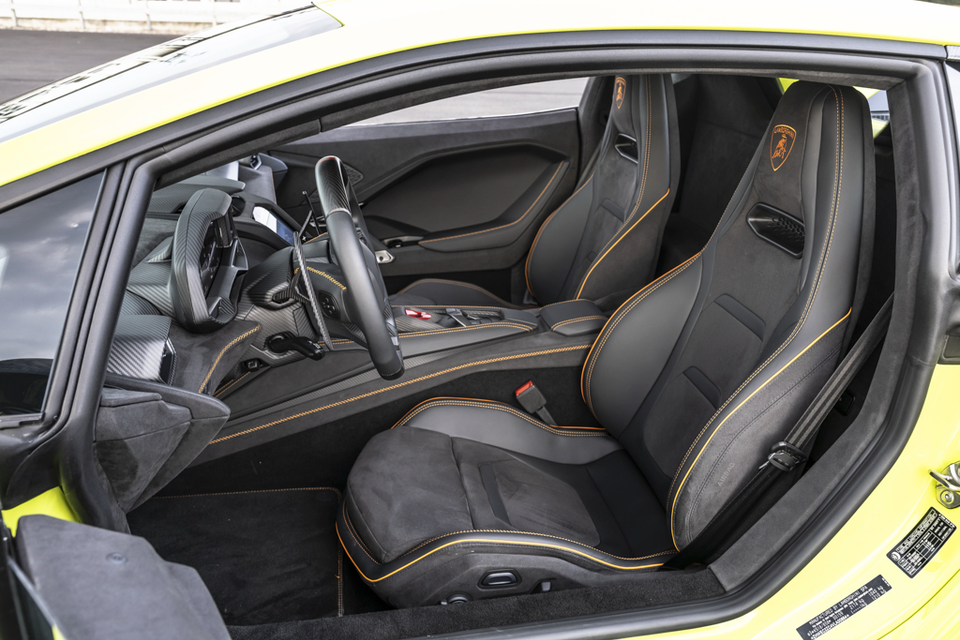
The lower-set, more tightly bolstered 'sport' seats solve that problem, albeit with new drawbacks. Both climate functions are absent, while adjustment is manual and limited to slide and recline, with no ability to alter the angle of the seat base for extra under-thigh support.
Even so, they’d be my pick. Sitting closer to the floor feels more appropriate in a supercar, and makes Lamborghini’s claim that the Temerario can accommodate a two-metre-tall driver wearing a helmet seem more believable.
Driver legroom is also up by 46mm compared with the Huracán, and the broad pedal box helps the driving position feel natural rather than awkwardly offset as was the case in models like the Countach.
Spare a thought for any passengers, though, as their footwell is far less roomy.
But any sympathy for your shotgun rider quickly fades into the background as the rest of the Temerario's cabin comes into focus.
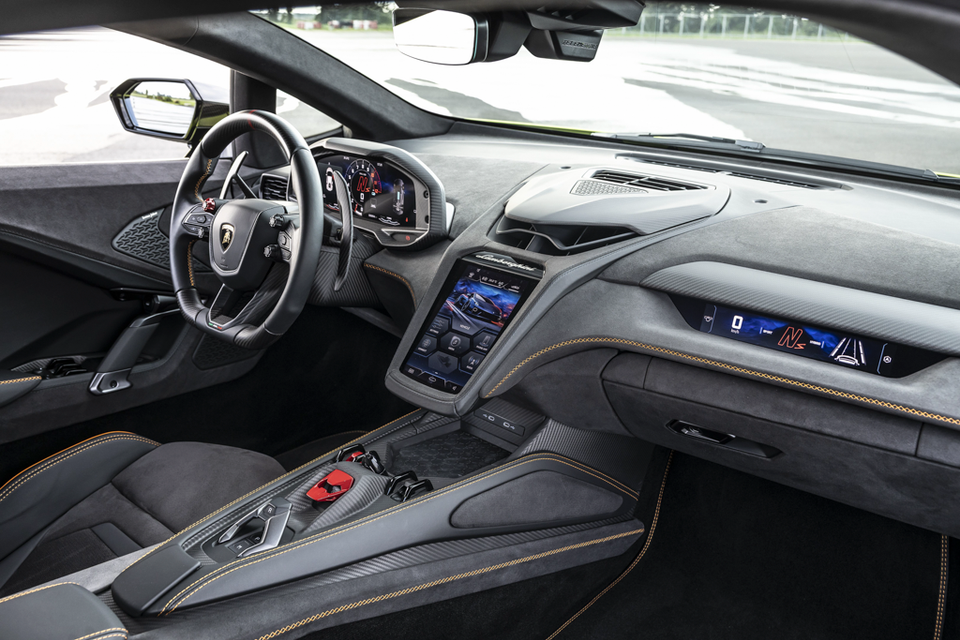
Subtlety has never been Lamborghini’s strong suit, and the Temerario stays true to that, serving up an aggressive, dramatic cockpit strikingly similar to that of the Revuelto.
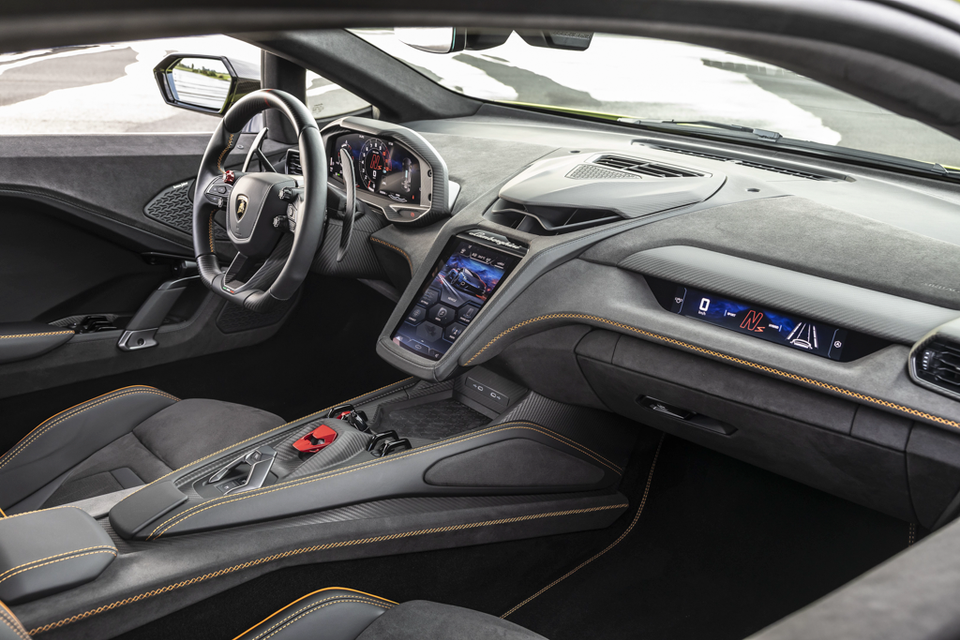
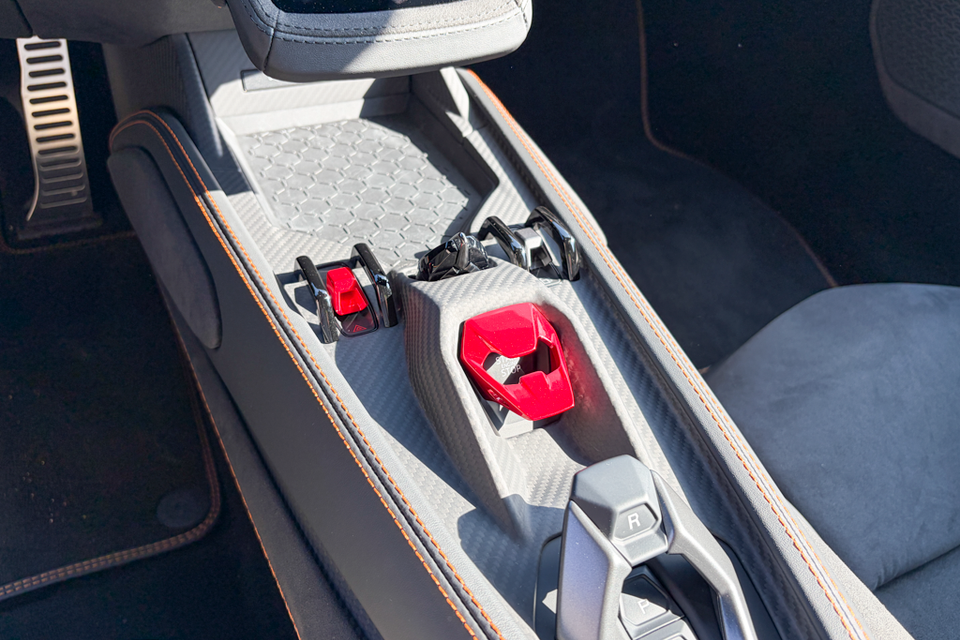
Take the startup sequence, for example. Rather than just pressing an anonymous button, you first have to lift a bright red, fighter jet-style cover on the centre console to reveal the starter beneath.
It’s a suitably theatrical touch inherited from the Huracán, even if firing the Temerario into life no longer produces a peep, let alone its predecessor's animalistic growl.
Reverse and Park are selected using similarly audacious switches, while Drive is engaged by pulling the right shift paddle – a suitably supercar-like quirk.
Elsewhere, a selection of premium, purposeful materials further elevates the ambience. No two Temerarios are the same, but regardless of spec the cabin is almost entirely trimmed in a mix of Corsa-Tex – Lamborghini’s version of Alcantara – luscious leather and carbon-fibre, often complemented by colourful contrast stitching. A retina-melting orange, in this case.
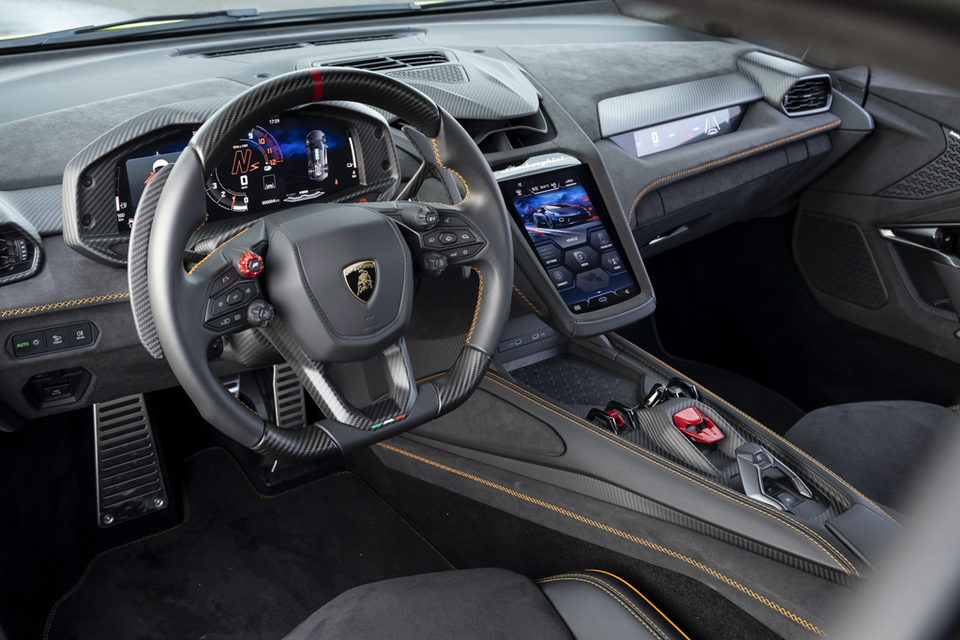
Specify the lightweight Alleggerita package and the carbon-fibre treatment extends to the door panels, centre console, door pulls, instrument binnacle, and air vent surrounds.
And if that wasn't already enough, the vents themselves resemble a shrunken entrance to the Bat Cave.
The steering wheel is fittingly bonkers too, albeit for different reasons. Because while the thin, sculpted rim is refreshingly easy to wrap your hands around, the number and layout of controls takes some getting used to.
All up, there are 20-something buttons, four rotary dials, two shift paddles and one stalk to play with, spread across both the front and back of the wheel. The indicator, light and wiper controls are all integrated into the tiller itself, too.
It can feel overwhelming at first, particularly with so many buttons hidden from view, but there is some method to the madness here. Once familiar with the layout, you can control just about anything without taking your hands off the wheel.
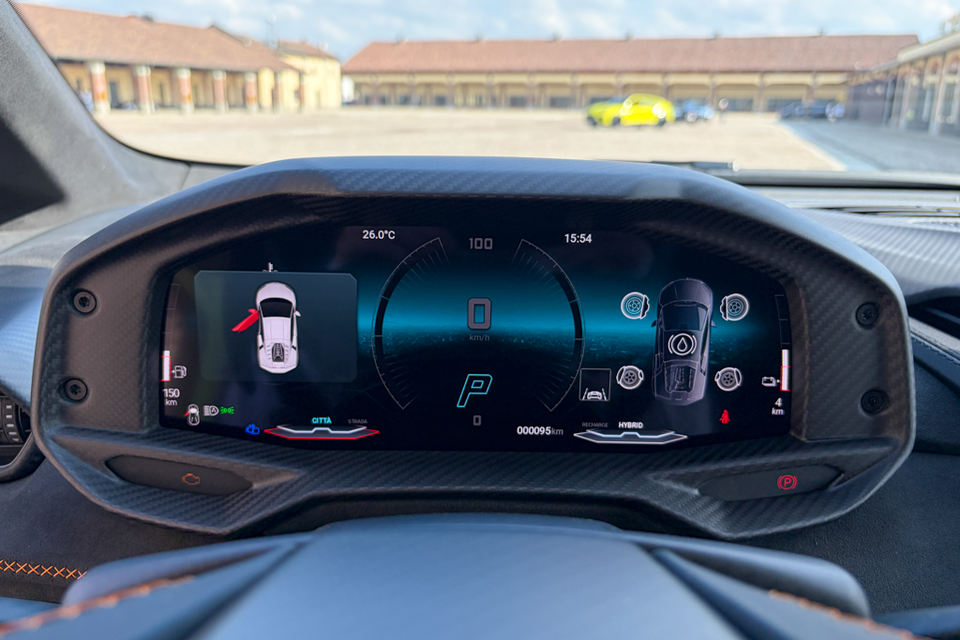
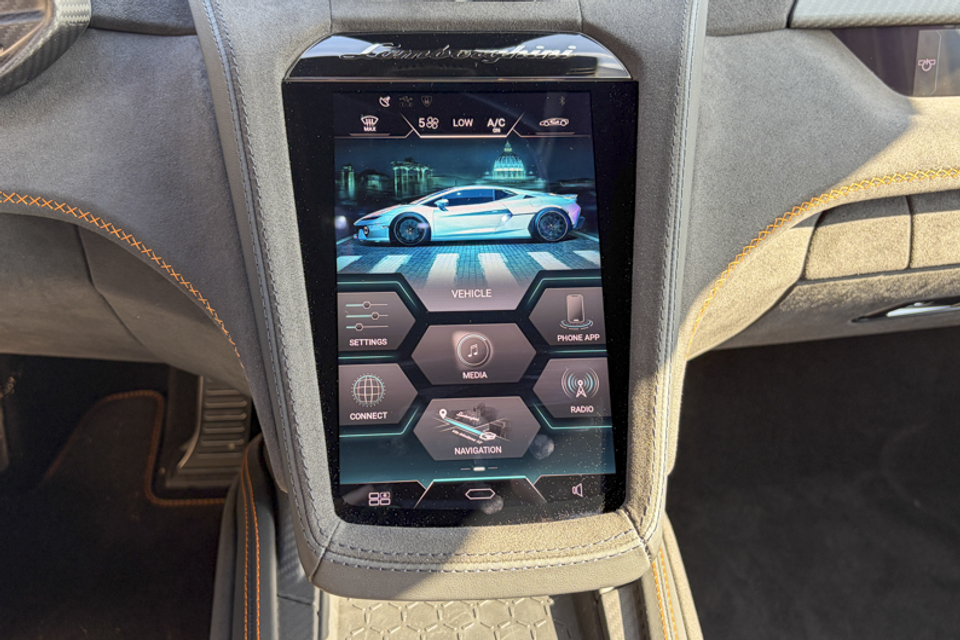
And unlike Lamborghinis of old, all the oddities and theatrics are now backed by a comprehensive, thoroughly modern technology suite.
The aforementioned carbon-fibre instrument binnacle could present better, jutting out of the dashboard with exposed screws on each side, yet it houses a large, crisp and highly configurable display. Three main layouts are available, covering everything from performance metrics to a full-screen navigation view, while the visual theme also changes depending on the selected drive mode.
Moving across, there's a semi-floating portrait-oriented infotainment touchscreen packing far more functionality than you'd reasonably expect. Standard wireless smartphone mirroring, connected navigation and Amazon Alexa integration all make the Temerario easier to live with day-to-day, although it seems unlikely many owners will ever seek directions to their nearest public charging station.
If I had to nitpick, the system could be more responsive to touch inputs, but it’s easy enough to navigate and the graphics are genuinely distinctive, helping separate the Temerario further from lesser Audi products.
Customers are also afforded the (costly) option of a third display for the passenger, showing a selection of basic vehicle readouts. That's a box best left unticked, if you ask me.
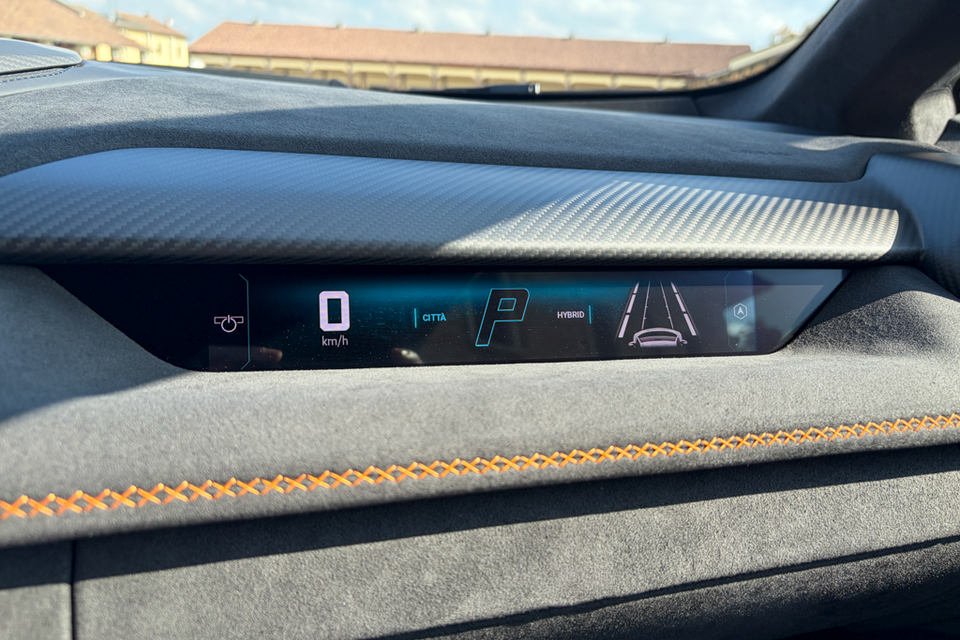
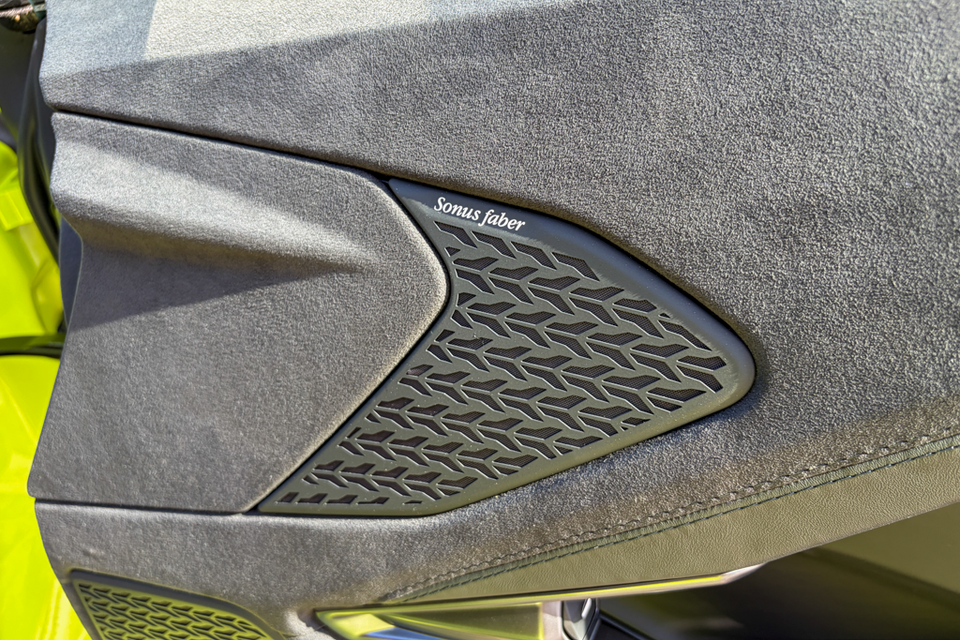
I'll tell you what, though, the Sonus faber premium sound system is far from superfluous, delivering a breathtaking combination of immersion, power and clarity that I'd wager transforms the driving experience when commuting or cruising.
Speakers are integrated throughout the doors, dashboard and rear bulkhead to create a convincing surround-sound effect, while the system is individually tuned according to the car's specification and interior materials.
The result? Dog Days Are Over by Florence and the Machine has never hit so hard.
Now, I realise some of you are probably sitting there thinking 'who cares if a supercar has CarPlay and a kickass set of speakers?' I thought the same thing, until Lamborghini executives told me around 30 per cent of Huracán owners drive their cars every single day – and they expect the Temerario to be treated much the same way. As such, mod-cons matter more now than ever before.
And it's not like Lamborghini has forgotten its more hardcore customer base – an optional Lamborghini Vision Unit (LAVU) system adds cameras that capture both the road ahead and your reactions inside the cabin, working with Telemetry 2.0 to log full track sessions or up to two minutes of road driving.
Yet, for all its claimed usability, the Temerario offers no more storage than its rivals.
A dainty 112-litre 'frunk' is supplemented by enough space behind the seats for a couple of soft weekend bags, while smaller items can be stashed in a wide phone tray or segmented glovebox.
Don't expect cupholders, though – those cost extra. I'm not kidding.
Such shortcomings are nonetheless forgivable, given just how much the Temerario gets right inside.
| Dimensions | Lamborghini Temerario |
|---|---|
| Length | 4706mm |
| Width | 1996mm (excl. mirrors) |
| Height | 1201mm |
| Wheelbase | 2658mm |
| Cargo capacity | 112L (under-bonnet storage) |
To see how the Lamborghini Temerario lines up against the competition, check out our comparison tool
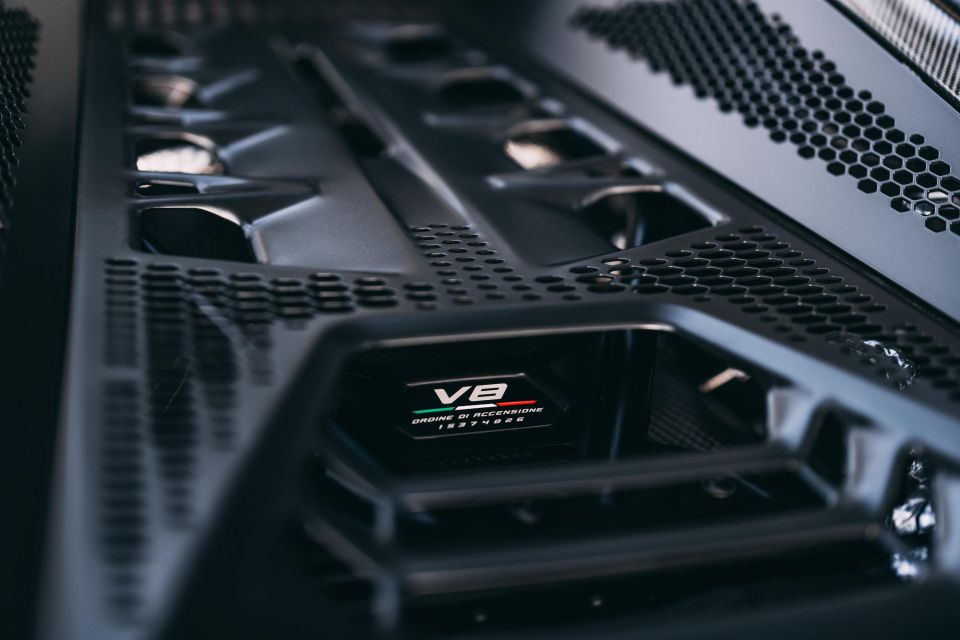
There's a lot to unpack here, as the Temerario houses one of the most complex powertrains you'll find in any road car ever built. In simple terms, its powered by the combination of a 4.0-litre twin-turbocharged petrol V8 and three electric motors.
| Specifications | Lamborghini Temerario |
|---|---|
| Engine | 4.0L V8 twin-turbo petrol |
| Engine outputs | 588kW @ 9750rpm 730Nm @ 4000-7000rpm |
| Electric motor outputs | 220kW @ 3500rpm |
| System outputs | 677kW |
| Battery | 3.8kWh lithium-ion |
| Transmission | 8-speed dual-clutch automatic |
| Drive type | All-wheel drive |
| Dry weight | 1690kg |
| 0-100km/h (claimed) | 2.7 seconds |
| Top speed | 343km/h |
| Fuel economy (claimed) | 11.2L/100km |
| Electric driving range | 11km |
| Fuel tank capacity | 68L |
| Fuel requirement | 98-octane premium unleaded |
| CO2 emissions | 272g/km |
| Emissions standard | Euro 6 |
The V8 itself is anything but simple. It uses a flat-plane crankshaft, dry-sump lubrication and a 'hot-V' layout, which places the turbochargers and exhaust manifolds inside the valley between the cylinder banks. Besides making the engine more compact, this arrangement helps reduce lag from the two massive turbochargers, which push up to 36psi of boost.
In total, the V8 produces 588kW from just four litres, equating to an extraordinary 147kW per litre. Even more extraordinary is its ability to rev all the way to 10,250rpm (with launch control).
The Temerario's power is sent through a new eight-speed dual-clutch automatic transmission mounted transversely behind the engine.
On the electric side, two independent motors drive the front wheels, while a third is integrated between the engine and transmission to help fill any torque gaps created by the turbos. All three are fed by a 3.8kWh lithium-ion battery.
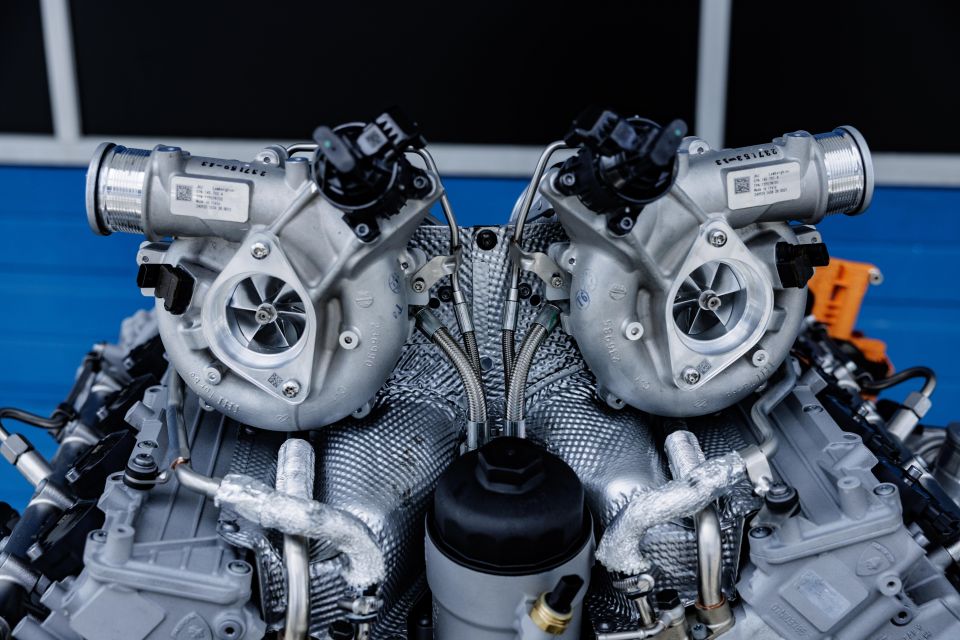
Each motor is capable of up to 110kW, although battery output is capped at 140kW across the system. More importantly, the two front motors can vary torque independently between the wheels, allowing the Temerario to actively influence yaw and cornering behaviour rather than simply using electrification for extra straight-line shove.
In layout, its closest rival is arguably the Chevrolet Corvette E-Ray, another all-wheel drive V8 hybrid supercar. However, the Lamborghini's twin-motor front axle is considerably more sophisticated, enabling active torque vectoring across the front wheels.
Lamborghini says the Temerario can travel up to 11km on electric power alone – enough to get to the supermarket and back, but not much more.
What it lacks in EV range, though, it makes up for in configurability. The hybrid system, powertrain and chassis offer four core driving modes (Città, Strada, Sport and Corsa) plus three energy profiles (Hybrid, Recharge and Performance), and three Drift settings. All up, there are 13 possible configurations.
To see how the Lamborghini Temerario lines up against the competition, check out our comparison tool
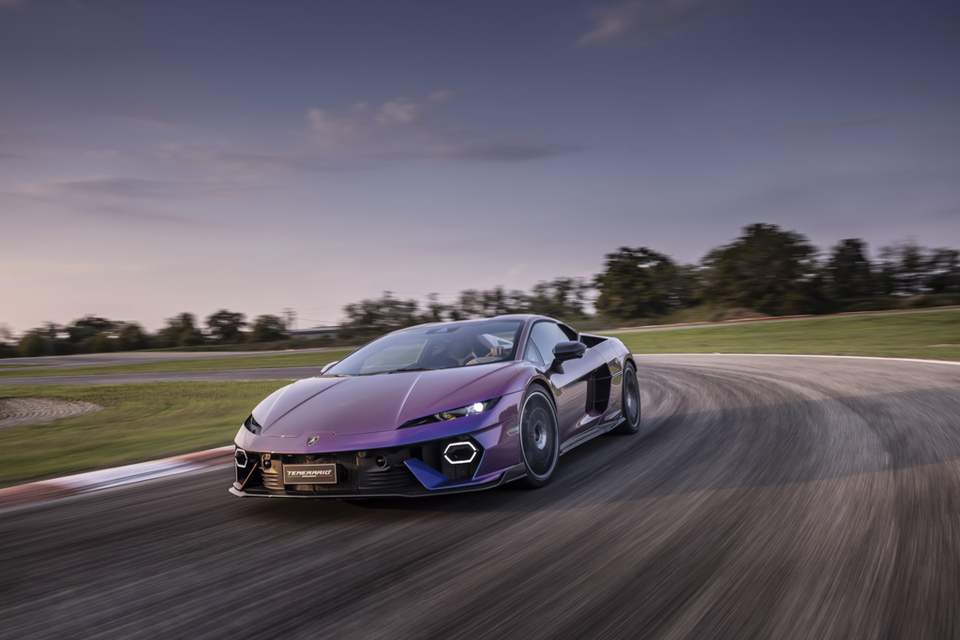
The numbers above provide an accurate representation of what you can expect from the Temerario in terms of straight-line speed.
If this is the car for you, we’ll compare offers from trusted dealers, handle the back and forth and manage your purchase from enquiry to delivery.
Sitting stationary at one end of Vairano's longest straight, I excitedly prepare for launch – left foot on the brake, Corsa drive mode selected, chequered flag (launch control) button firmly held and, finally, right foot hard on the gas.
Releasing the stoppers is like being fired out of a cannon. No scrabbling for traction, no hesitation, just brutal acceleration, with triple-figure speeds coming up in a matter of moments. In first gear, too.
More impressive is what comes next. Because while many modern cars – including some electric family SUVs – can leave you breathless while sprinting from 0-100km/h, far, far fewer can maintain the Temerario's unrelenting rage.
It simply doesn't let up, delivering its full 730Nm of spine shove from 4000 to 7000rpm before the 'Temerario Zone' – as Lamborghini calls it – arrives, bringing with it an equally outrageous top end (up to 10,250rpm!) before the dual-clutch transmission does its thing, transporting you back to the meaty mid-range via instantaneous upshifts.
This intoxicating cycle repeats a few times before I'm seeing 300km/h on the dash and rapidly reducing runway ahead, meaning it's time to brake... and breathe.
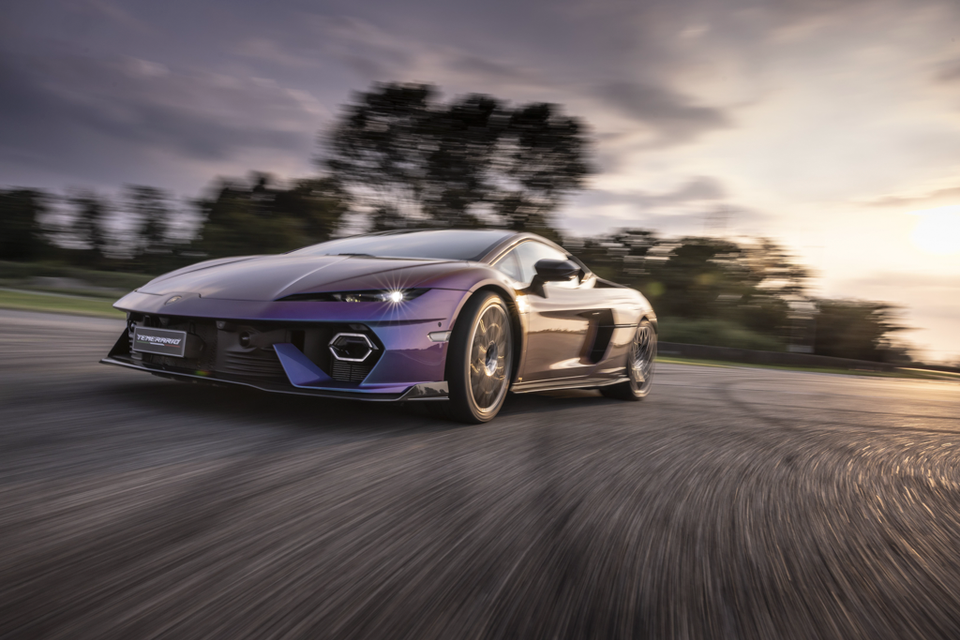
Next we're sent to lap an extended version of the Vairano handling track, a mostly technical configuration designed to test low-to-medium-speed vehicle dynamics.
And while I was somewhat ready for the Temerario's epic thrust, nothing can prepare you for just how well it takes corners.
Up until recently, buying a Lamborghini was reason enough to update your life insurance policy. They were widely considered loose on a good day, and downright scary in imperfect conditions.
Not this one.
Still in Corsa mode, the Temerario slices its way around a dry Vairano with scalpel-like precision, keenly obeying the instructions of its driver despite weighing in at 1690kg – 300kg more than its predecessor, around 200kg heavier than a 296 GTB, and on par with an E-Ray which is, well, American.
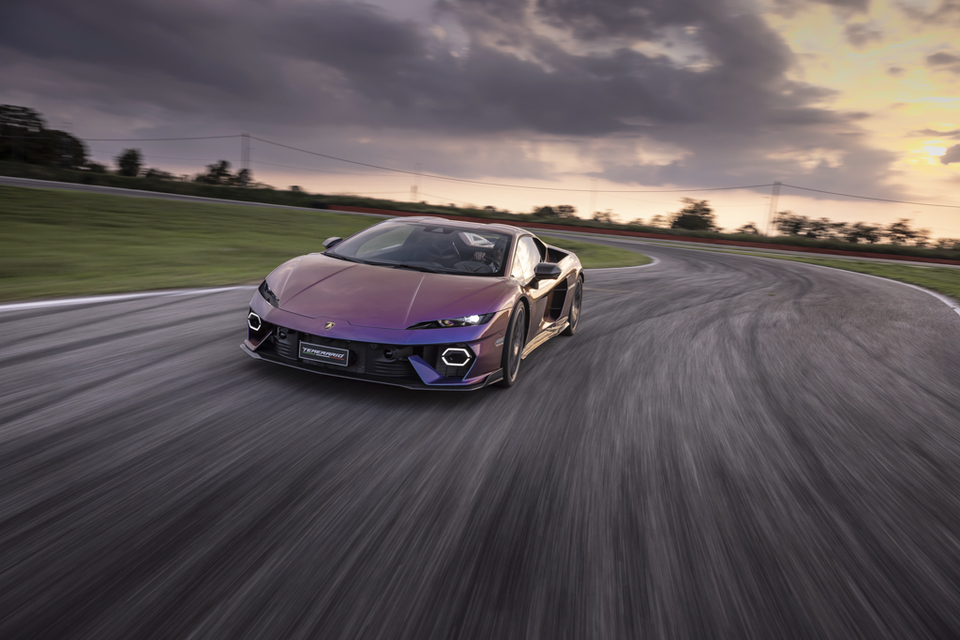
The steering is extremely fast (10.5:1 ratio), and light too, so it doesn't take much effort to get the Temerario turning. Simultaneously, the e-motors shift torque to the outside front wheel, physically pulling the nose towards an apex.
The job isn't done yet, though. Through faster corners, the front e-axle continues to work its magic, ensuring the car goes exactly where you tell it. This often generates huge G-forces with barely any discernible body roll, as well as significant tyre load, the latter barely felt as I dispatch a sweeping right-hander at 150km/h.
Some credit must go to the double-wishbone suspension and adaptive dampers. Even in Corsa, the Temerario is surprisingly compliant over Vairano's slightly coarse surface, while still feeling glued to the tarmac. Admittedly, the circuit is relatively smooth, so we'll reserve judgement on how that balance translates to bumpier roads.
The standard Bridgestone hoops were chosen for their balance between grip and longevity, so track rats unbothered by road compromises stand to benefit from even stickier rubber.
Still, the Temerario handles as if on rails at high speeds, inspiring the confidence to attack bends with vigour.
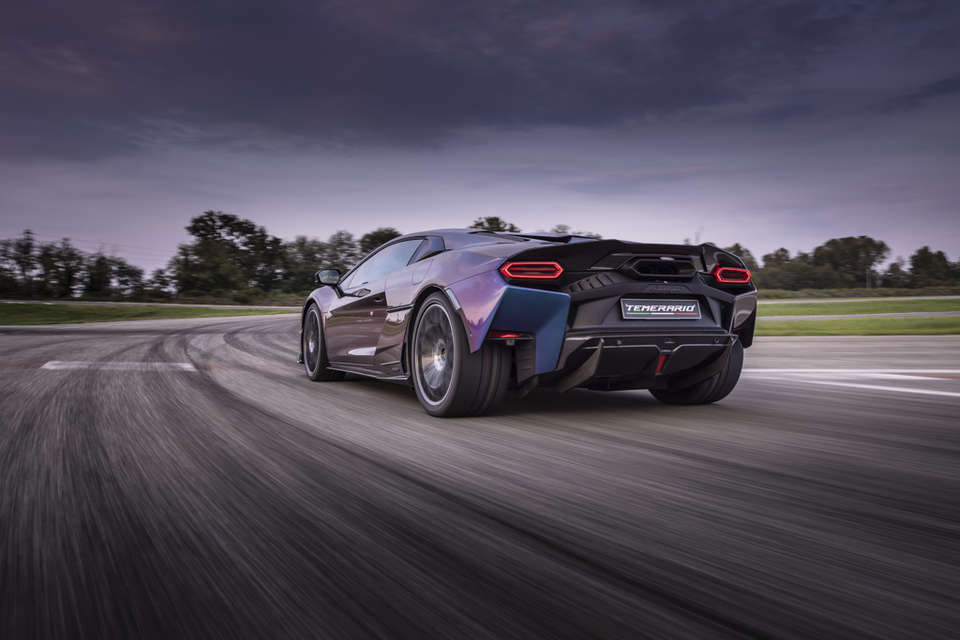
The flexibility of the powertrain also lets you focus on your lines, rather than chasing the right gear. There's enough torque across the rev range to persist with higher gears than you might expect, throttle response is immediate, and the electric motors effectively fill any potential holes low down.
As such, you can power out of corners without so much as thinking about pulling a paddle.
When you do call for another ratio, Corsa mode serves up forceful shifts rich in character, with upshifts delivering an 'over-torque'-style kick.
It's never too long before you're forced to call upon the brakes – huge carbon-ceramic items clamped by 10-piston front and four-piston rear calipers. The left pedal is firm and easy to modulate, hauling the car down at an astonishing rate when pressed with authority. The Temerario remains composed throughout, wiping off speed without losing any of its stability.
Our sessions weren't long enough to properly assess brake endurance, although Lamborghini has made substantial gains in cooling. Compared with the Huracán EVO, it says the Temerario delivers 20 per cent more cooling to the discs and 50 per cent more to the calipers – changes intended to improve consistency during sustained track use.
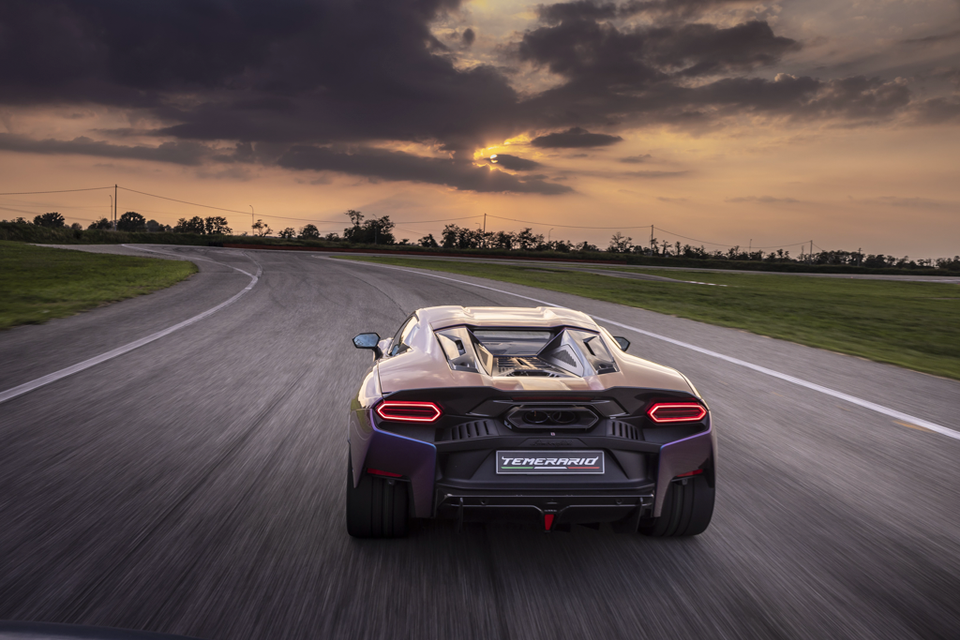
Bleeding off the stoppers into one of Vairano's sharper corners reveals yet another side to the Temerario's impressive agility and all-wheel drive neutrality. Point the nose and the tail follows in an orderly fashion, with no recovery required between successive direction changes.
It's all very unexpected, sure, but actually feels quite natural from behind the wheel.
Well, apart from the steering, which is light to the point of being too light (even in Corsa), and lacks feedback – great for city driving, not so much for track work. The Porsche 911 GT3 has the Temerario covered in this regard.
Nevertheless, it's truly remarkable how controllable the Temerario can be, requiring minimal skill to make maximum progress.
Not all supercar owners care about setting lap records, though. Some just want to have fun while driving fast.
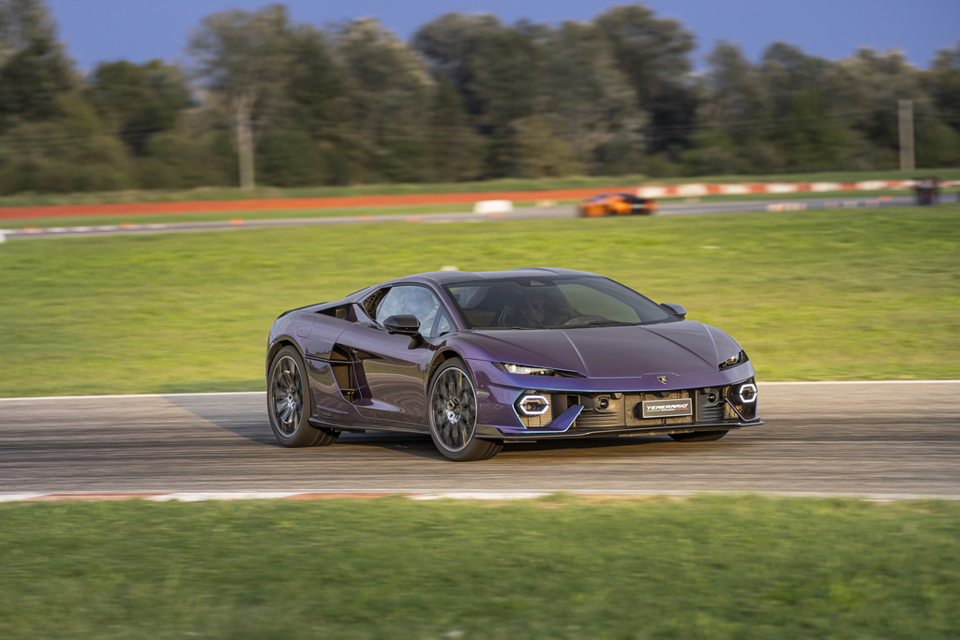
That's where the other drive modes come in.
Switching over to Sport, the Temerario's personality changes perceptibly. Once almost entirely neutral, it's now clearly more rear-biased, with a newfound tendency towards manageable, grin-inducing oversteer. The front e-axle still chimes in to straighten things out, but its intervention is deliberately delayed.
There's extra fun to be had when shifting gears too, as Sport alters the transmission calibration to briefly interrupt torque on full-throttle upshifts, delivering a deliberate, invigorating kick in the back.
If Sport is for having fun, Drift mode is for... having even more fun.
Itself split into three skill-based levels, Drift does exactly what it says on the tin, enabling heroic slides through torque vectoring of the front wheels.
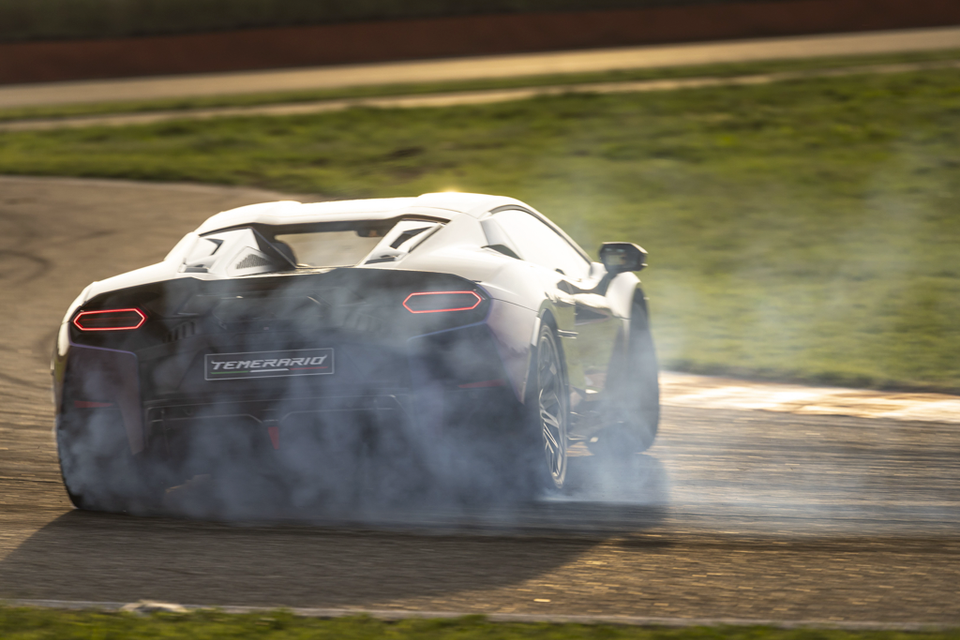
But as I quickly found out, it doesn't guarantee them. After all, you're dealing with a high-powered, rear-biased Lamborghini with sensitive steering, so the learning curve is steep – I spun the Temerario more than once before beginning to get a feel for it.
Still, it's a welcome option, and one that slightly less sensible owners could get into some trouble with.
Unfortunately, though, none of the available drive modes remedy the Temerario's most glaring transgression – how it sounds.
The Huracán's V10 was always going to be a hard act to follow, even more so given the noise and emissions regulations manufacturers now face, and the Temerario never quite escapes that shadow. At idle and low revs, it's comparatively muted and not nearly as cultured, producing a low, vibrating chatter.
Wind it out and the acoustics improve dramatically. Push past 7000rpm and the powertrain takes on the manic character of a superbike, culminating in a truly special engine note inside the cabin at redline.
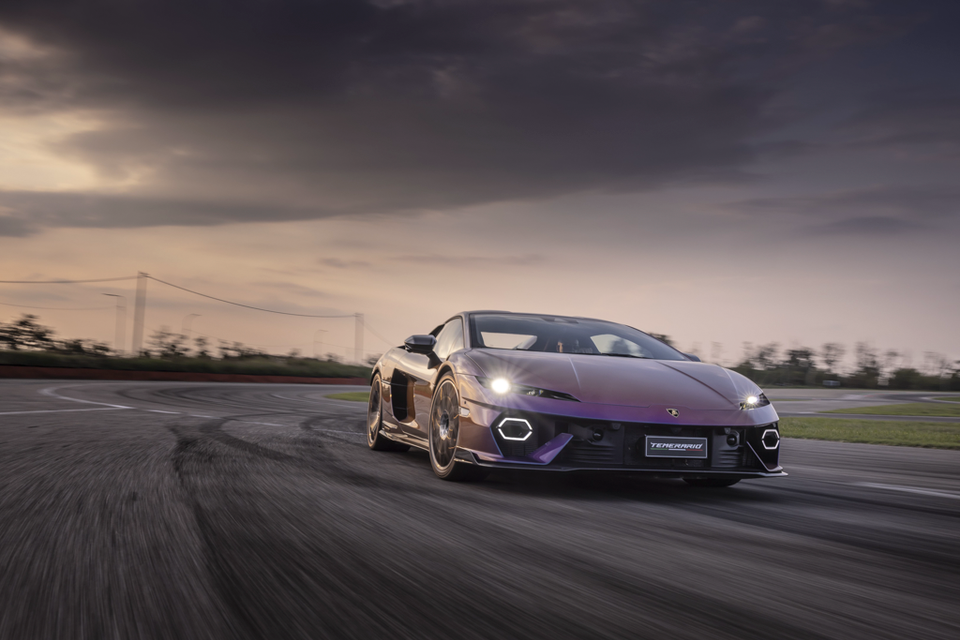
From the outside it's noticeably quieter, lacking the richness and theatre of Lamborghini V10s of years gone by.
And this raises a dilemma for those considering the Temerario as a street car, at least in Australia. Because to access its party piece you need to be pushing it hard, and that means exceeding our modest speed limits. Remember, first gear extends beyond 100km/h.
As such, you're largely stuck in the low- to mid-range around town, where the engine is more rattly than melodic. It simply doesn't have the same sense of occasion at ordinary speeds, nor is it likely to snap necks from a block away like the Huracán once did.
Solutions are starting to emerge, namely aftermarket exhaust systems designed to beef up the Temerario's aural presence and better underscore its supercar status – albeit by 2026 standards.
The Temerario's size also limits the fun that can be had with it on the road. It's larger than both the Huracán and its direct rivals, something that's easy to ignore on a circuit but harder to forget when threading it along a narrow mountain road.
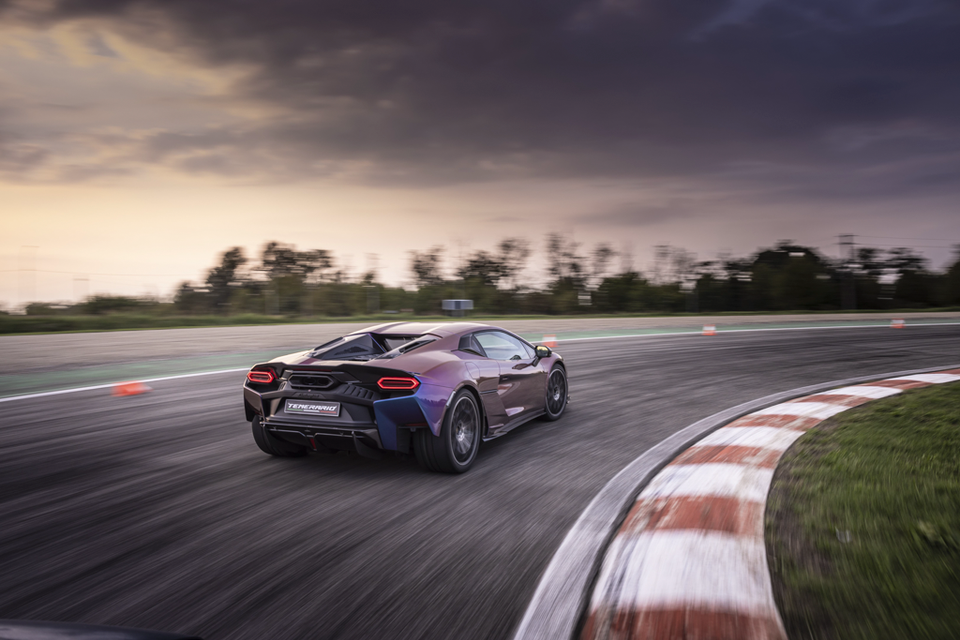
Otherwise, despite its lofty performance capabilities, the Temerario shapes up as Lamborghini's most daily-drivable supercar yet. It starts up in electrified silence, so you'll never wake the neighbours, and can be driven as a 140kW front-wheel drive EV for up to 11km. It almost beggars belief.
Switching from Città (City) into Strada turns the Temerario into a 588kW shopping cart with soft, supple suspension, easy steering, and a full suite of handy parking cameras... which you'll need, given visibility is predictably patchy.
So, all told, the Temerario offers hypercar levels of performance, exceptional handling configurability, and genuine everyday usability, albeit at the cost of some emotion.
To see how the Lamborghini Temerario lines up against the competition, check out our comparison tool
The Temerario scores huge upgrades over its predecessors in the tech department, promising a properly modern supercar experience.
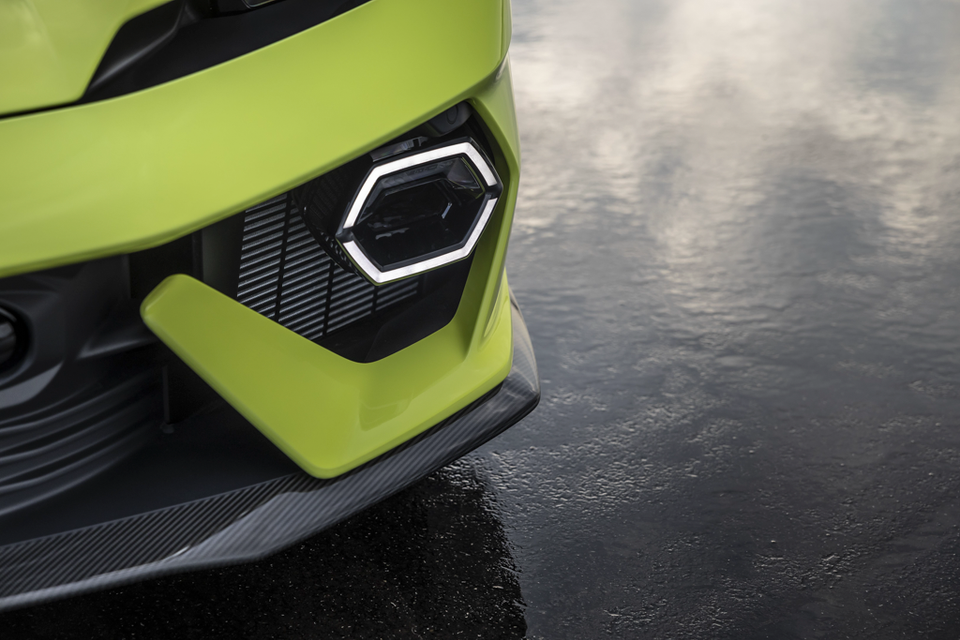
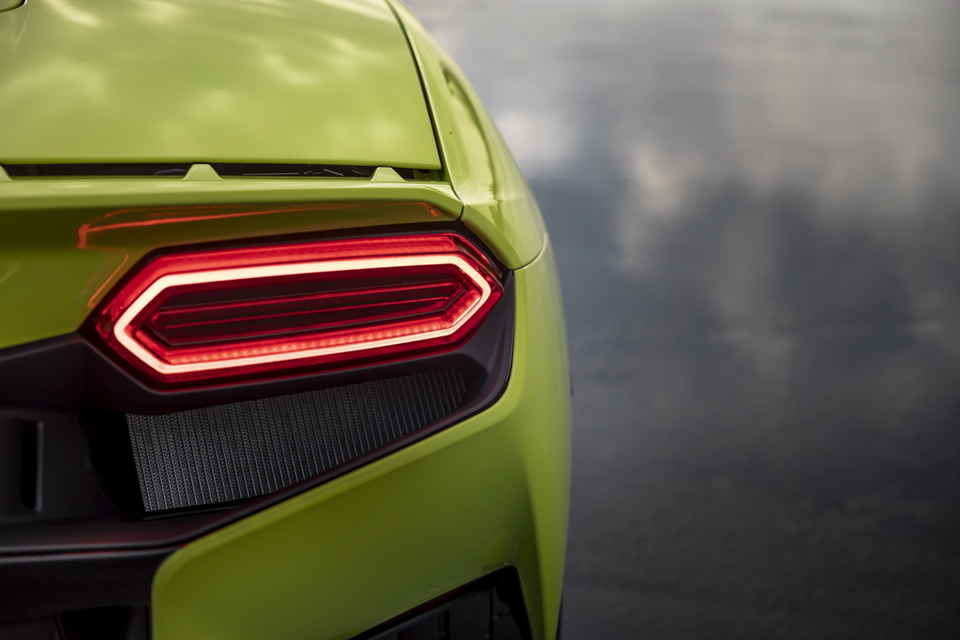
2027 Lamborghini Temerario equipment highlights:
However, many features you'd expect to be standard – including cupholders! – are listed among the options.
As such, the cost of options can add up quickly, particularly if you specify the $85,410 Allegerita (lightweight) package, which trims up to 25kg through greater use of carbon-fibre while increasing downforce by 67 per cent.
Carbon-fibre wheels alone will set you back $48,000.
To see how the Lamborghini Temerario lines up against the competition, check out our comparison tool
There is no crash data from any independent automotive safety authority for the new Temerario, and that’s unlikely to change given the low production volume and price of the vehicle.
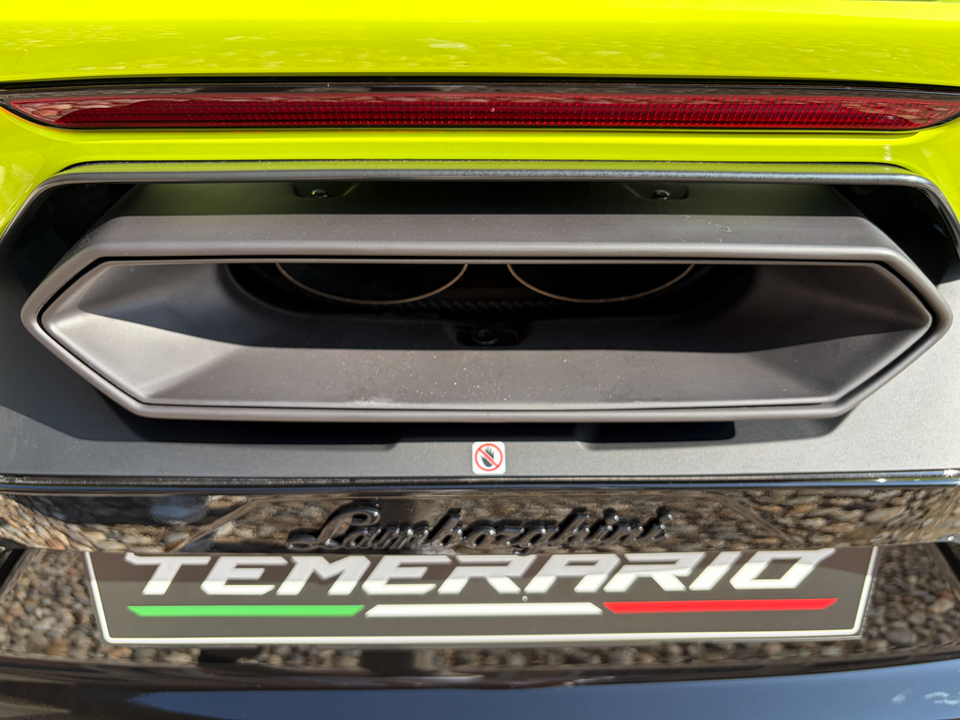
Standard safety features include:
Full Assistance Pack adds:
To see how the Lamborghini Temerario lines up against the competition, check out our comparison tool
Short warranty aside, Lamborghini is quite generous in this regard, offering five years of free servicing and three years of complimentary roadside assistance.
| Servicing and Warranty | Lamborghini Temerario |
|---|---|
| Warranty | 3 years, unlimited kilometres – vehicle 8 years or 160,000km – high-voltage battery |
| Roadside assistance | 3 years |
| Service intervals | 12 months or 15,000km |
| Capped-price servicing | 5 years free |
| Total capped-price service cost | $0 |
For context, Ferrari and McLaren cover scheduled maintenance for seven and three years respectively, while Porsche does not offer any form of capped-price servicing in Australia.
There are five official Lamborghini dealerships Down Under, covering the five most populated states.
To see how the Lamborghini Temerario lines up against the competition, check out our comparison tool
By treating electrification as an opportunity rather than a death sentence, Lamborghini has raised the performance bar for 'junior' supercars.
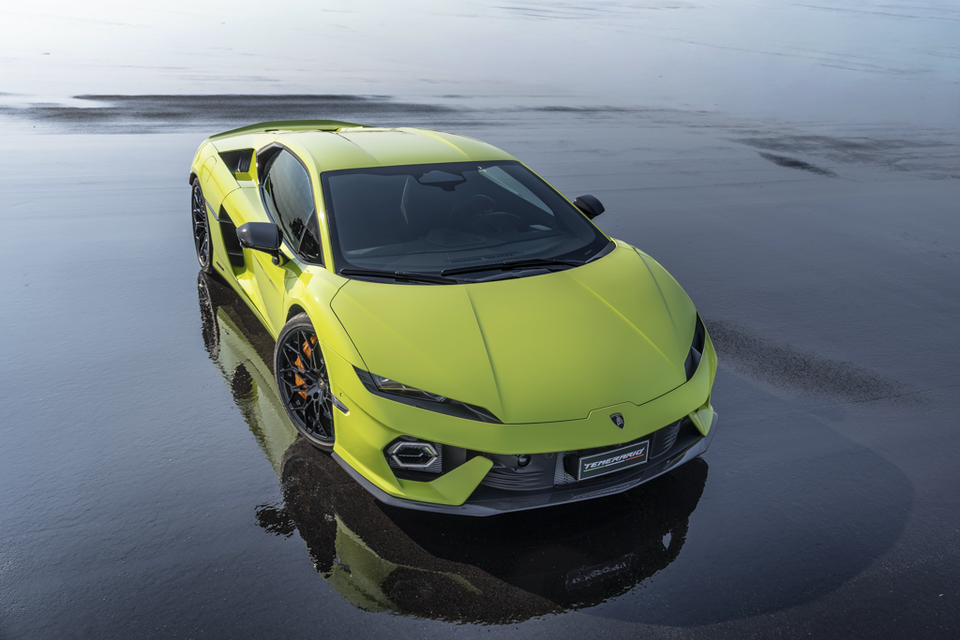
That much is clear on a racetrack, where the Temerario proves itself to be monstrously quick not only in a straight line, but also around Vairano's tight, technical handling course.
At the same time, it's remarkably approachable, combining impressive agility with a confidence-inspiring point-and-shoot driving experience in its most track-focused Corsa mode.
Not fussed about lap times? Drift mode is a welcome source of old-school fun.
So, in the context of a track test, the Temerario is pretty tough to fault aside from its overly light steering.
The combination of a configurable driving experience and comfortable cabin suggest journeys to and from the track – in addition to daily duties – should be wholly pleasant, too, especially by Lamborghini standards.
Emotion may be harder to come by, though. Because the engine, as technically accomplished as it is, can sound a little agricultural at low revs compared with the musical V10 it has replaced, while long gearing limits transmission interaction at road-legal speeds.
The Huracán sounded special from idle, whereas the Temerario asks you to work much harder before its powertrain really comes alive.
Rest assured, Lamborghini is already working on that. For MY27, insulation has been stripped from the engine bay in pursuit of a louder, more visceral experience.
And at the end of the day, this is just the beginning for the Temerario. Lamborghini says there’s both headroom and flexibility to take the model in a variety of exciting directions, all of which should only broaden its appeal.
With that in mind, the Temerario is poised to remain one of the benchmarks in its segment for years to come.
CarExpert can save you thousands on a new Lamborghini Temerario. Click here to get a great deal.
Click the images for the full gallery
If this is the car for you, we’ll compare offers from trusted dealers, handle the back and forth and manage your purchase from enquiry to delivery.
Josh Nevett is an automotive journalist covering news and reviews, with a background in motorsport journalism.
Add CarExpert as a Preferred Source on Google so your search results prioritise writing by actual experts, not AI.
Josh Nevett
4 Minutes Ago

Derek Fung
20 Minutes Ago


Damion Smy
1 Hour Ago

Damion Smy
1 Hour Ago
Damion Smy
15 Hours Ago

William Stopford
16 Hours Ago
Add CarExpert as a Preferred Source on Google so your search results prioritise writing by actual experts, not AI.
# Based on VFACTS and EVC data
† Displayed prices exclude on-road costs such as delivery charges, registration fees, number plates, insurance and applicable road taxes. These prices are subject to change without notice and may not reflect current market pricing or dealer offers.
 Automotive Vehicle Spec Data & 4K images Powered by JATO Dynamics Ltd