




Damion Smy
A decade on: Our favourite Australian-made Fords
Ten years to the day since Australia's final Ford factory closed, we reminisce with our favourite locally made models.
15 Minutes Ago
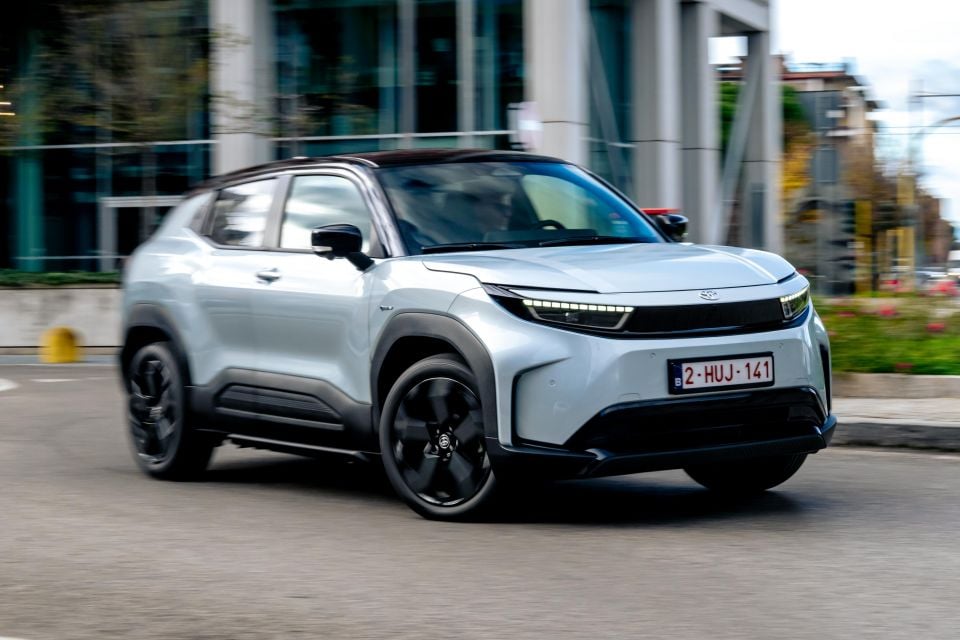
Toyota borrows Suzuki’s e-Vitara EV to create its smallest electric crossover. But has it significantly changed in the process?

Contributor
Contributor
Contributor
Contributor
If this is the car for you, we’ll compare offers from trusted dealers, handle the back and forth and manage your purchase from enquiry to delivery.
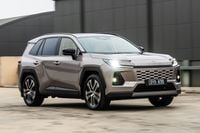
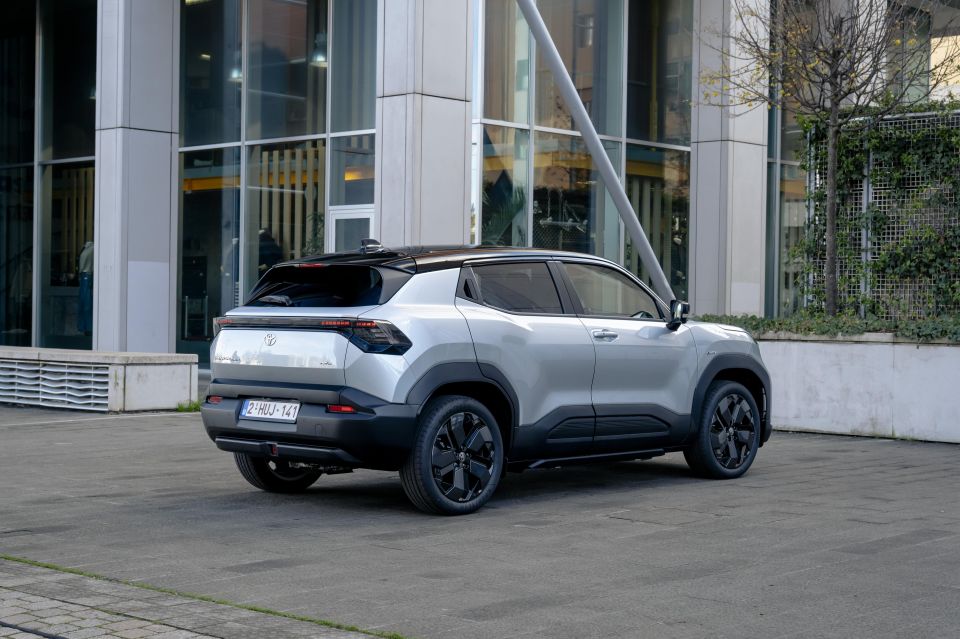
The Suzuki e-Vitara is the source material for the latest Toyota Urban Cruiser, and this isn’t too unusual as most versions of preceding Urban Cruisers sold worldwide have often been based on Suzuki Vitaras.
The problem, though, is that the e-Vitara is Suzuki’s first attempt at an electric vehicle (EV) and we were less than impressed with its dynamics and efficiency.
So the question is whether Toyota has done significant work in modifying the e-Vitara’s underpinnings to create the new Urban Cruiser, or whether it has just plonked its own very similar crossover body on top of the platform and sent the car on its merry way.
To find out, we went to the international launch of the Toyota Urban Cruiser in Florence, Italy.
While it has promised to release a number of EVs in coming years, at this stage Toyota Australia hasn’t committed to releasing the Urban Cruiser in this market, so there’s no inkling of how much it might cost here.
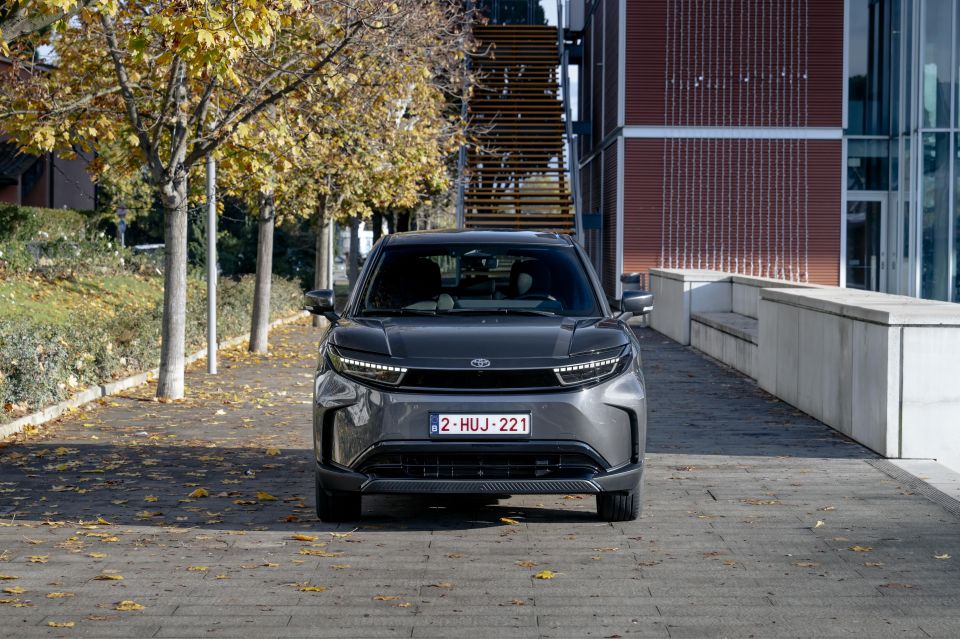
Similarly, Suzuki Australia hasn’t revealed e-Vitara pricing ahead of its local launch in the second quarter of 2026, although in certain European markets we know the two vehicles are identically priced at a reasonably competitive level.
It’s a fairly safe bet to assume the Urban Cruiser would probably slot in somewhere between the Yaris Cross (from $31,790 before on-roads), C-HR (from $42,990) and Corolla Cross (from $37,440) compact SUVs.
Toyota Australia also recently slashed pricing on the larger bZ4X, which now starts from $55,990 or over $10,000 less than before.
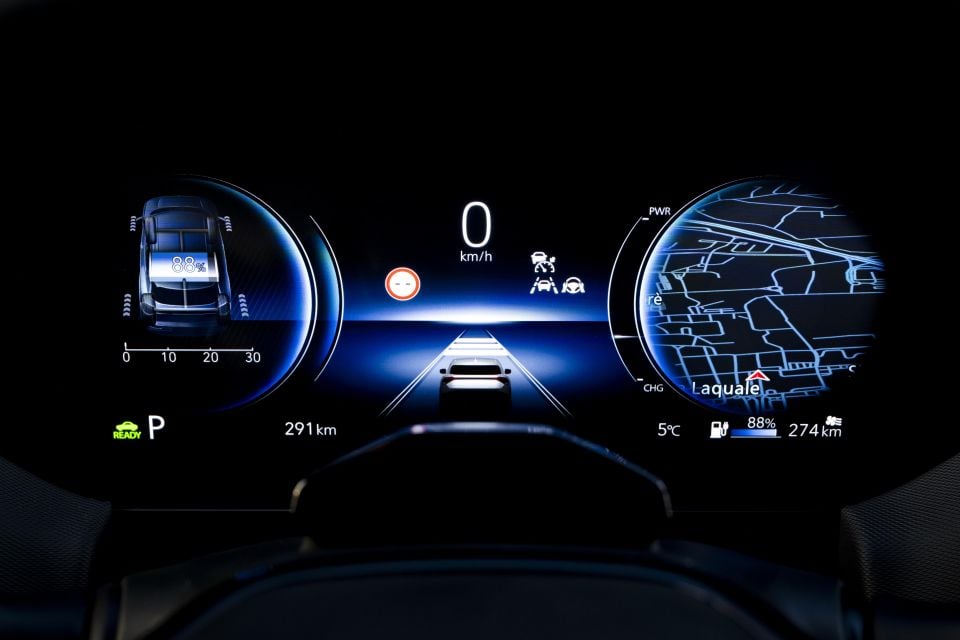
Very similar to the Suzuki e-Vitara, to the point that only the Toyota-embossed steering wheel and some mildly tweaked graphics in the instrument displays betray that you’re even in a different car.
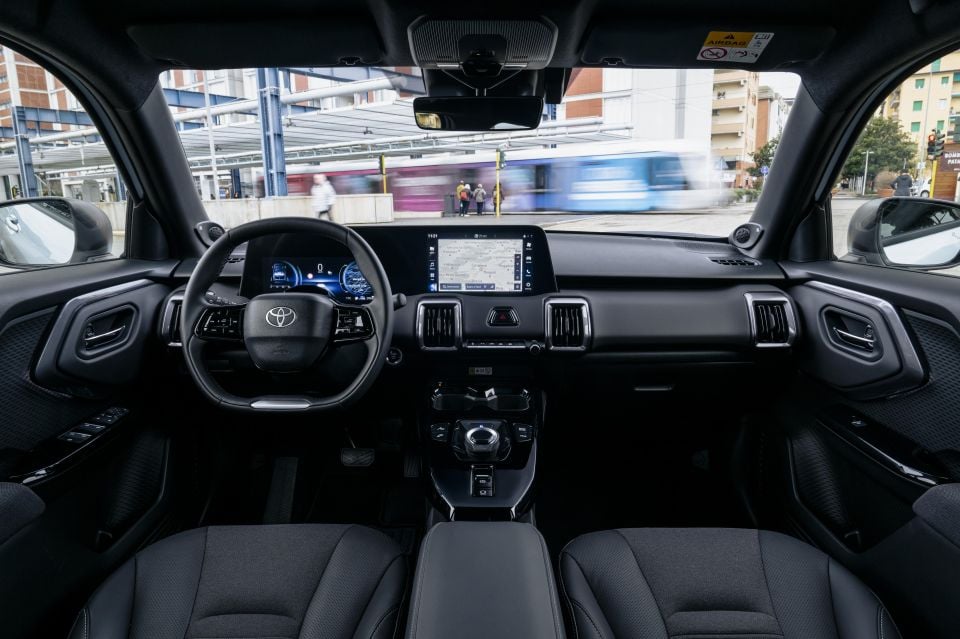
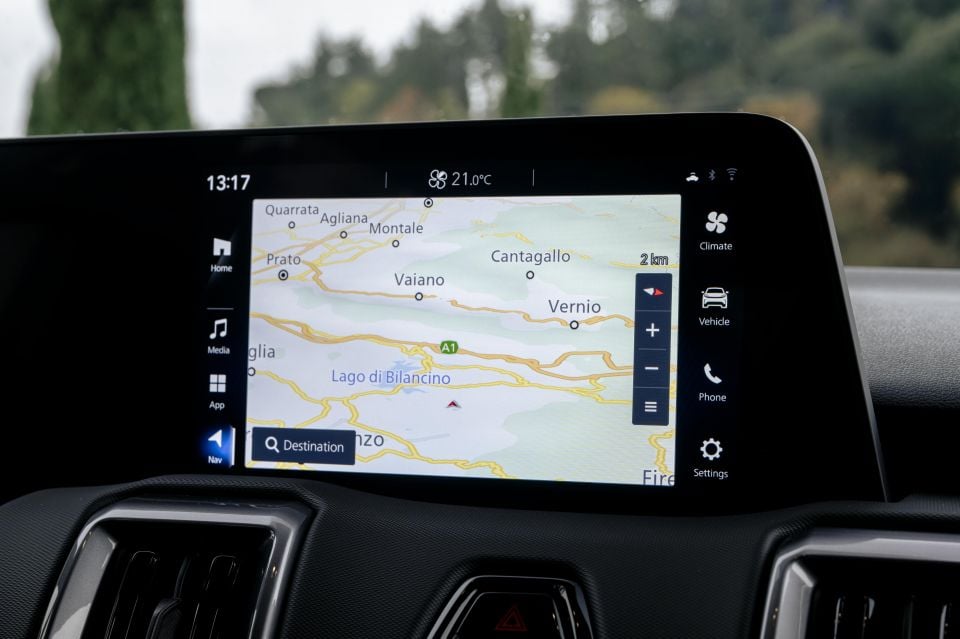
This means the Urban Cruiser is put together solidly enough, and in the main most things operate intuitively. That is, until you start working with the 10.1-inch central infotainment touchscreen, which sits – rather awkwardly from a visual perspective – in a single trapezoid housing spanning the central and driver’s portions of the upper fascia.
Not only does this middle screen sit at a different height to the 10.25-inch instrument cluster, meaning the displays are mismatched and bordered by differing amounts of black plastic, but there’s simply too much reliance on that infotainment panel for the car’s own good.
For instance, flying in the face of Toyota’s typically sensible ergonomics, it takes five taps of the screen to adjust the heated seats. And turning off various advanced driver assistance systems (ADAS) is also a lengthy and needlessly complex chore. It’s infuriating.
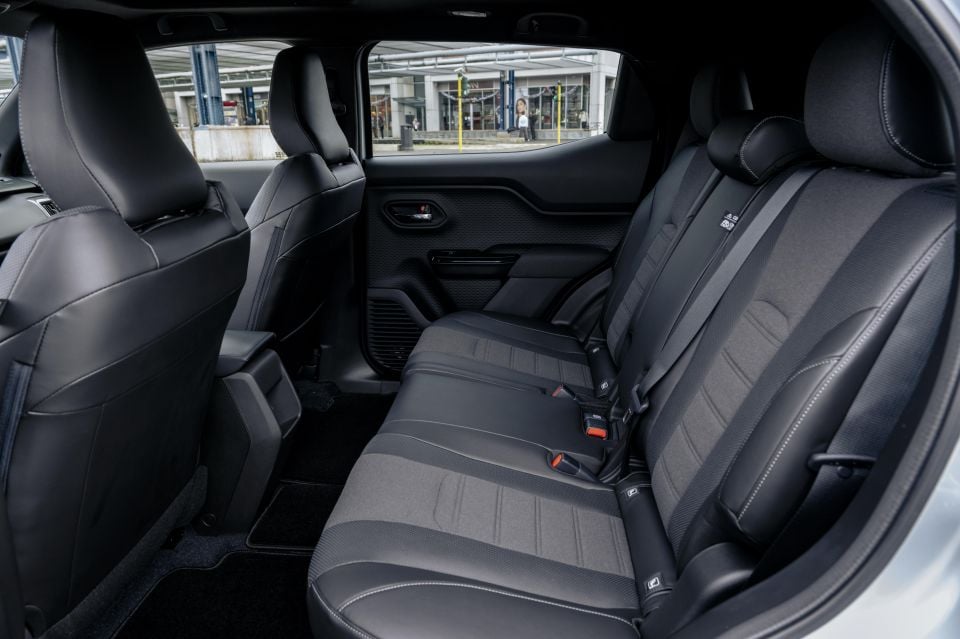
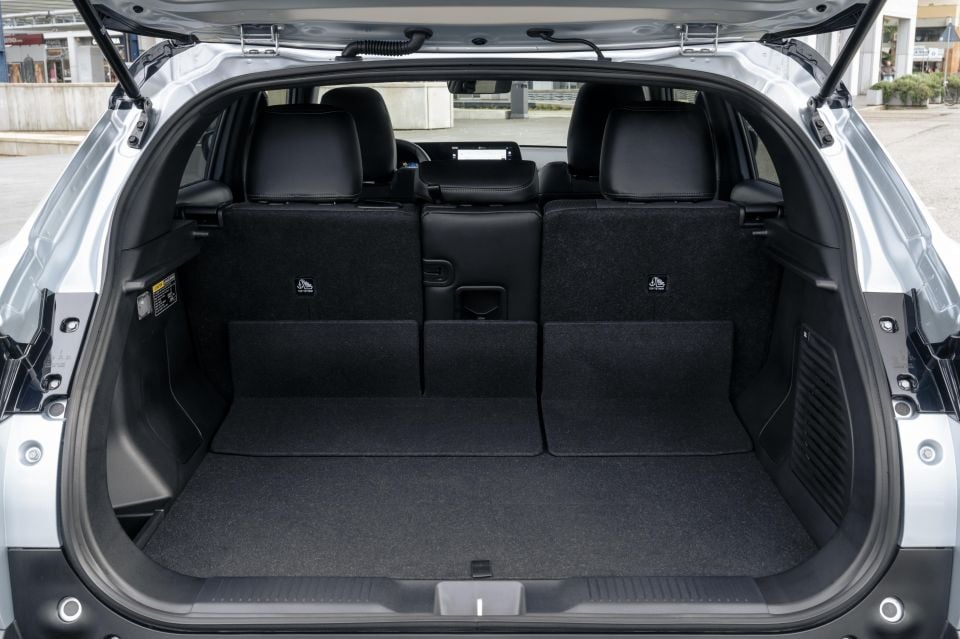
And while the space in the back of the car is okay, it’s not as generous there as you at first might think. The Urban Cruiser does have the useful function of being able to slide the rear bench squabs backwards and forwards, in a 60:40 split, by up to 160mm, so you can increase luggage or rear-passenger space according to your needs.
But that means a boot which only measures 238-244 litres with all seats in use (depending on the fitment of a subwoofer for the top-level JBL sound system or not), rising to a modest 306-310L with the seats forward – whereupon legroom in the back becomes almost non-existent.
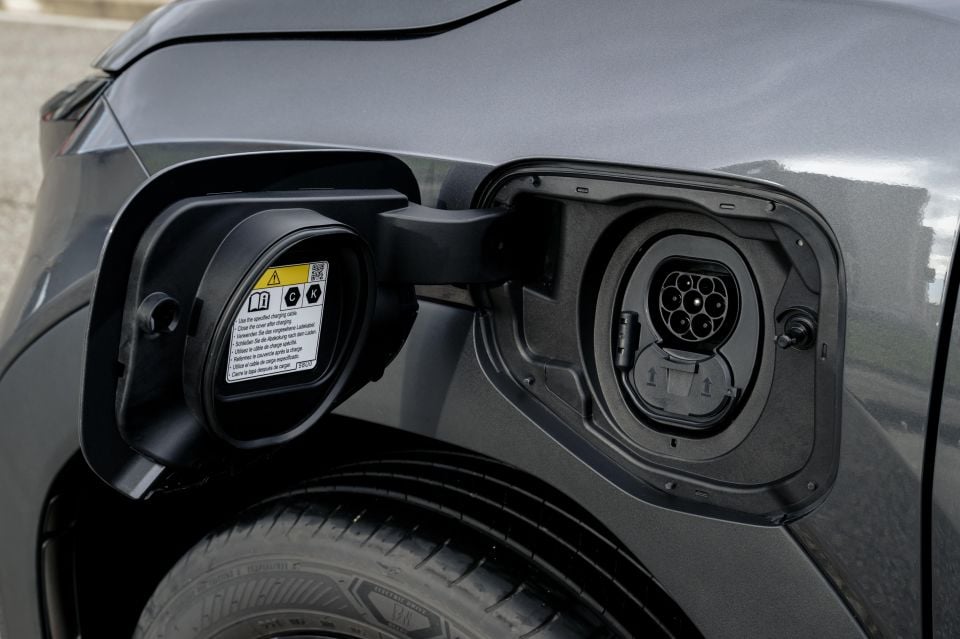
Finally, there’s no front boot at all in the Urban Cruiser, so all its cables need to be stashed under the rear cargo area’s floor.
There are two battery sizes and two motor layouts available to the Toyota Urban Cruiser, resulting in three distinct models.
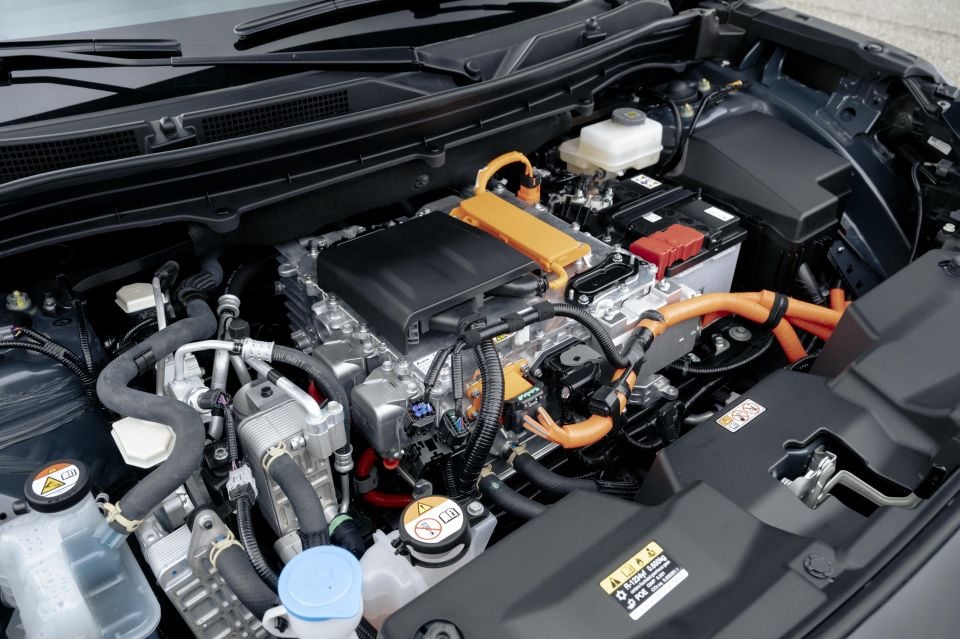
| Specifications | Toyota Urban Cruiser 61kWh AWD |
|---|---|
| Drivetrain | Dual-motor electric |
| Battery | 61kWh li-ion (net) |
| Power | 135kW |
| Torque | 309Nm |
| Driven wheels | Four |
| 0-100km/h – claimed | 7.4 seconds |
| Energy consumption – claimed | 14.9kWh/100km |
| Energy consumption – as tested | 25.6kWh/100km |
| Claimed range – WLTP | 395km |
| Max AC charge rate | 11kW |
| Max DC charge rate | 70kW |
The first is a single-motor, front-wheel drive variant with a 49kWh battery pack and a 106kW/193Nm electric motor. This Urban Cruiser will run 0-100km/h in a claimed 9.6 seconds and is said to be able to travel up to 344km on a single charge.
In the middle is a longer-range, front-wheel drive Cruiser with a 61kWh battery pack. While it gains no more torque, peak power climbs to 128kW, trimming the claimed 0-100km/h time to 8.7 seconds. This is also the longest-legged of the newest Toyota EV family, with up to 426km of range.
Topping the lineup off is the sole dual-motor Urban Cruiser, the all-wheel drive car picking up a secondary electric motor on its back axle and utilising the 61kWh battery. Power is up again, albeit only marginally to 135kW, but torque output leaps significantly as a result of the second motor, to a peak of 307Nm.
That again cuts the claimed 0-100km/h sprint, to a respectable 7.4 seconds, but the payoff is reduced range – to 395km.
The problem with the Toyota Urban Cruiser is that it is subject to the same limitations as the Suzuki, with respect to its electrical system. A maximum DC fast-charging rate of 70kW in this day and age is substandard, even if 11kW AC charging is acceptably competitive.
Therefore, at best, a 10-80 per cent top-up of the battery on the fastest public connection will still need 45 minutes of hook-up. With an 11kW AC three-phase power supply, 15-100 per cent charging in the Urban Cruiser should take six hours. On a more typical 7kW wallbox, that increase to 9.5 hours.
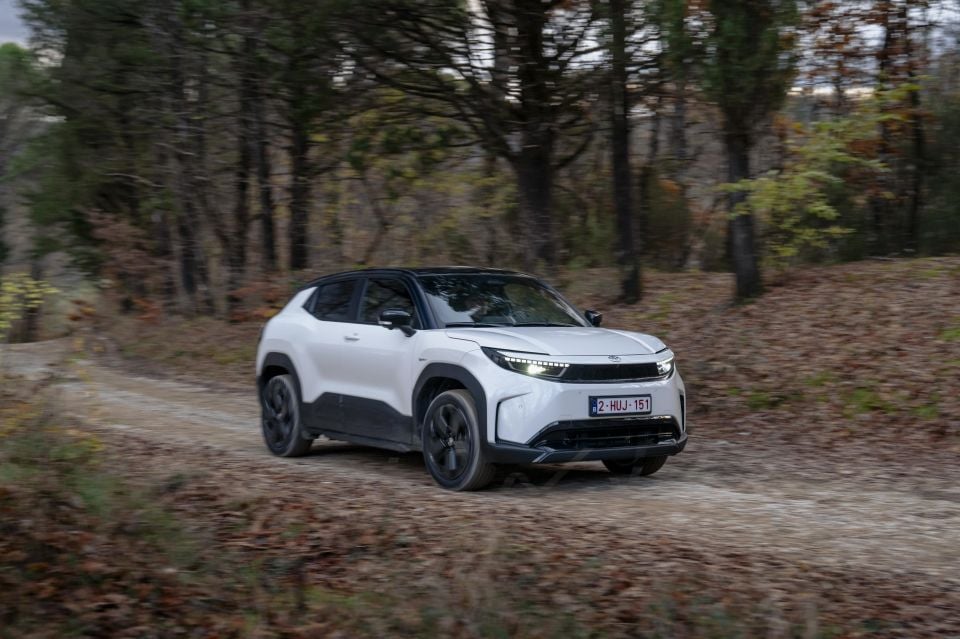
There’s no polite way of saying it, but the Urban Cruiser’s primary ride is shockingly poor.
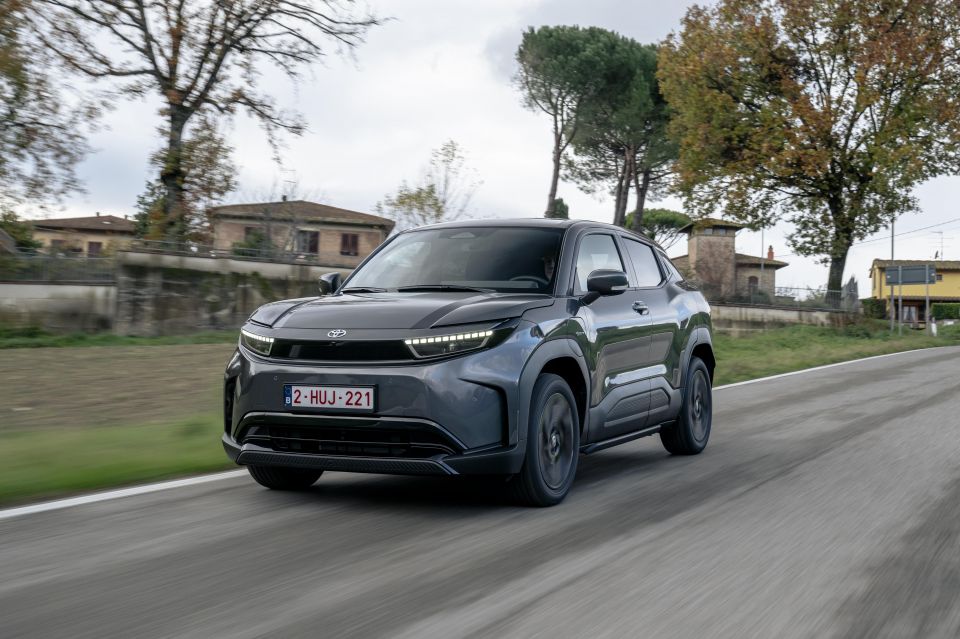
Italy might be a lovely and scenic place to launch a car, but the woeful state of some of its roads only shows up how bad the Toyota is at dealing with anything bigger than a medium-sized compression of its springs.
The Cruiser amplifies only moderately sunken manhole covers and dimples in the road into big, uncomfortable moments, and it’s shocking how noisy and ill-mannered it is in the wake of really big hits to its underpinnings.
Neither the lighter single-motor nor heavier AWD variants are better at dealing with this stuff, so don’t go expecting added weight to settle the Toyota down on its springs.
Sure, if you end up on really smooth tarmac, then the Urban Cruiser rolls along acceptably – albeit there’s a bit more road noise than we’d like.
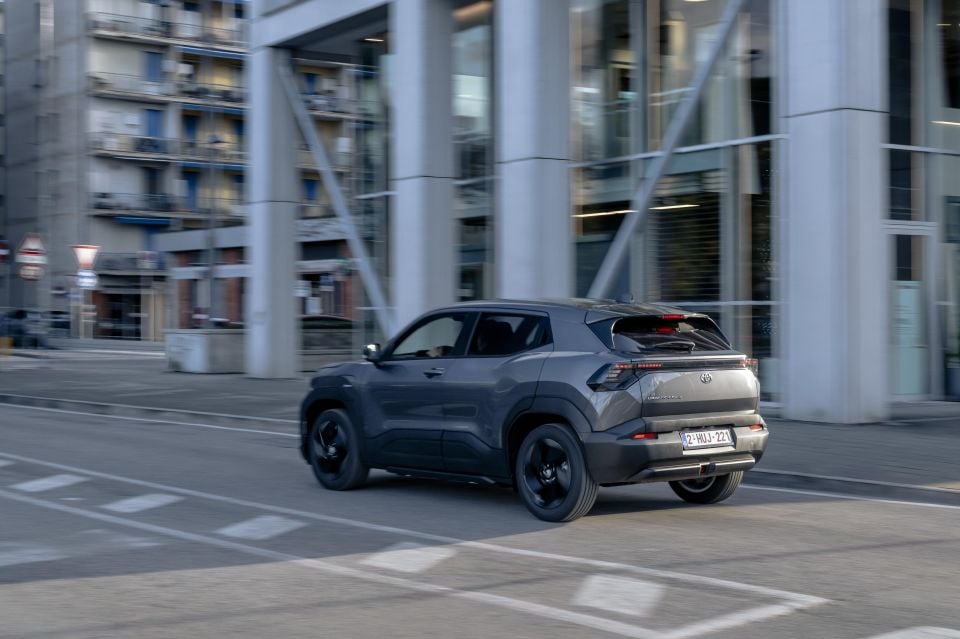
But, as we all know, really smooth tarmac is the exception rather than the rule, and it’s commensurately hugely frustrating that a car called the Urban Cruiser doesn’t actually work brilliantly in an urban environment at all.
Then there’s the poor electrical efficiency. We wouldn’t say we drove the Urban Cruiser particularly hard, either as the AWD or in single-motor, 61kWh format, and yet neither car managed to better a dreadful 25kWh/100km. The weather in Italy was mild, too, so it wasn’t like the cold was sapping power from the battery needlessly.
At that sort of consumption, you’d be getting a maximum of circa-240km from the Urban Cruiser, not 395km. And it’s probably best we don’t point out that the front-wheel drive Toyota, supposedly easier on its battery, turned in a worse figure when driven later on the same day.
Now, while searing speed is not essential in a small, compact crossover, it’s a shame the single-motor Urban Cruiser is so weedy. Quite how Suzuki has managed to get less than 200Nm from an electric motor of 128kW is unfathomable, so the single-motor Cruiser does feel thoroughly undernourished. The dual-motor AWD is, at least, better in this regard.
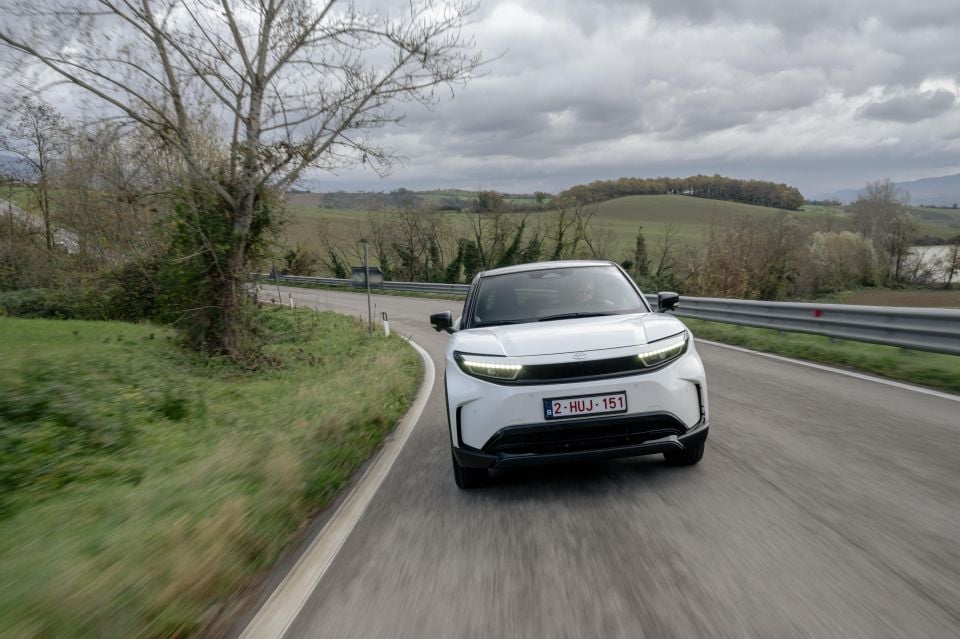
As for the handling, it’s all rather so-so.
There’s a lot of body movement from the Urban Cruiser, because despite the fact it has a lumpen feel when dealing with bumps in the road, the suspension is quite soft so the shell of the car can list about under duress.
Couple in light, feel-free steering and brakes which are nothing more than acceptable, and you won’t really want to throw the Toyota around. Fun to drive, this thing is not.
Sure, if you drive the Urban Cruiser in an incredibly gentle and sedate fashion, and you stick to better-made roads, then it’s fine.
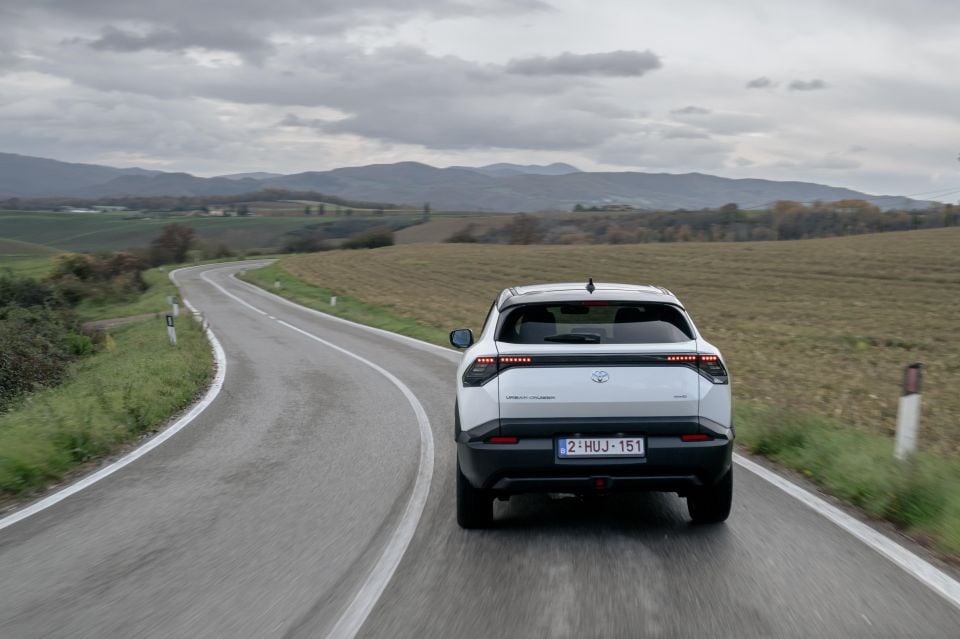
Yet almost any other comparable electric crossover like this will do the same job to the same sort of standard, only it will layer on top superior low-speed and motorway ride comfort, or it’ll handle with a lot more sparkle than this, or it’ll give you far better real-world electrical consumption and therefore range, or it’ll do all three of these things to a higher standard than the Toyota does.
We’re not sure what the Urban Cruiser does, from a dynamic perspective, which makes it a must-have buy in this sector. To us, it feels way off the pace of the prevailing class standards, and it’s nothing like as good as Toyota’s other in-house EVs or electrified products either.
We don’t know what any Australian specification of the Toyota Urban Cruiser would look like, should it be confirmed for our market.
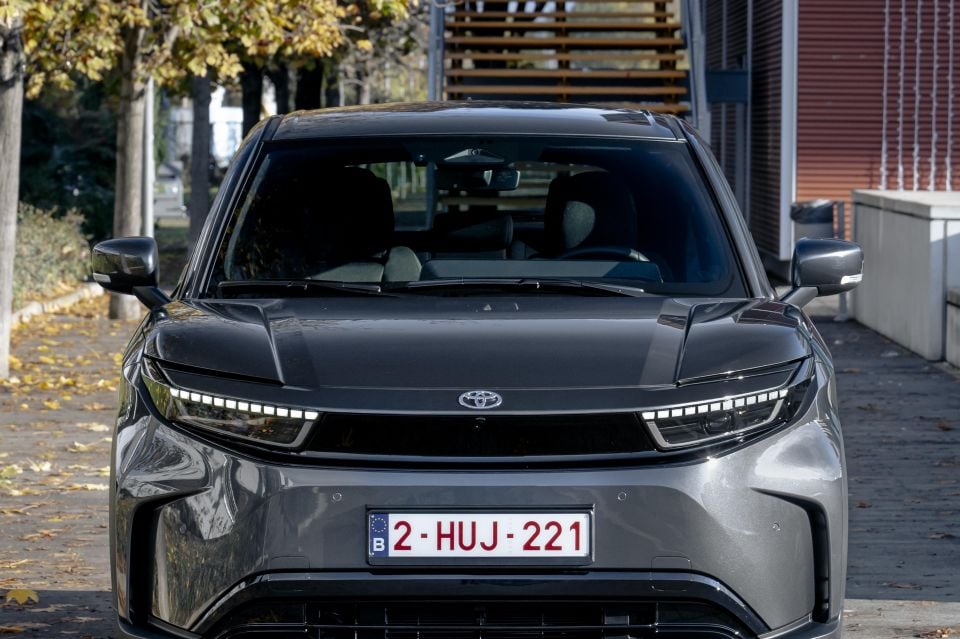
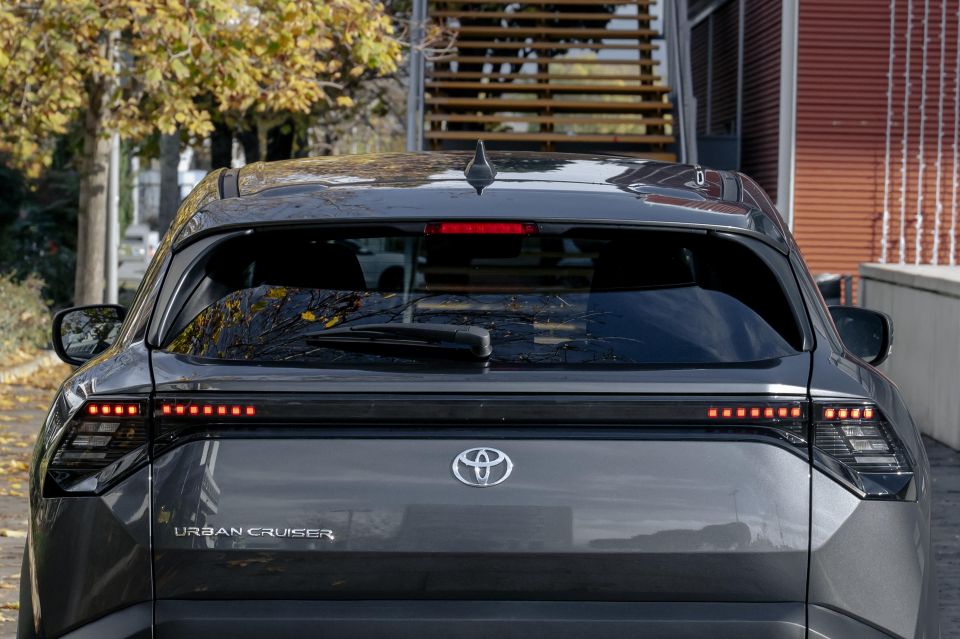
Going by its European structure, equipment is broadly linked to each of the three drivetrain specs – so there’s a certain level of kit on the basic 106kW model, which is then added to for the 61kWh, 128kW front-drive Cruiser, before the AWD gets even more toys.
As a result, we’d expect the following equipment to be standard on even a basic car.
2026 Toyota Urban Cruiser equipment highlights:
Stepping up to the mid-grade model should bring:
The top specification should then add:
The Toyota Urban Cruiser hasn’t been tested by ANCAP as yet, although its sister body Euro NCAP has a report for it.
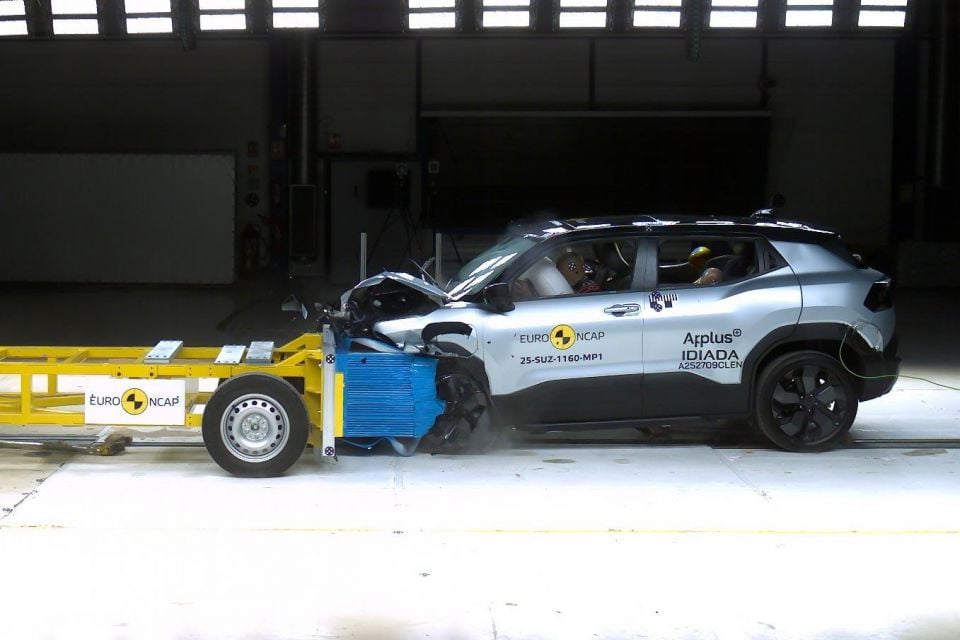
If you look at it carefully, though, you’ll see it was garnered from testing the Suzuki e-Vitara itself: so the 77, 85, 79 and 72 per cent subsection scores, plus the four-star overall rating, are shared between the Toyota and its donor vehicle.
As you can see from the spec list above, though, Toyota does at least mitigate this somewhat by fitting some desirable advanced driver assistance systems (ADAS) to every model of the Urban Cruiser.
It’s likely that the Urban Cruiser would come with a five-year, unlimited-distance warranty as standard, which can be extended on a service-activated basis to seven years if required – as is Toyota Australia’s current coverage.
Beyond that, there’s eight years of coverage for the battery pack’s efficacy, guaranteeing it for 70 per cent of its initial capacity after that period.
A separate warranty of five years on the battery can be extended to 10 years, providing it has an annual health check with Toyota – and there’s a 1,000,000km level of cover here.
The usual service schedule for a Toyota EV is every 12 months or 15,000km, whichever comes sooner.
If it seems like we’re being overly harsh on the Toyota Urban Cruiser, then perhaps we can at least defend ourselves by saying we were hoping for some clear differentiation between this car and the Suzuki e-Vitara.
If this is the car for you, we’ll compare offers from trusted dealers, handle the back and forth and manage your purchase from enquiry to delivery.
We struggle to believe that a company of the size and profitability of Toyota couldn’t have tried the e-Vitara out first, then quietly said to a few of its best chassis engineers “have a look at that and sort the bloody ride comfort out first, would you?”.
Sadly, aside from the ‘Hammerhead’ front-end design and the badging, it is in every respect precisely the same vehicle as the Suzuki, which means it doesn’t ride very well, it isn’t particularly impressive for performance, the interior design is drab, and it feels like it stands out a mile from the rest of Toyota’s SUV range – for all the wrong reasons.
If you’ve always really wanted an electric Toyota crossover of about this size and potential price level, then the Urban Cruiser might just be for you. For everyone else, there are far better options available out there, meaning you can safely avoid this seriously underwhelming Japanese EV.
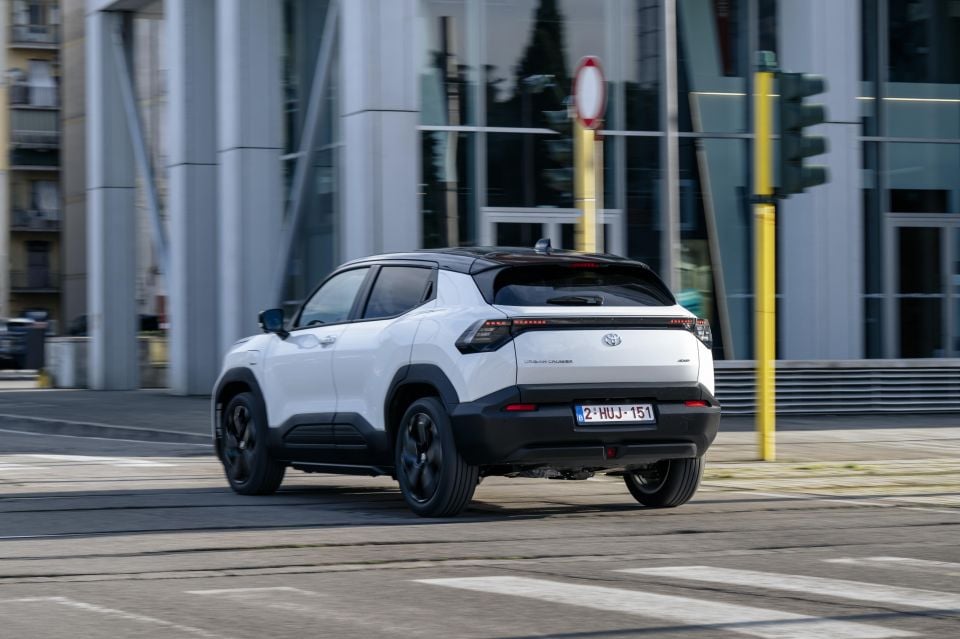
Click the images for the full gallery
If this is the car for you, we’ll compare offers from trusted dealers, handle the back and forth and manage your purchase from enquiry to delivery.
Add CarExpert as a Preferred Source on Google so your search results prioritise writing by actual experts, not AI.
Damion Smy
15 Minutes Ago

Elle Baillieu
17 Minutes Ago

William Stopford
50 Minutes Ago
William Stopford
50 Minutes Ago
Damion Smy
2 Hours Ago

Damion Smy
2 Hours Ago
Add CarExpert as a Preferred Source on Google so your search results prioritise writing by actual experts, not AI.
# Based on VFACTS and EVC data
† Displayed prices exclude on-road costs such as delivery charges, registration fees, number plates, insurance and applicable road taxes. These prices are subject to change without notice and may not reflect current market pricing or dealer offers.
 Automotive Vehicle Spec Data & 4K images Powered by JATO Dynamics Ltd