





CarExpert
Why BYD did so well at the 2026 CarExpert Choice Awards
BYD took home two trophies in this year's CarExpert Choice Awards, with the popular Shark 6 also finishing as a finalist.
1 Day Ago
Mercedes-Benz simplifies its model naming with the new GLB Electric – a premium seven-seat SUV with zero tailpipe emissions. Is it worth the outlay?
CarExpert brings together reviews, research tools and trusted buying support, guiding you from research to delivery with confidence.
It seems car manufacturers are keen to move away from the new-fangled, EV-specific branding policies they were all rushing towards in the middle of last decade, and instead they're now returning to heritage nameplates in something of a hurry.
Mercedes-Benz is rowing back from the so-called ‘EQ’ sub-group of models it was initially determined to set up.
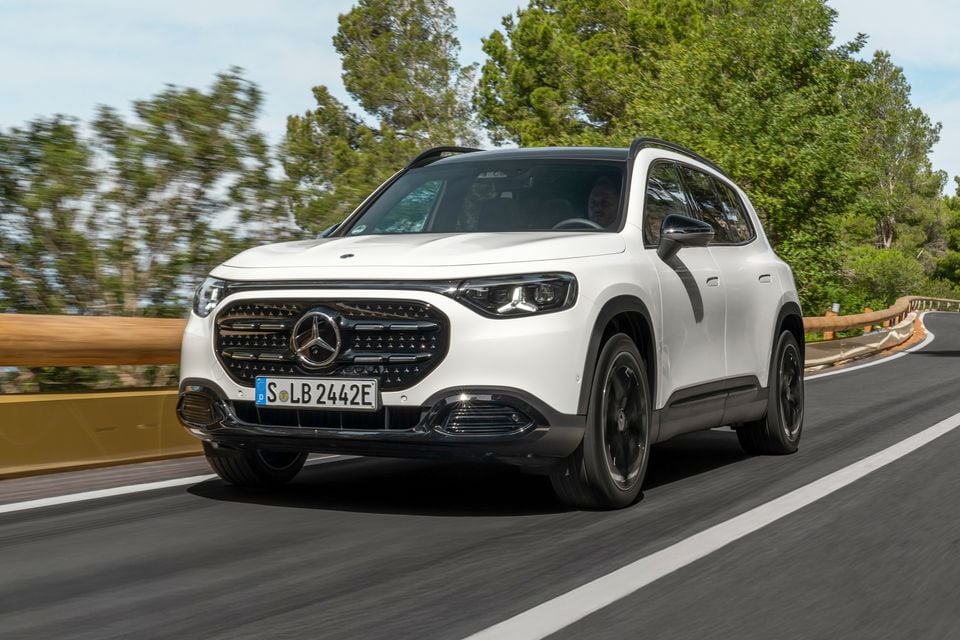
As a result, vehicles like this one – the second-generation GLB mid-size SUV – aren’t sold with two different badges depending on their propulsion. So the zero-emissions GLB is no longer known as the EQB but now goes under the simpler moniker of GLB Electric.
It was going to be the ‘GLB with EQ Technology’ to retain some sort of familial link to this brief period in Mercedes-Benz history, but that’s strangely wordy so plain old ‘Electric’ it is.
Available in Europe in two formats with one big battery, the new GLB Electric nevertheless represents one of the most affordable ways to get into a seven-seat electric vehicle from a premium auto brand, while remaining a car with a relatively small footprint on the road.
To see how good it is, or otherwise, we headed over to the UK to sample the new GLB Electric 250+ ahead of its Australian release.
We’ve already asked the question of Mercedes-Benz Australia and been told that, with the new GLB going on sale here in the final quarter of this year, local pricing and spec levels have yet to be set in stone.
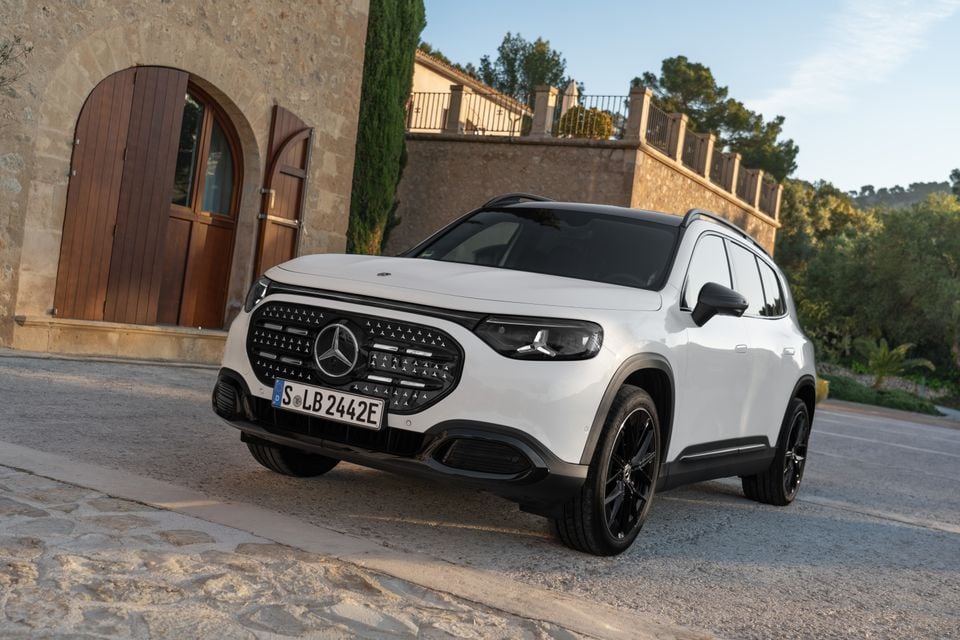
The outgoing Mk1 GLB is currently priced from $72,900 before on-road costs, with the electric EQB spin-off retailing on the far side of $90,000.
We’re expecting the new GLB, Electric or otherwise, to command higher price tags.
To see how the Mercedes-Benz GLB lines up against the competition, check out our comparison tool
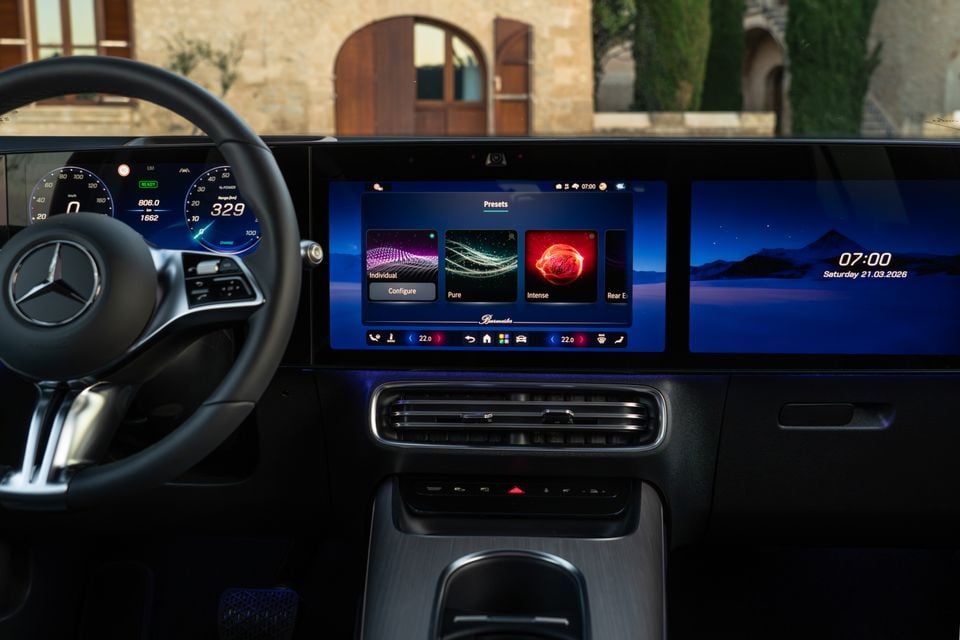
The cabin of the new Mercedes GLB is dominated by the dashboard.
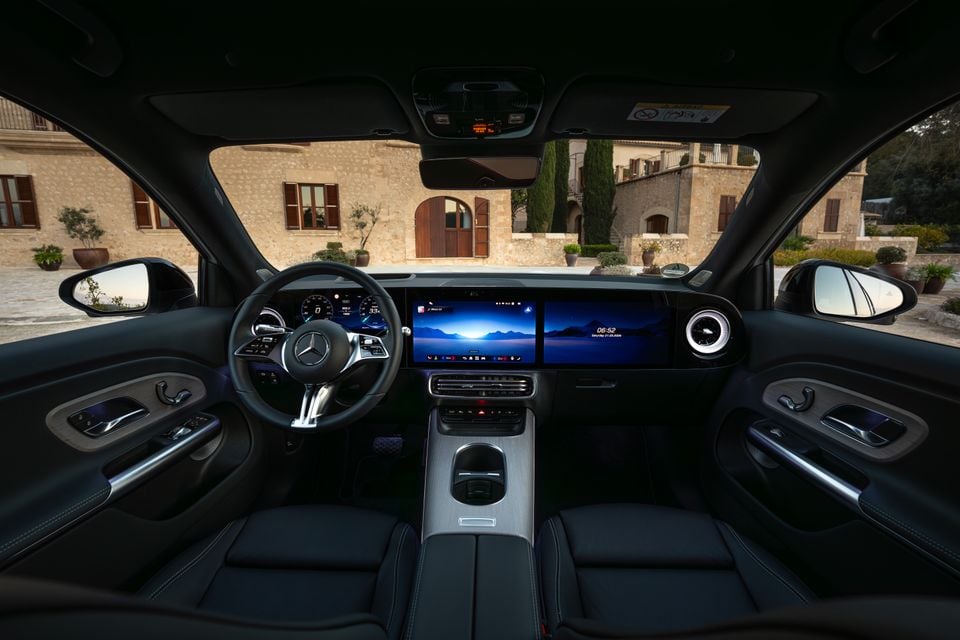
The vast, cliff-face edifice is known as the MBUX Superscreen and, while the precise number of digital panels you get within it depends on ticking certain options boxes at ordering time, there’s no doubt it could be a potentially divisive decision by Mercedes-Benz to go in so heavy on the technological front.
If you like lots of digital displays, then the slab-like band of them across the fascia of the GLB Electric is sure to impress you. At its most spectacular, there are two 14-inch screens for the central infotainment system and the passenger-side display, and another 10.25-inch unit serving as the instrument cluster.
To be fair, they are all presented with super-sharp graphics and crisp response rates, although there’s a dearth of physical switchgear in the cabin, meaning most functions must be operated through the middle display. At least the menu layout is intuitive, so it’s not a total nightmare to have to interact with the Superscreen interface.
Beyond that, cabin material quality feels fine, albeit not tremendous, and we’re not sure about the mismatched transmission-tunnel trim which was in our test car, featuring straight and curved lines on a white background.
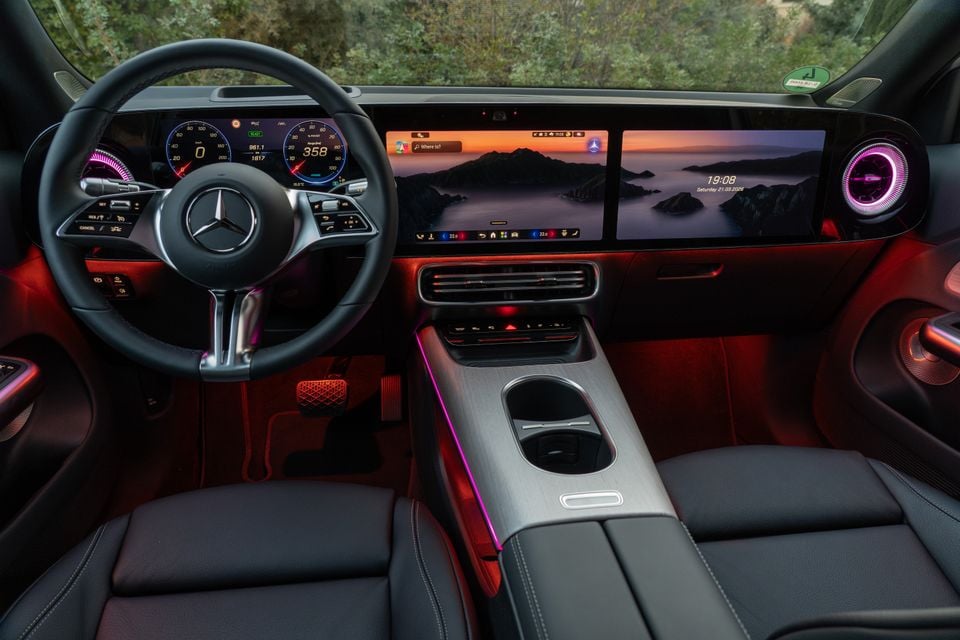
The panel surrounding the cupholders is deliberately mismatched, so the straight lines are towards the back of the car on the passenger side but aligned to the front for the driver, yet this just makes it look a bit like the trim was installed incorrectly at the factory.
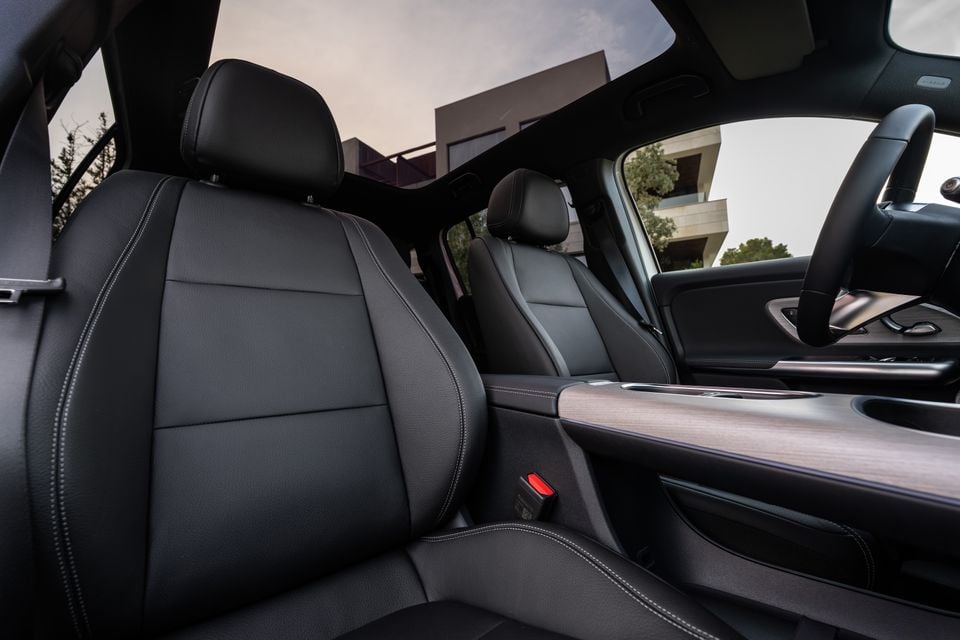
The seats are good though, and with light-and-shade colourways possible, the GLB’s cabin feels just about suitably upmarket enough to justify the three-pointed star logos which abound everywhere.
As to passenger space, it’s brilliant in the second row, where the GLB Electric has a flat floor, plenty of legroom, and 40:20:40-split/folding seats which can all slide forwards and backwards individually. There’s also generous headroom in the middle row of the cabin, thanks to the boxy exterior shape of the GLB with its high roof.
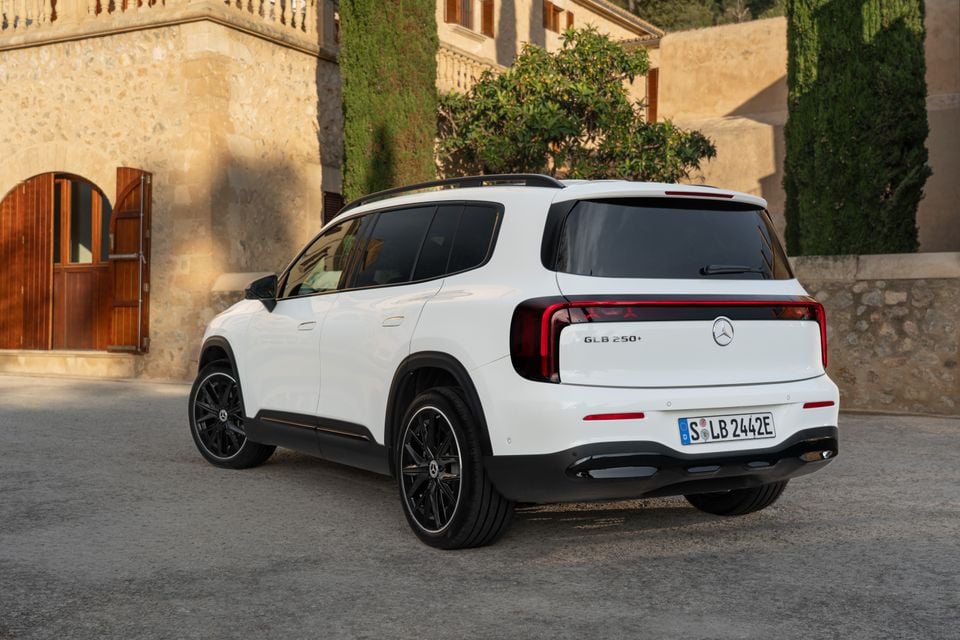
That said, even though we admire the packaging work carried out by Mercedes-Benz, which has managed to squeeze seven seats and a huge battery pack into a vehicle which is only just over 4.7 metres long, you are going to have to accept that the third-row seats are some of the smallest of their type.
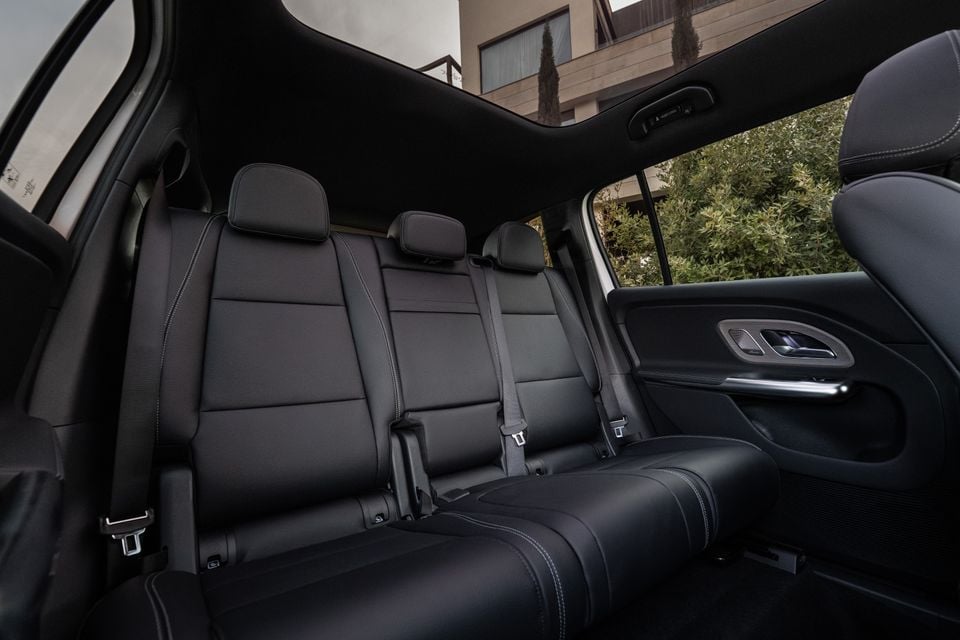
Only children of a younger age would be happy sitting back there for any great length of time, while with the two rear-most pews in situ, the boot space is reduced to a nominal volume of 145 litres.
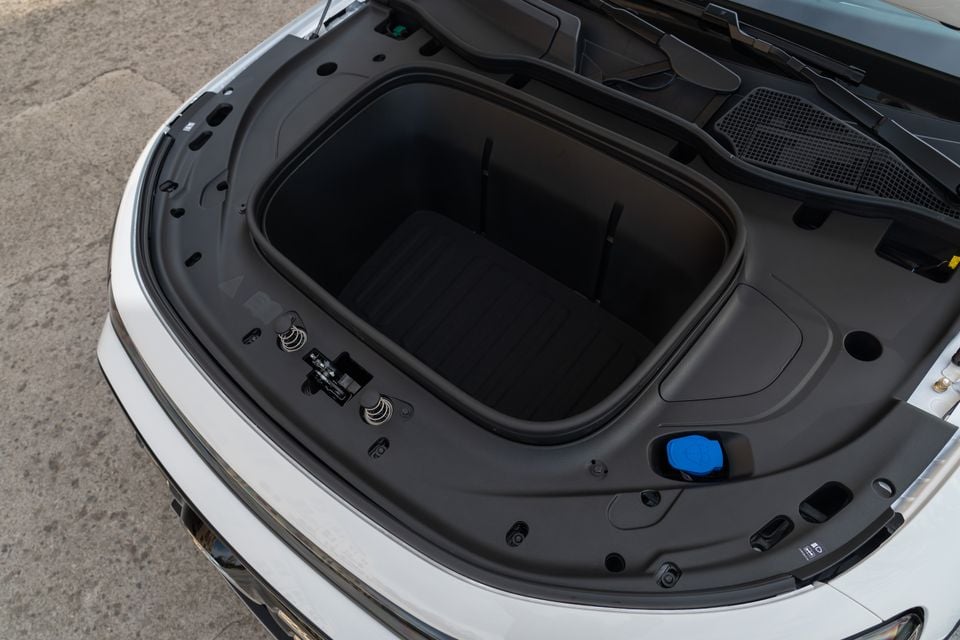
Nevertheless, Mercedes-Benz counters this by providing a comparatively large 127-litre front boot, and with the GLB Electric in five-seat format, owners will have a generous 540L of luggage capacity in the back.
Fold every seat down bar the front two, and the Mercedes-Benz EV’s cargo volume increases to a sizeable 1715L.
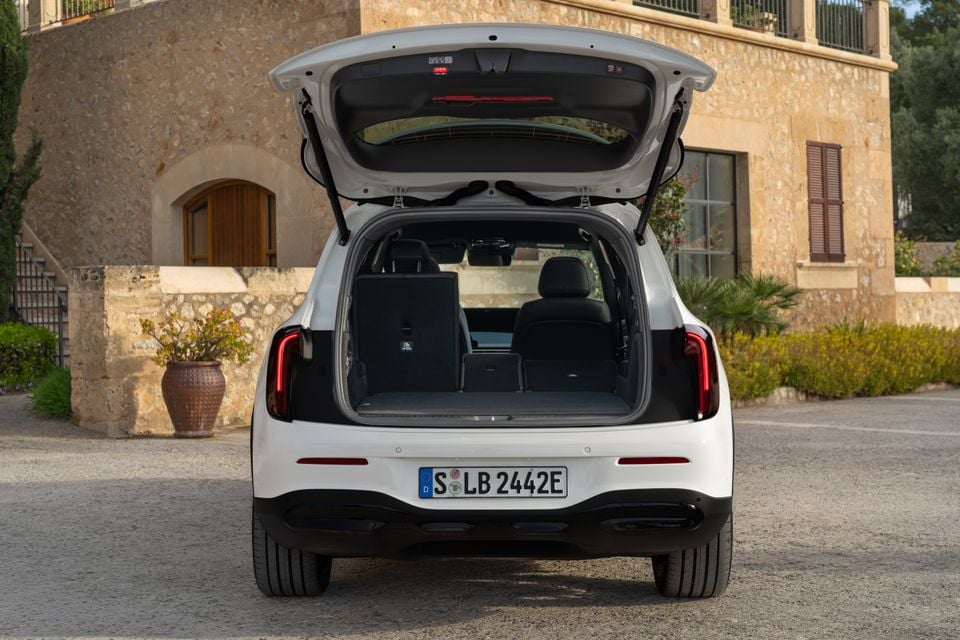
| Dimensions | Mercedes-Benz GLB Electric |
|---|---|
| Length | 4732mm |
| Width | 1861mm |
| Height | 1687mm |
| Wheelbase | 2889mm |
| Cargo capacity – five-seat variants | 540L (rear seats up) 1715L (rear seats folded) 127L (under-bonnet storage) |
Cargo capacity – seven-seat variants | 145L (third row up) 480L (third row folded) 1605L (second row folded) 127L (under-bonnet storage) |
To see how the Mercedes-Benz GLB lines up against the competition, check out our comparison tool
There are two main flavours of the Mercedes GLB Electric: the single-motor, rear-wheel drive 250+ we’re testing here, and the more potent all-wheel drive 350 4Matic which deploys dual motors.
| Specifications | Mercedes-Benz GLB Electric 250+ |
|---|---|
| Drivetrain | Single-motor electric |
| Battery | 85kWh NMC lithium-ion (usable) |
| Power | 200kW |
| Torque | 335Nm |
| Drive type | Rear-wheel drive |
| Weight | TBC |
| 0-100km/h (claimed) | 7.4 seconds |
| Energy consumption (claimed) | 15.8-18.3kWh/100km |
| Energy consumption (as tested) | 18.1kWh/100km |
| Claimed range – WLTP | 631km |
| Max AC charge rate | 22kW |
| Max DC charge rate | 320kW |
You’re looking at 200kW allied to 335Nm from the GLB 250+, resulting in a 7.4-second claimed 0-100km/h time and a top speed of 210km/h.
The GLB 350 4Matic, meanwhile, pumps those numbers up to 260kW and 515Nm, bringing the 0-100km/h claim down to 5.5 seconds. Its top speed is unchanged.
Intriguingly, like some high-output EVs such as the Porsche Taycan and the related Audi e-tron GT, the GLB Electric has a two-speed reduction-gear transmission, rather than the far more commonplace single-speed mechanism.
You can, very occasionally, discern the shift as the Merc switches from its shorter, accelerative ‘gear’ to the longer one, but this is only really possible when you’re absolutely hammering the accelerator and the car is moving well beyond 110km/h. Up to that point, the power delivery of the GLB Electric is as seamless and smooth as you’d expect of an EV.
Both versions of the GLB Electric use the same 85.5kWh NMC lithium-ion battery pack, almost all of which is usable, apparently (85kWh, says Mercedes-Benz). You pay a little bit of a range penalty for the 350 4Matic’s added potency, its 614km claim not quite matching the 250+ variant's 631km peak.
Mercedes-Benz's newest EV sits on advanced 800-volt electrical architecture, so charge times are rapid. At its fastest of 320kW, it’ll complete a 10-80 per cent charge in a claimed 22 minutes, while just 10 minutes of hook-up will add 260km of range, according to Mercedes-Benz.
Overnight charge times will be something like 12 hours on a 7.4kW AC wallbox, while at 11kW it’ll take nine hours to completely top up the battery in the GLB. There’s an option to uprate the AC charging to 22kW if so required.
To see how the Mercedes-Benz GLB lines up against the competition, check out our comparison tool
The Mercedes GLB Electric is composed and capable – and it’s also a little bit clinical.
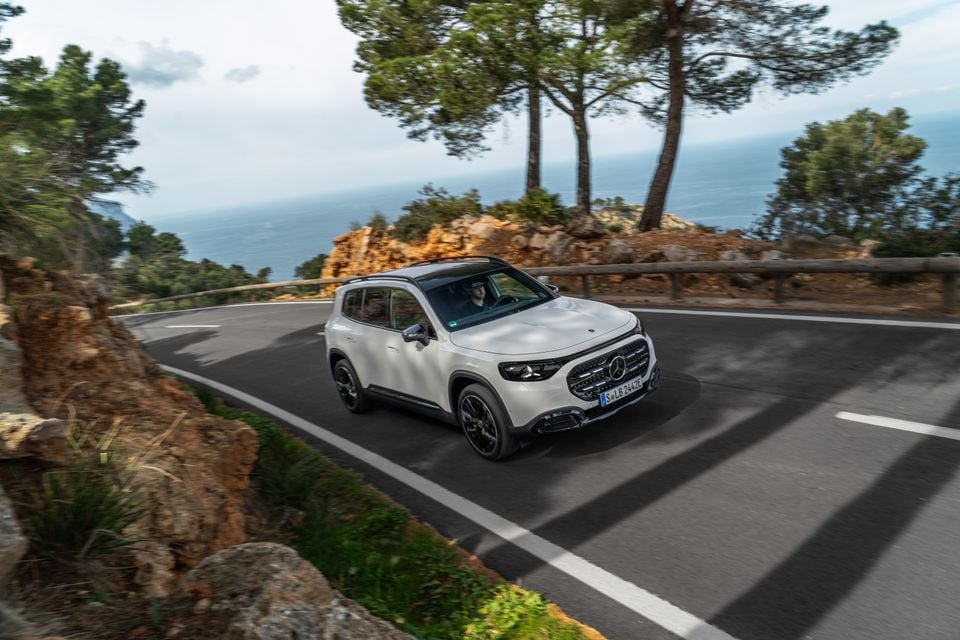
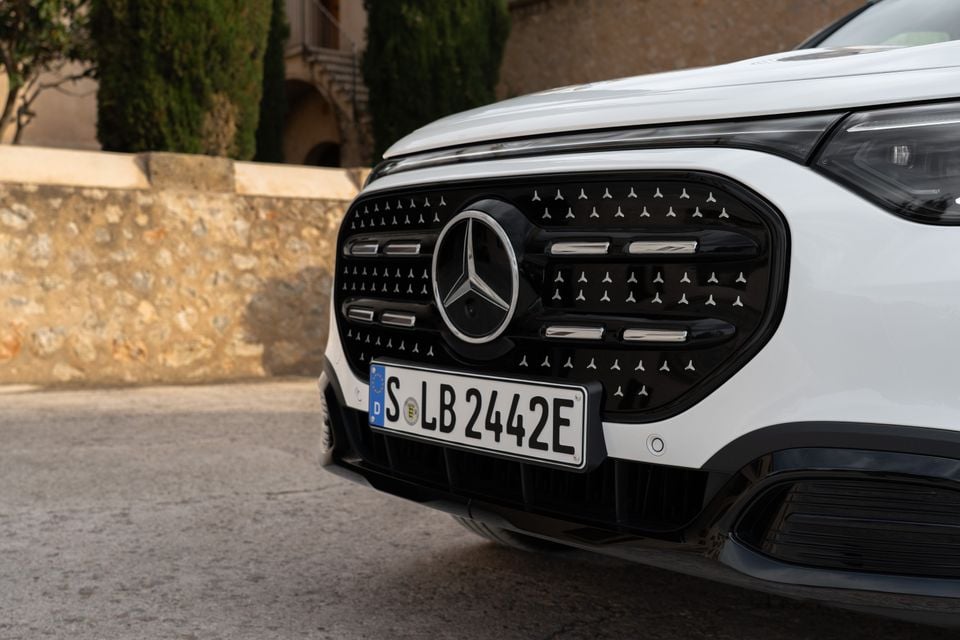
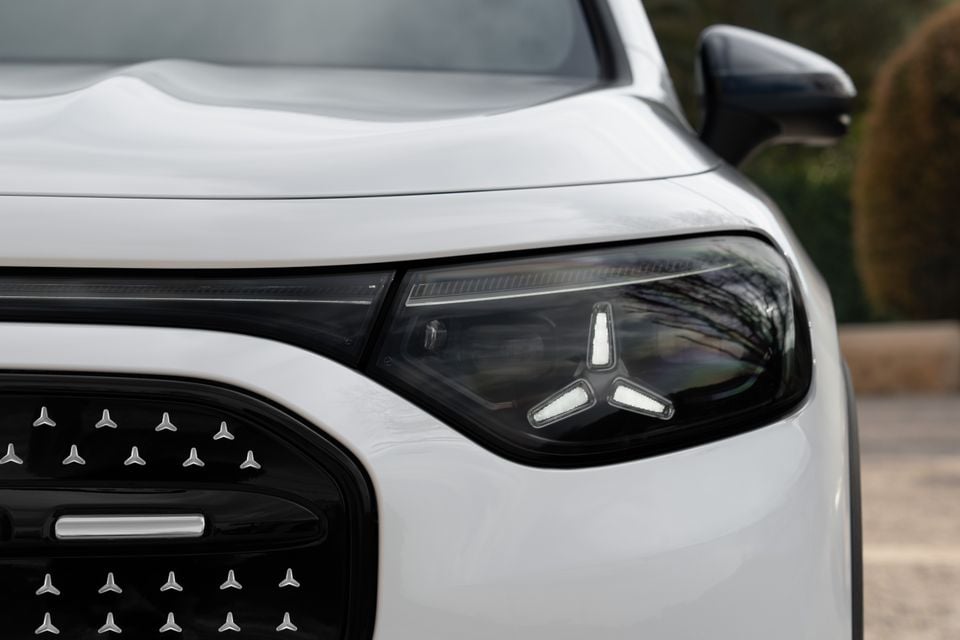
We kind of wonder whether Mercedes-Benz was so keen to smatter its three-pointed star logos everywhere on and in the car (including on the full-width light strips at both ends of the vehicle and on the dash trim if you don’t go for the maximum Superscreen array), just to remind you that, yes, it is a Benz you’re driving.
Ultimately, it’s a pleasant enough thing, and the ride quality is pretty decent across the board. So is the rolling refinement, as the GLB filters out wind and suspension noise effectively, although road roar can be a touch elevated on poorer surfaces.
There is a switch in the chassis depending on the size of wheels you go for, too. If Australian-market cars follow European-spec GLBs, then anything on 19-inch alloys or smaller will come with conventional, passive springs and dampers.
Stepping up to 20s instead gives the mid-size SUV adaptive shock absorbers, and with a very brief comparative drive in a 350 4Matic available at the end of the day, we can tell you the GLB is improved with the more advanced suspension tech.
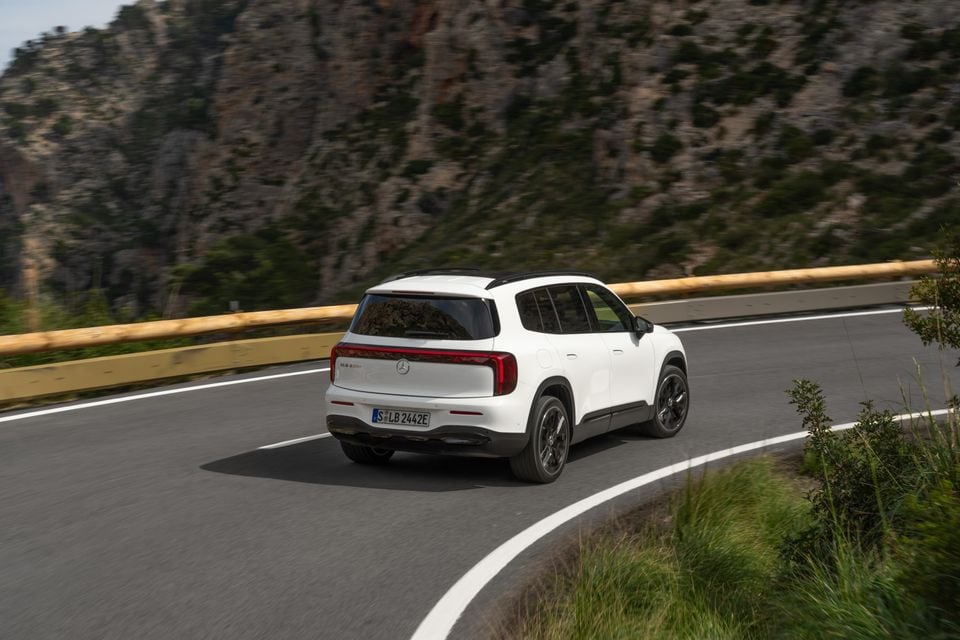
It just has a better level of vertical control in the wake of bumps with the adaptive shocks, preventing the feeling of the whole SUV getting up on its tiptoes, which manifests in the 250+ when you drive over larger lumps and through deeper compressions at speed.
Neither version of the GLB Electric is a hoot in the corners, though. It’s a polished thing, with not too much lean and positively weighted steering being highlights of its handling. But there’s not much feel through the wheel for the driver, nor is there much joy to be extracted by trying to hustle 2.7 tonnes of electric SUV through corners like it’s a hot hatch.
The GLB may be relatively small on the outside for a seven-seater, but it’s in no way a light-on-its-feet or thrilling thing to pilot on more challenging roads.
Of course, its serene and easy-going manners in day-to-day driving are more of a boon and what should draw in interested customers, while the 200kW GLB 250+ we’re focusing on here provides more than enough satisfying acceleration urgency for most reasonable needs. We can’t imagine the 350 4Matic will be strictly necessary for most buyers unless they need all-wheel drive.
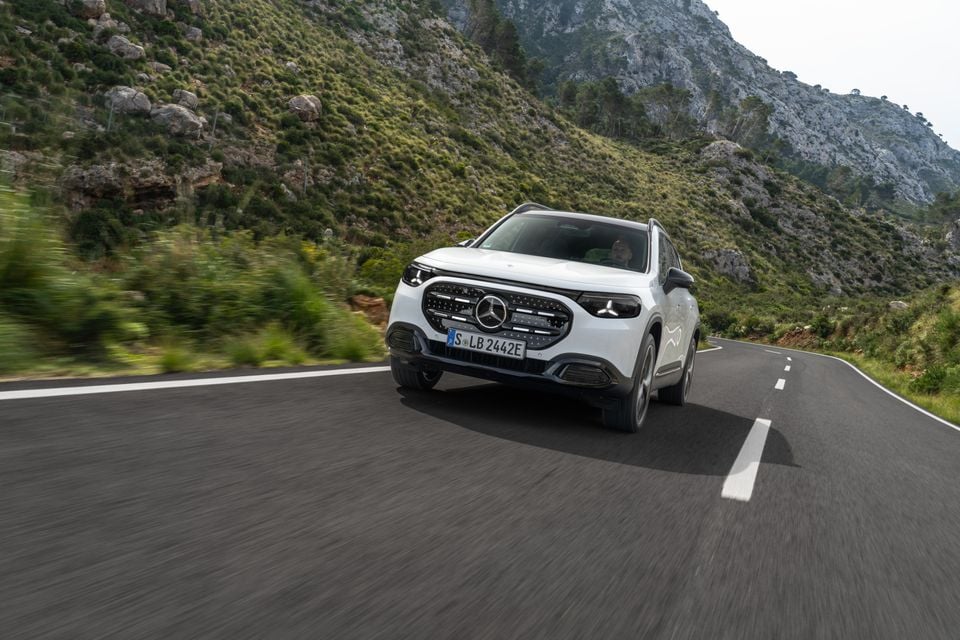
We also achieved an energy consumption figure within the official range on a fairly untaxing test route in warmer conditions, but we were nearer the top of the quoted WLTP banding at 18.1kWh/100km.
If you could replicate that sort of efficiency on a regular basis, you’d be looking at more like 470km per full charge of the GLB’s battery, rather than in excess of 600km.
To see how the Mercedes-Benz GLB lines up against the competition, check out our comparison tool
We’re still awaiting Australian specifications for the Mercedes GLB 250+, but if it were to follow the European market's AMG Line Executive grade, then it should be relatively generously equipped:
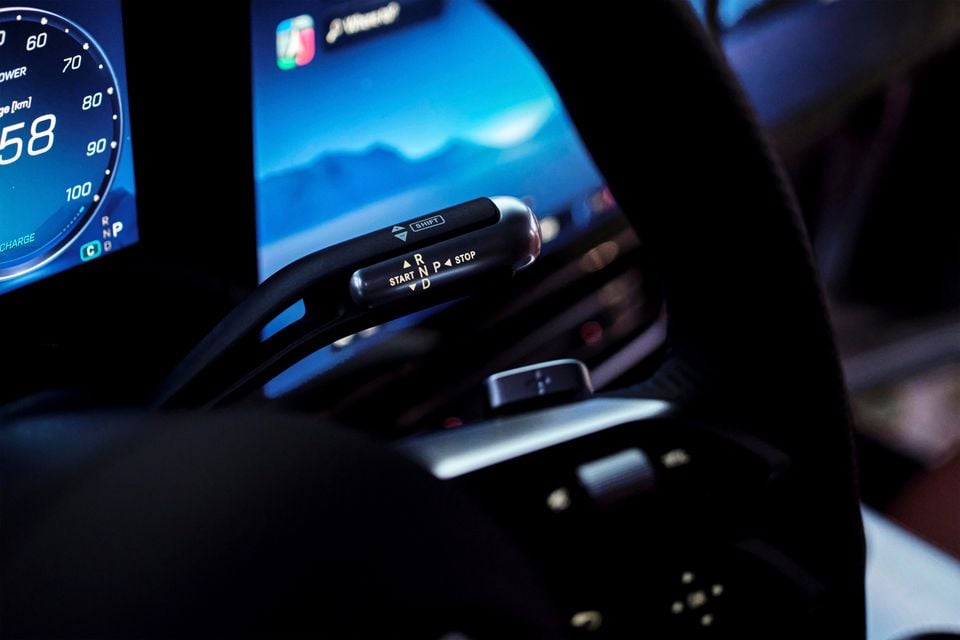
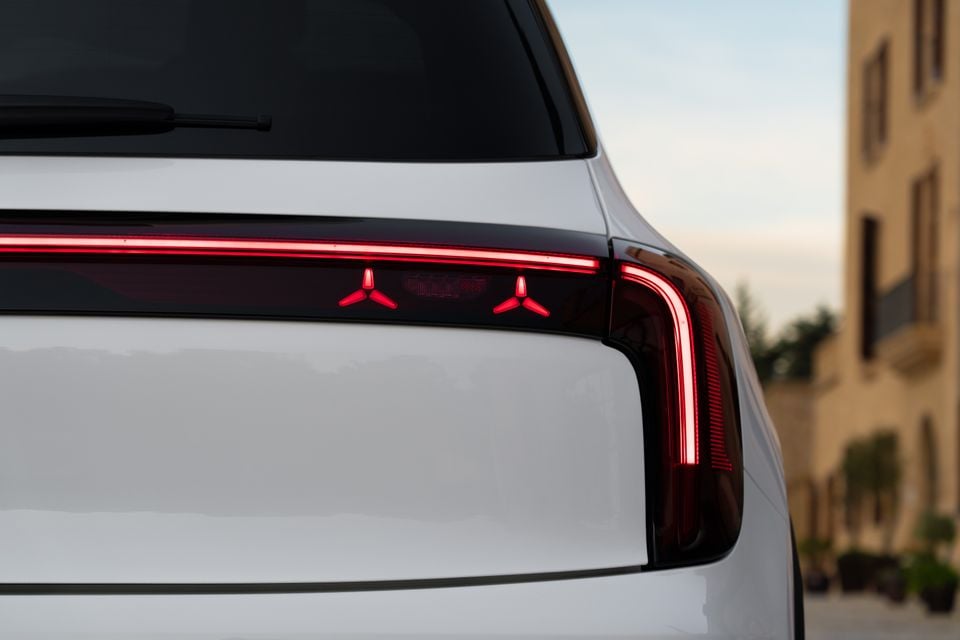
2026 Mercedes GLB Electric 250+ standard equipment highlights:
To see how the Mercedes-Benz GLB lines up against the competition, check out our comparison tool
Curiously, the Mercedes GLB hasn’t been put through its paces yet by either Euro NCAP or ANCAP.
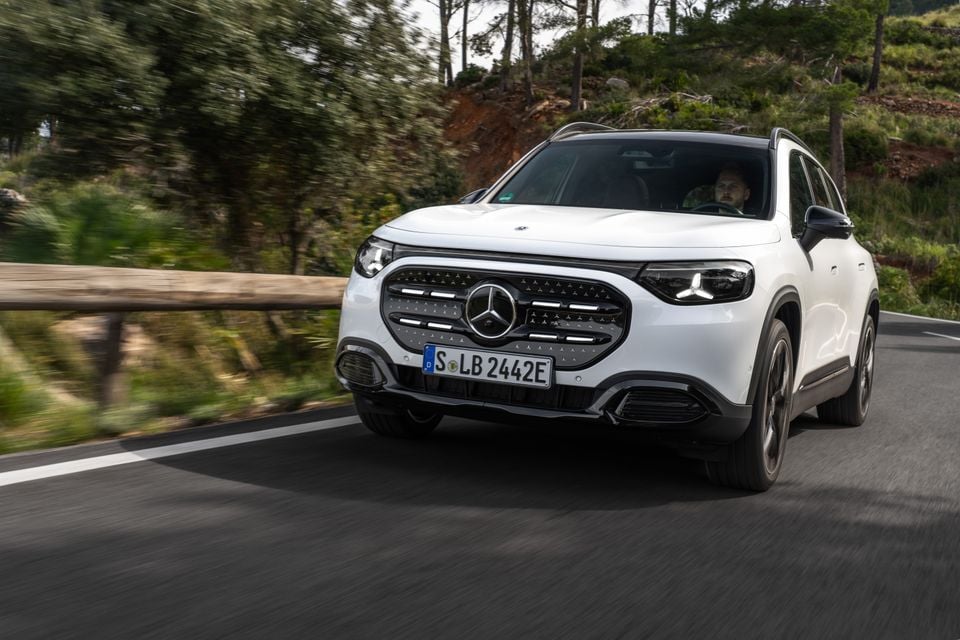
CarExpert brings together reviews, research tools and trusted buying support, guiding you from research to delivery with confidence.
It comes with a healthy list of advanced driver assistance systems though, and sturdy construction on the Mercedes-Benz Modular Architecture (MMA) chassis.
Recent Mercedes-Benz models, including the related CLA, as well as the CLE and E-Class, have picked up full five-star ratings when subjected to the stringent safety testing, so we’d expect the family-oriented GLB Electric to score similarly highly when it's assessed.
To see how the Mercedes-Benz GLB lines up against the competition, check out our comparison tool
Mercedes-Benz Australia has offered a five-year, unlimited-distance warranty for all its new vehicles since 2020, plus five years of roadside assistance, and the GLB Electric’s nature should mean longer service and maintenance schedules than the related hybrid models, too.
To see how the Mercedes-Benz GLB lines up against the competition, check out our comparison tool
There’s much here to commend about the new Mercedes GLB Electric 250+, which is an impressive packaging feat and one that’s very comfortable to drive.
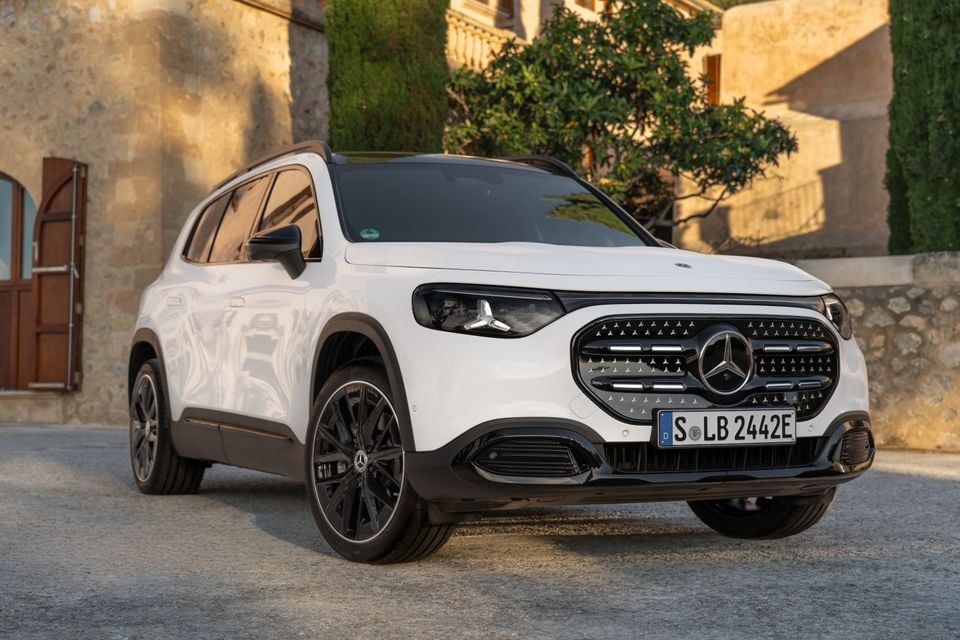
It’s a serene and largely subdued way to get about, while its large battery and seven-seat status – even if the third-row accommodation is cosy in the extreme – both serve to give it commendable realistic range, plus a clear identity in the wider electric SUV market.
Our only problem is that the driving experience it serves up, while undeniably cultured, doesn’t in any way suggest you’re in a Mercedes-Benz. Blank off all the three-pointed star emblems here, and you could be in practically any other high-riding EV once you’re on the move.
So when you factor in a likely starting price approaching $100,000 in Australia, the question will be whether the new Mercedes-Benz GLB can justify its premium positioning in the marketplace amid a sea of mid-size electric SUV rivals, premium and otherwise.
Interested in buying a Mercedes-Benz GLB? Let CarExpert find you the best deal here
Click the images for the full gallery
CarExpert brings together reviews, research tools and trusted buying support, guiding you from research to delivery with confidence.
Quickly see how this car stacks up against its competition. Select any benchmark to see more details.
2026
$73,833
2026
$73,833
Add CarExpert as a Preferred Source on Google so your search results prioritise writing by actual experts, not AI.
CarExpert
1 Day Ago

Tace Clifford
4 Days Ago

Matt Campbell
4 Days Ago

Marton Pettendy
9 Days Ago
Marton Pettendy
11 Days Ago

James Wong
12 Days Ago
Add CarExpert as a Preferred Source on Google so your search results prioritise writing by actual experts, not AI.
# Based on VFACTS and EVC data
† Displayed prices are based on the drive-away price of the vehicle, which includes delivery charges, registration fees, number plates, and applicable road taxes, based on a Sydney location. However, prices may vary between states and territories, and additional costs such as compulsory third party (CTP) insurance, dealer delivery fees, and optional extras are not included. These prices are subject to change without notice and may not reflect current market pricing or dealer offers.
 Automotive Vehicle Spec Data & 4K images Powered by JATO Dynamics Ltd