Lamborghini says emotion and drivability, not speed, define the modern supercar.
With electric vehicles including family sedans and SUVs now increasingly capable of the same brutal acceleration once associated exclusively with exotic supercars, the Italian automaker is instead focusing its efforts on making driving fast both easier and more exciting.
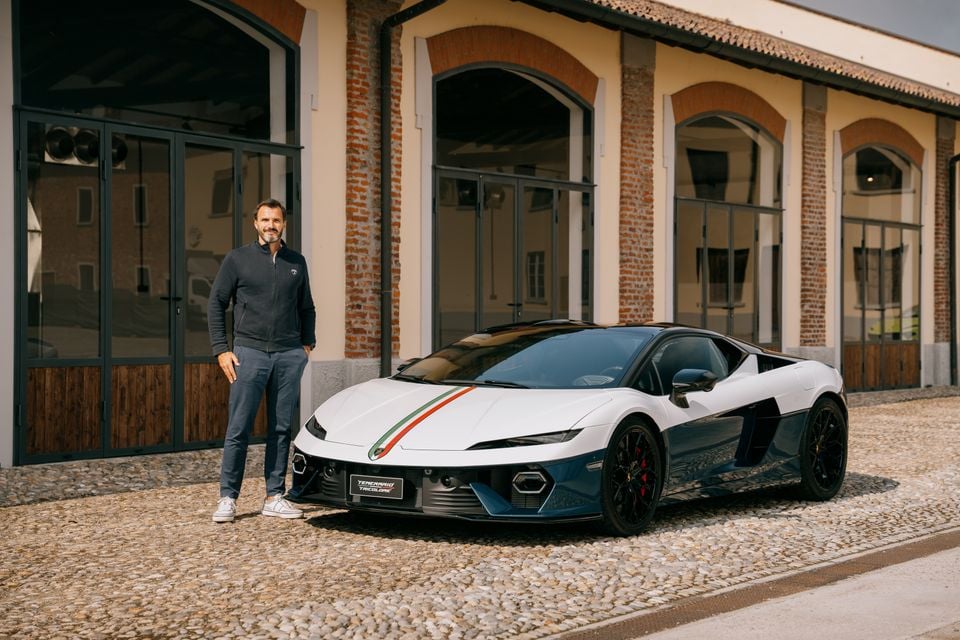
Exhibit A: the new Temerario, according to model line director Paolo Racchetti.
"Speed is still an important part of performance, but it's clear that it's necessary, not sufficient, for a car to be called a super-sports car," Mr Racchetti told CarExpert in Milan, Italy.
“It’s becoming more important [to focus on] the dynamic capabilities of the car, and maybe the level of performance… will be less relevant in the future.
"What a super-sports car must provide is not only acceleration and speed, but also emotion. That's why we went for a hybrid architecture, because at the end of the day you still have the turbocharged internal combustion engine able to rev to 10,000rpm, giving you the strong emotionality that only mechanics can provide.
"At the same time, through hybridisation, we are emphasising performance, drivability and emotion. It's a philosophy that we think is working because it remains really connected to our DNA."
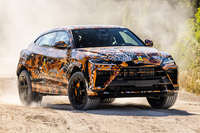
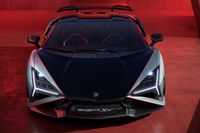
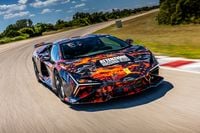
The Temerario, the 'entry-level' successor to the Huracán, is powered by the combination of a 4.0-litre twin-turbocharged petrol V8 and three electric motors producing a combined 677kW.
Lamborghini claims it'll sprint from 0-100km/h in just 2.7 seconds but, more importantly from a character perspective, it revs to over 10,000rpm – a first for a mass-produced supercar.
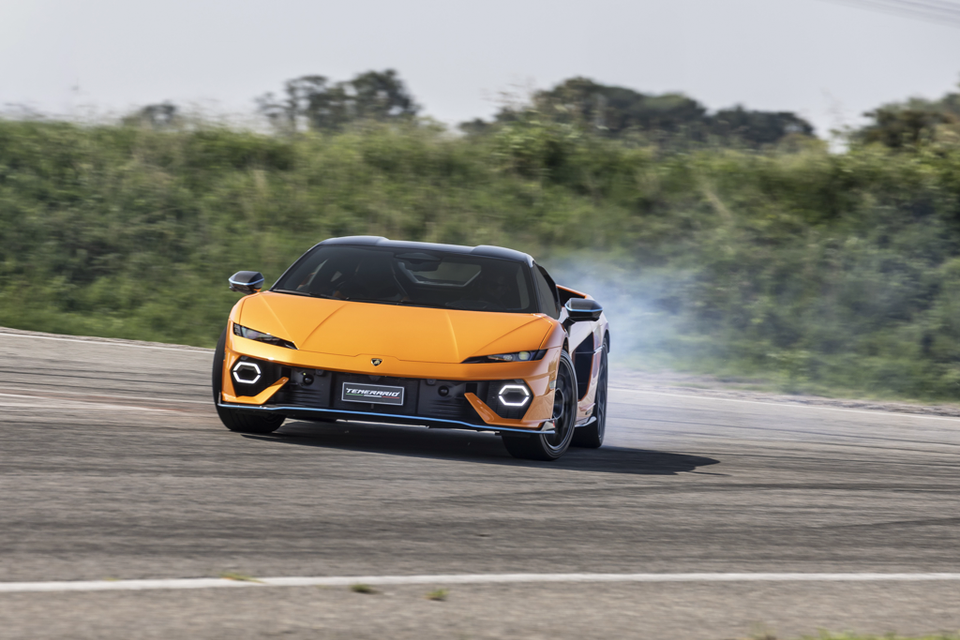
On the handling side, the two front e-motors can vary torque independently between the wheels, allowing the Temerario to actively influence yaw and cornering behaviour rather than simply using electrification for extra straight-line shove.
The system is highly configurable, contributing to 13 possible drive configurations, including a Drift mode with three levels.
"We want to provide cars that are really emotional, but hybridisation is also helping us to deliver the kind of performance you experienced in the Temerario, while widening the opportunities for characterisation and driving dynamics," explained Mr Racchetti.
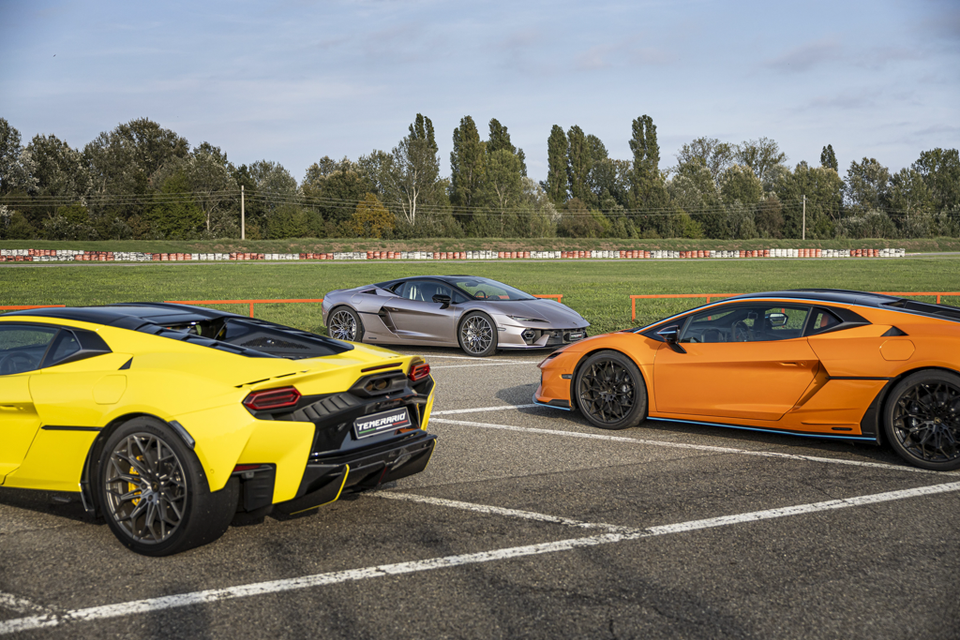
"You can have a car that can be a grand tourer, a rear-wheel drive car, an all-wheel drive car – really different kinds of driving dynamics.
"The secret behind everything here is LDVI 2.0. We have a brain inside the car that is the controller – the mastermind of all the other smaller brains managing the engine software, gearbox software, motor software, damping system and braking software.
"That's the secret. You're driving a car with this level of performance, but the car is really easy to drive and gives you a lot of confidence because the electronics are helping you achieve the performance in a seamless way.
"But maybe the most important thing is that we can emphasise emotion."
That philosophy also helps explain why Lamborghini remains reluctant to release a fully electric vehicle.
Earlier this year, Lamborghini CEO Stephan Winkelmann told CarExpert the decision had been made to postpone Lamborghini's first EV indefinitely, confirming the brand’s fourth model – a 2+2-seat GT car likely based on the Lanzador concept – will follow the rest of the lineup in adopting plug-in hybrid power.
“We are not selling mobility – you don’t buy a Lamborghini because you have to go from A to B every day,” Mr Winkelmann said at the time.
Despite the democratisation of high performance, Lamborghini has now recorded five consecutive years of record sales, including 10,747 deliveries in 2025.