




Derek Fung
Leapmotor B03: Bargain EV approved for sale in Australia
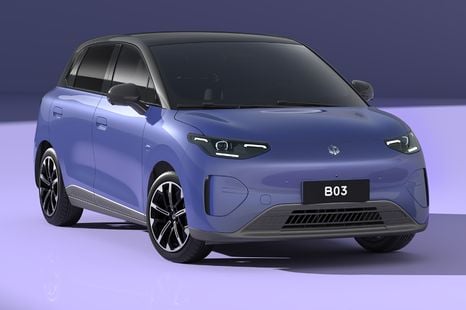
Those looking to get into an EV for the least money possible could soon have another option with the Leapmotor B03 receiving local certification.
12 Hours Ago

Publisher
Leapmotor wants to be seen as more than another Chinese electric vehicle (EV) brand chasing customers with low prices.
During a media tour in China last week, CarExpert was shown how Leapmotor is trying to bring more of the EV value chain in-house, by covering battery packs, battery management systems, electric drive units, motor controllers, software, production analytics, and energy storage.
That doesn’t automatically make Leapmotor unique. Tesla, BYD, Hyundai, Toyota, Volkswagen, and others are all localising or integrating more of their EV supply chains. But the level of vertical integration Leapmotor is claiming is notable for a relatively young automaker.
CarExpert can save you thousands on a new car. Click here to get a great deal.
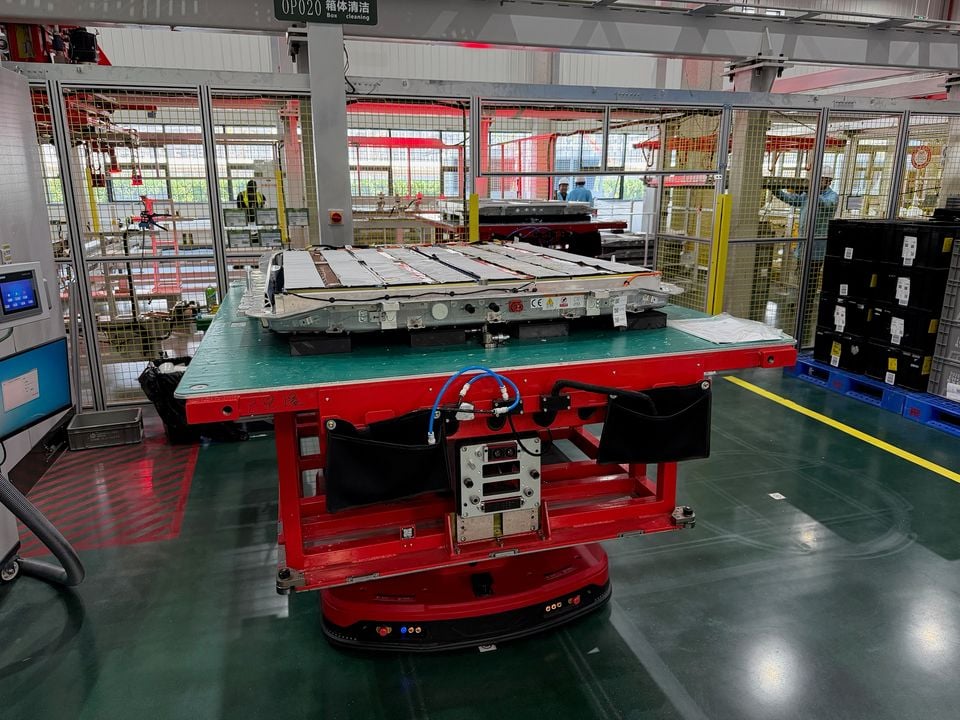
The company says its LeapEnergy battery division is responsible for high-voltage batteries, energy storage systems, battery management systems, cell-to-chassis technology, cloud monitoring, battery lifecycle management, and parts of the energy-storage business.
Its LeapPower division covers e-drives, motor controllers, stators, and rotors. The core message the Chinese brand wants to get out is that Leapmotor wants to own more of the expensive and complicated parts of an EV, not just design vehicles around them.
This is good for its customers because it means the company has far more control over the products it sells.
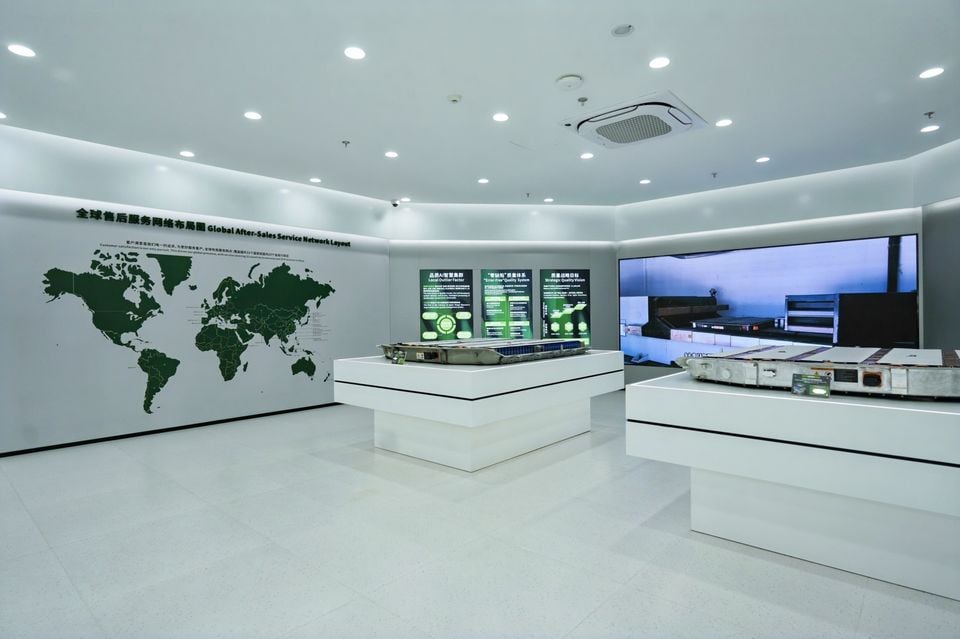
Stellantis invested about €1.5 billion (A$2.5bn) in Leapmotor back in 2023, when it established Leapmotor International, a Stellantis-led joint venture with exclusive rights to export, sell, and manufacture Leapmotor products outside Greater China.
The brand is already in Australia. The Leapmotor C10 mid-size electric SUV was launched here in late 2024, followed by the extended-range electric vehicle (EREV) version dubbed the C10 REEV in 2025, and then the Leapmotor B10 small electric SUV in recent months with a starting price of $37,888 before on-road costs.
Leapmotor claims it delivered 613,756 vehicles globally in 2025, so while its volumes are not where some other Chinese giants are, it's growing fast across Europe and other markets.
| Area | Leapmotor claim |
|---|---|
| LeapEnergy Huzhou battery plant | Six production lines, 360,000 units of annual capacity, expandable to 720,000 |
| LeapEnergy Wuyi battery plant | Planned annual capacity of 1.72 million battery packs |
| LeapEnergy in-house manufacturing | Up to 90 per cent self-research and self-manufacturing depth |
| Battery packs delivered | More than 1 million to date |
| CTC-equipped vehicles | More than 400,000 vehicles |
| CTC cost reduction | Around ¥1000 per pack, or about A$203 |
| LeapPower Huzhou e-drive plant | 112,700 square metres; more than ¥200 million investment (A$41m); planned workforce of about 1250 people |
| LeapPower annual capacity | 1 million units (component capacity) after full commissioning |
| LeapPower automation | More than 60 per cent overall |
| Battery-pack quality target | Failure rate of one in 1,000,000 |
Leapmotor says LeapEnergy has one R&D centre in Hangzhou and major manufacturing sites in Huzhou, Jinhua, and Wuyi.
The Huzhou site has six production lines, a total line length of 260m, annual capacity of 360,000 units, and future expandable capacity of 720,000 units.
Leapmotor also claims the Wuyi site will become a “million-level” super-integrated battery factory, with annual capacity of 1.72 million vehicle battery packs.
The company says that site will make core battery-system components within the same industrial park, including cells, cases, liquid cooling plates, and cell connection systems.

Leapmotor claims this can reduce packaging and logistics costs by producing more of the battery system in one manufacturing ecosystem. That’s plausible in principle, but a lot remains to be seen.
The strongest theme at LeapEnergy was integration. Leapmotor says its battery team was established in November 2015, its first fully self-developed S01-Hyperion battery pack entered mass production in January 2019, and its T03 adopted cell-to-pack (CTP) technology in July 2021.
It says it launched cell-to-chassis (CTC) technology in April 2022, upgraded CTP to CTP 2.0 in December 2023, and launched CTC 2.0 in January 2024.
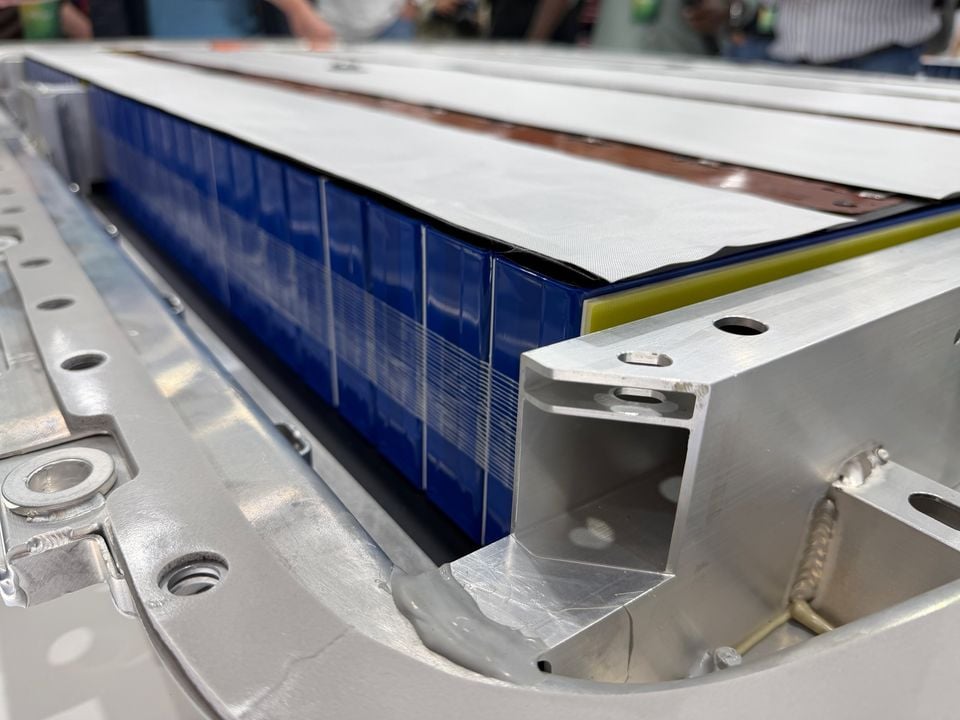
The basic idea behind cell-to-chassis is simple. Rather than treating the high-voltage battery pack as a separate box bolted into the car, the battery structure is more directly integrated into the vehicle body.
Leapmotor claims this saves space, reduces weight, improves pack volume utilisation, and increases body stiffness.
| Claimed CTC benefit | Leapmotor Figures |
|---|---|
| Vertical space saved | 8-15mm |
| Battery space increase | 14.5 per cent |
| Weight reduction | 10 per cent |
| Usable capacity increase | 10 per cent |
| Driving range increase | 15 per cent |
| Torsional stiffness increase | 25 per cent |
| Bending stiffness increase | 45 per cent |
| Battery capacity compatibility | 35-120kWh |
| Voltage compatibility | 400V and 800V |
| Fast-charging compatibility | 2.2C to 4C |
| Claimed installed base | More than 400,000 vehicles |
The C-rate refers to how quickly a battery can theoretically be charged relative to its capacity. For example, a 67.1kWh battery charging at 2.2C would be receiving about 148kW, while 4C would be about 268kW.
In real-world use, the actual charging speed depends on the state of charge, battery temperature, charger output, and how long the battery can sustain its peak charging rate.
Leapmotor says the battery-to-body connection uses more than 20 fastening bolts and more than 70 sealing bolts, with anaerobic adhesive and robotic dispensing used to improve structural integrity.
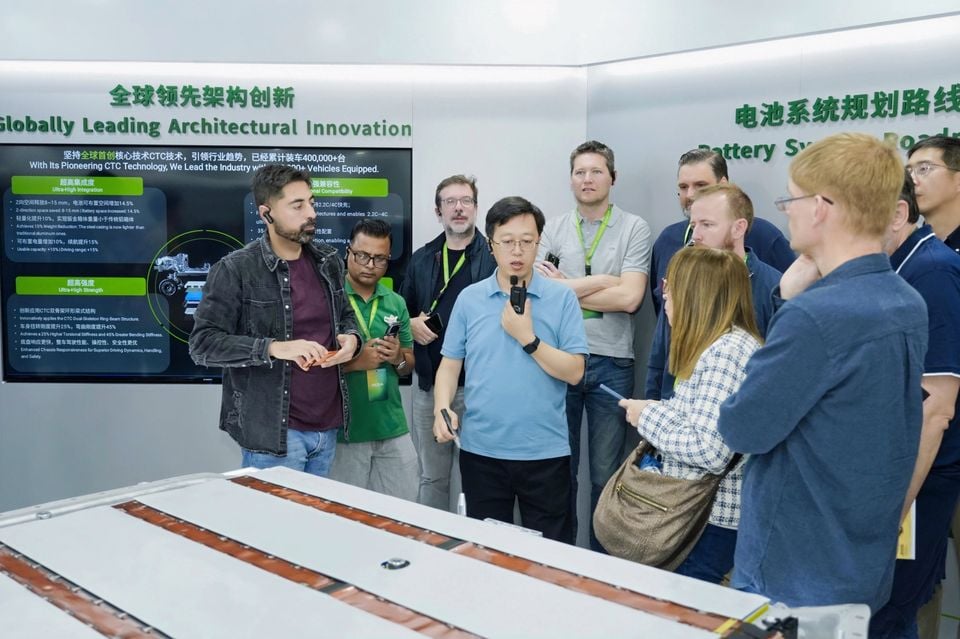
The company also showed a CTC 2.0 Plus battery with a 67.1kWh capacity and 166Ah cell capacity. Development began in December 2022 and it entered production in April 2025. That 67.1kWh capacity is what you find in the Australian-market B10 Design LR.
| Battery system | Timing | Voltage and charge-rate claim | Quick-charge claim | Chemistry | Volume utilisation claim |
|---|---|---|---|---|---|
| CTP 1.0 | 2021 | 400V, 1C | 30 minutes | LFP and NCM | At least 73 per cent |
| CTC 1.0 | 2022 | 400V, 1.2C | 30 minutes | LFP and NCM | At least 75 per cent |
| CTP 2.0 | 2023-24 | 400V, 2.2C | 15 minutes | LFP and NCM | At least 75 per cent |
| CTC 2.0 | 2024-25 | 800V, 2.2C | 15 minutes | LFP and NCM | At least 78 per cent |
| CTC 2.0 Plus | 2025-26 | 1000V, 3C | 12 minutes | LFP, NCM, and LMFP | At least 81 per cent |
| CTC 3.0 | Future roadmap | 1000V, 4C | 8 minutes | High-nickel NCM, graphite and silicon, lithium | At least 84 per cent |
In simple terms, LFP is generally cheaper and more durable but less energy-dense, NCM is generally more energy-dense but more expensive, LMFP aims to improve on LFP by adding manganese, and high-nickel NCM pushes further towards higher energy density but can be more complex and costly to manage.
Leapmotor’s claimed direction is toward higher-voltage, faster charge rates, better packaging efficiency, and broader chemistry support.
The Wuyi battery plant is one of Leapmotor’s clearest statements of manufacturing ambition.
Leapmotor describes it as the “world’s first million-level super integrated battery factory”, with planned annual capacity of 1.72 million vehicle battery packs. The company says Phase I and Phase II are scheduled for production in July 2026.
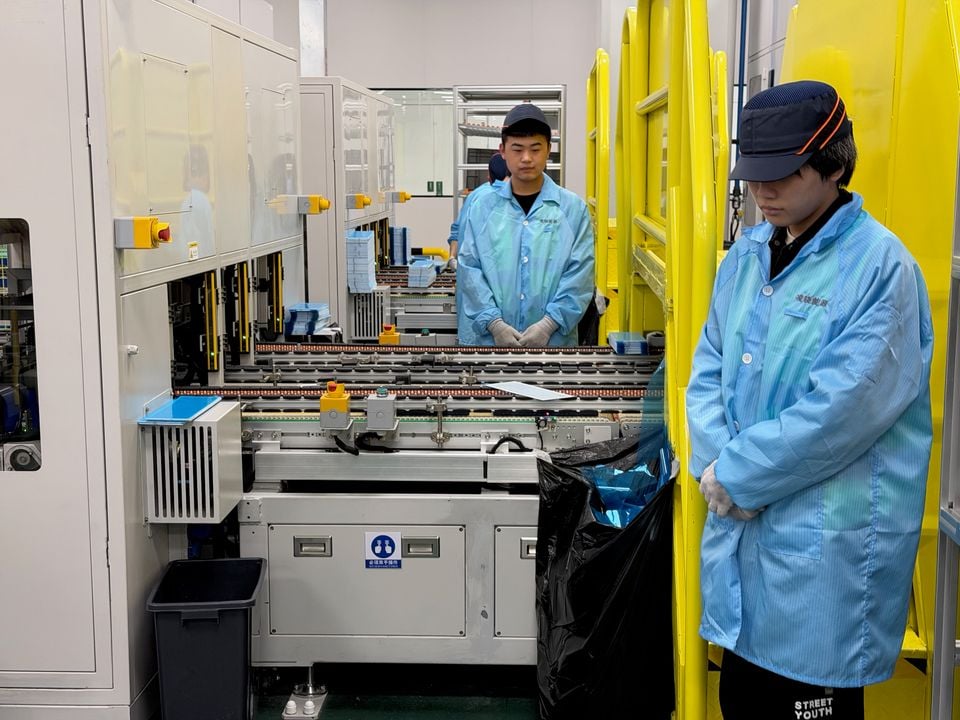
Leapmotor claims the Wuyi site will produce core battery-system components within the same industrial park, including cells, cases, liquid cooling plates, and cell connection systems.
It also claims this setup allows “zero packaging cost” and “zero logistics cost” for those parts. China’s technology capacity to engineer, manufacture and produce EV batteries at scale and at lower cost than anyone else is on full display here.
LeapEnergy isn’t limited to high-voltage traction packs though. Leapmotor claims it has developed a 12V lithium battery intended to replace a traditional lead-acid battery.
It says the battery has a 21Ah and 12.8V system specification, 268Wh capacity, an operating voltage range of 10-14.6V, dimensions of 175x175x130mm, and a weight of less than 3.56kg. Stuff you would usually find in a high-end performance car to save weight.
The company also claims the battery can support an in-car refrigerator for up to 12 hours, and that replacing lead-acid batteries could prevent 4000 tonnes of lead emissions annually.
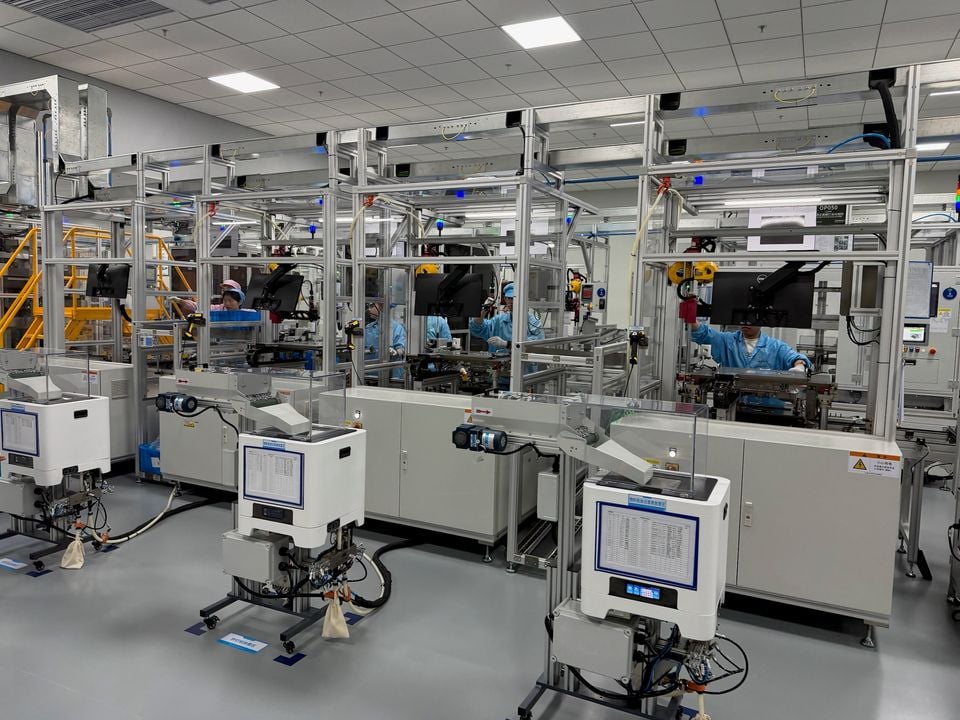
Leapmotor also claims it has developed a 48V mild-hybrid lithium battery with a 19.5Ah and 43.92V system specification, 856Wh capacity, operating-voltage range of 36-50.4V, dimensions of 359.3x174x150mm, and a weight of less than 11.5kg.
It says the 48V pack can discharge more than 21kW for 10 seconds and accept more than 23kW of charge for 10 seconds, with active liquid cooling and an operating temperature range of -40°C to 85°C.
The company also claims it uses three standard prismatic cell formats with 148mm, 208mm, and 300mm widths, which are compatible with battery-electric, range-extender electric, plug-in hybrid, and mild-hybrid vehicle platforms.
One of the more important pieces of hardware in LeapEnergy’s product portfolio is its '9-in-1' battery control system.
Leapmotor claims it integrates the battery management system and battery disconnect unit into a more compact controller. It says this reduces volume by 40 per cent and weight by 18.5 per cent.
| Claimed change | Leapmotor figure |
|---|---|
| Busbar use reduction | 33 per cent |
| Connection-point reduction | 25 per cent |
| Defect-rate reduction | 45 per cent |
| Maintenance-cost reduction | 60 per cent |
| Volume reduction | 40 per cent |
| Weight reduction | 18.5 per cent |
The system follows the same direction as the broader Leapmotor strategy, which is to use fewer separate parts, fewer connections, fewer interfaces, and more integration between hardware and software.
Leapmotor’s battery pitch isn’t just about cells and aluminium trays though, as a large part of the LeapEnergy story is built around data, monitoring, early-warning systems, and battery lifecycle management.
The company says it uses an intelligent battery monitoring system with fleet-level data covering vehicle count, model distribution, regional distribution, charging behaviour, pack types, and supplier data.
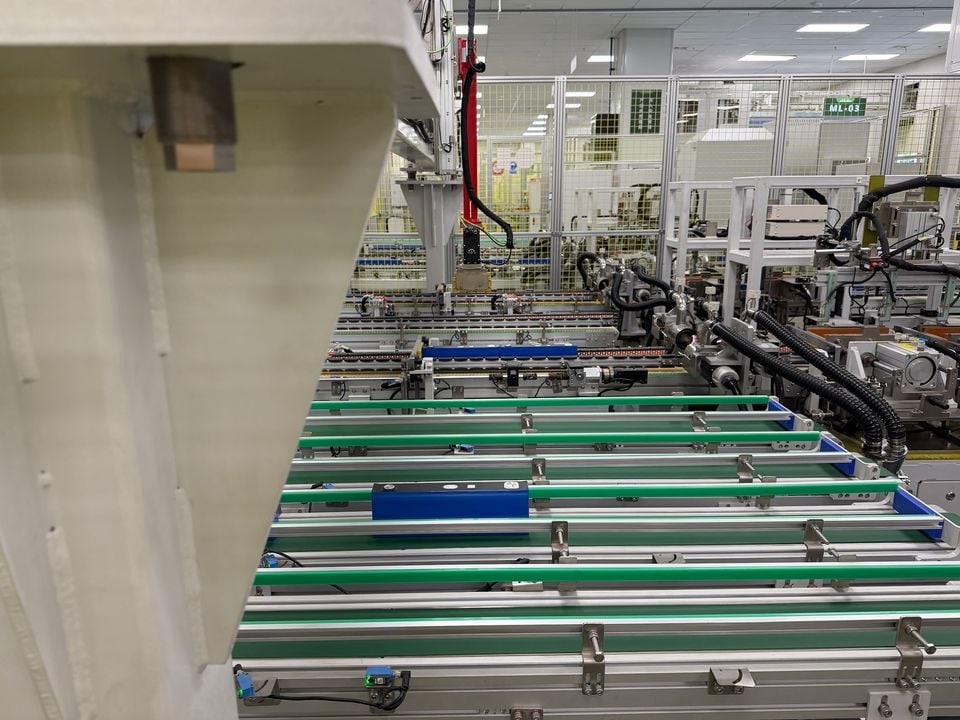
Leapmotor also claims it has developed a cloud-hosted digital twin platform that can localise and analyse battery degradation down to individual-cell level, track battery faults from initiation through their evolution, and use 24 temperature sampling channels to simulate temperature detection across 256 cells.
It also claims it has a multi-dimensional thermal runaway early-warning system that can identify at-risk vehicles with an early-warning rate of up to 95 per cent and provide warnings more than one month in advance. This would be a very welcome feature if it works.
Thermal runaway prediction is a high-stakes area of EV battery management and, if done well, may help a lot of EV skeptics make the jump.
The company also claims its self-discharge early-warning system has been running stably for more than 24 months, with manually reviewed warning effectiveness exceeding 98 per cent.
Leapmotor says its quality-control story leans heavily on artificial intelligence. LeapEnergy uses an – and stay with us folks – 'Astra Nexus AI Quality Cluster' based on a Local Outlier Factor algorithm.
The company says this enables end-to-end intelligent processing of quality data, including abnormality analysis, quality issue management, layered audit management, and statistical process control.
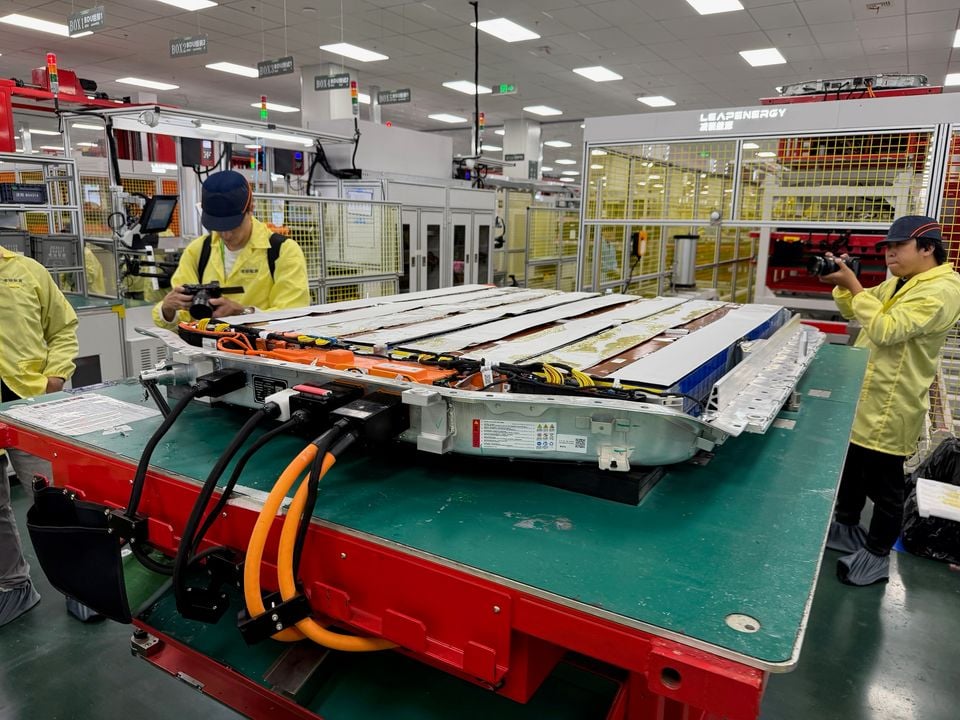
Leapmotor also claims it was the first in the industry to apply Alibaba’s Tongyi Qianwen large language model to a quality-management system.
It says its Local Outlier Factor algorithm reduced the rate of issues occurring within the first three months of service (3MIS) from 0.3 to 0.1 per cent.
LeapEnergy’s stated quality objective is to reduce battery-pack failure rates to one in 1,000,000. It also refers to an “error-free” quality system with four pillars: zero-defect design, zero component failure, zero-defect manufacturing, and zero customer complaint.
This is the kind of language every automaker uses in some form. The more useful detail is in the way Leapmotor says its production lines operate.
Leapmotor says its Huzhou module line has up to 90 per cent automation, integrates a Manufacturing Execution System, and uses error-proof assembly, 100 per cent inspection, and full data traceability.
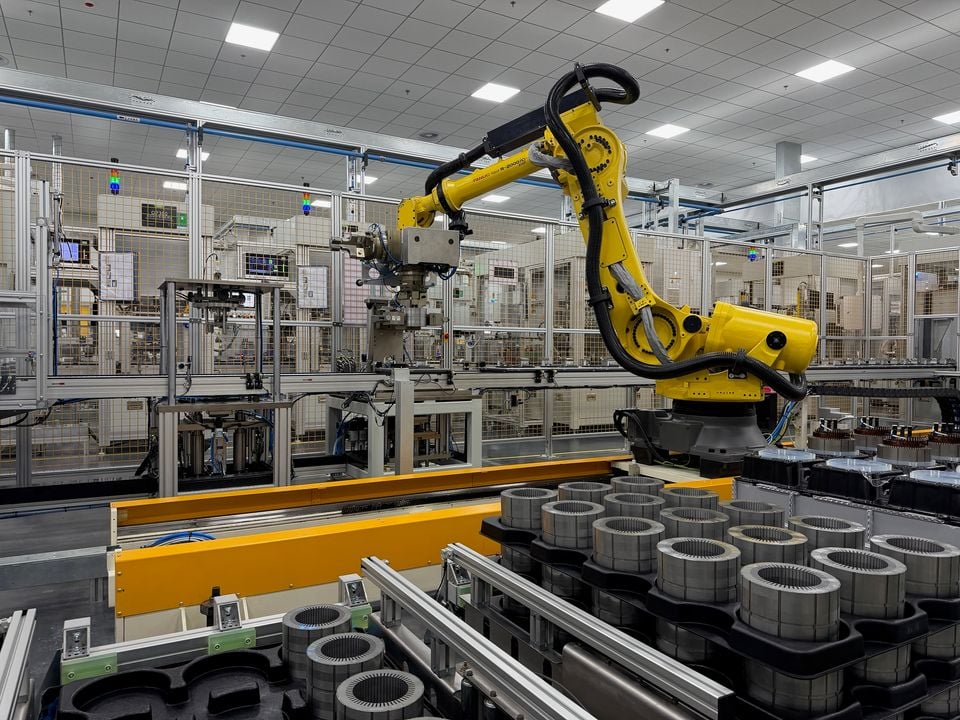
The company says its pack line, designed for CTC integrated frame-pack components, has up to 60 per cent automation and uses plate-chain lines, roller conveyor lines, and automated guided vehicles, again with MES integration and 100 per cent inspection.
These are all big claims and a factory can have strict controls and still need years of customer-use data before long-term durability is properly understood, so the jury is out on its objective error-free rate for now.
Leapmotor has also developed residential, industrial, commercial, and containerised energy-storage systems. Its residential energy-storage system links a photovoltaic setup, distribution box, meter, grid connection, smart energy platform, power conversion system, and battery storage cabinet.
Its industrial and commercial energy-storage cabinets are rated at 125kW and 261kWh each. Leapmotor says the use cases include self-generation and self-consumption, integrated storage and charging, peak shaving and valley filling, and emergency backup power.
The company’s container energy storage system uses battery containers rated at DC 1331.2V, 314Ah, and 5015kWh, linked to 2.5MW inverter-booster units and a high-voltage access cabinet before connecting to grid, cloud, and energy-management systems.
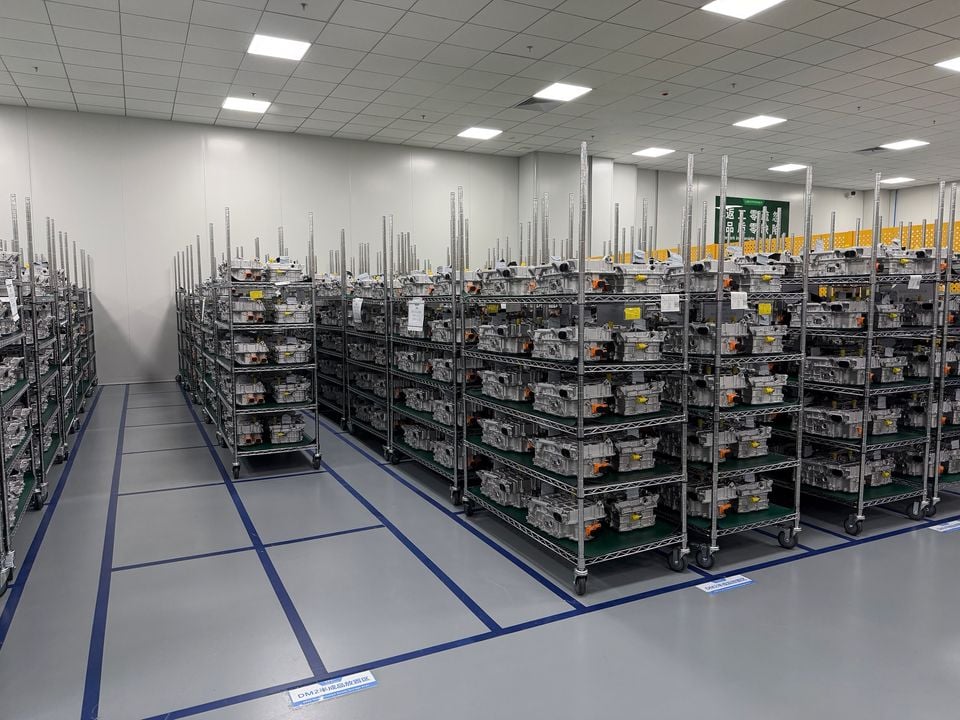
According to the Chinese brand, it has a battery lifecycle system covering cells, manufacturing, packs, new energy vehicles, resale-value assessment, decommissioned batteries, cascaded energy-storage use, dismantling, and planned in-house recycling and raw-material recovery.
If LeapEnergy is about storing energy, LeapPower is about turning it into motion. Leapmotor says its LeapPower e-drive plant in Huzhou covers a massive 112,700 square metres.
Construction officially started in April 2025 and the first product rolled off the line seven months later in November 2025, such is the pace at which the Chinese industrial complex moves.
The plant is focused on three core product areas.
| Product area | What it covers |
|---|---|
| E-drives | Integrated electric drive systems |
| Motor controllers | Power electronics and control units |
| Stators and rotors | Core electric motor components |
Leapmotor says the plant will ultimately have 10 production lines and annual capacity of one million units once fully commissioned.
Three lines are currently in mass production, five are being commissioned and due to enter mass production in the first half of 2026, and the final two are due for installation in the second half of 2026.
Leapmotor says the plant has an automation rate of more than 60 per cent and a designed Overall Equipment Effectiveness (OEE) of 80 per cent (OEE measures how effectively manufacturing equipment is being used by combining availability, performance, and quality).
| Line | Floor area | Workstations | Automation rate | Cycle time | Annual capacity |
|---|---|---|---|---|---|
| MCU Assembly Line 6 | 2208 square metres | 81 | 70 per cent | 60 seconds | 288,000 units |
| EDS Assembly Line 6 | 3683 square metres | 109 | 65 per cent | 60 seconds | 288,000 units |
The motor-controller line is divided into five sections: power module press-fit, box-body dispensing, power-supply assembly, MCU assembly, and MCU testing.
The EDS assembly line has seven sections: rotor sub-assembly, motor sub-assembly, shaft-system sub-assembly, gearbox assembly, EDS assembly, MCU assembly, and testing.
Leapmotor says its production equipment includes servo tightening systems, servo press systems, robotic handling, smart cameras, leak-testing equipment, and end-of-line electrical testing.
The Chinese brand claims that its e-drive factory has a “zero defect quality” goal, with full-process foreign-matter control, full-process quality inspection, and AI models to analyse and warn of production defects.
If a problem can’t be resolved within 15 minutes, or if there are equipment, process-document, incoming-material or product-quality issues, Leapmotor says the process requires the line to stop and staff to call in the relevant team leader, process technician, quality-control staff, or supervisor.
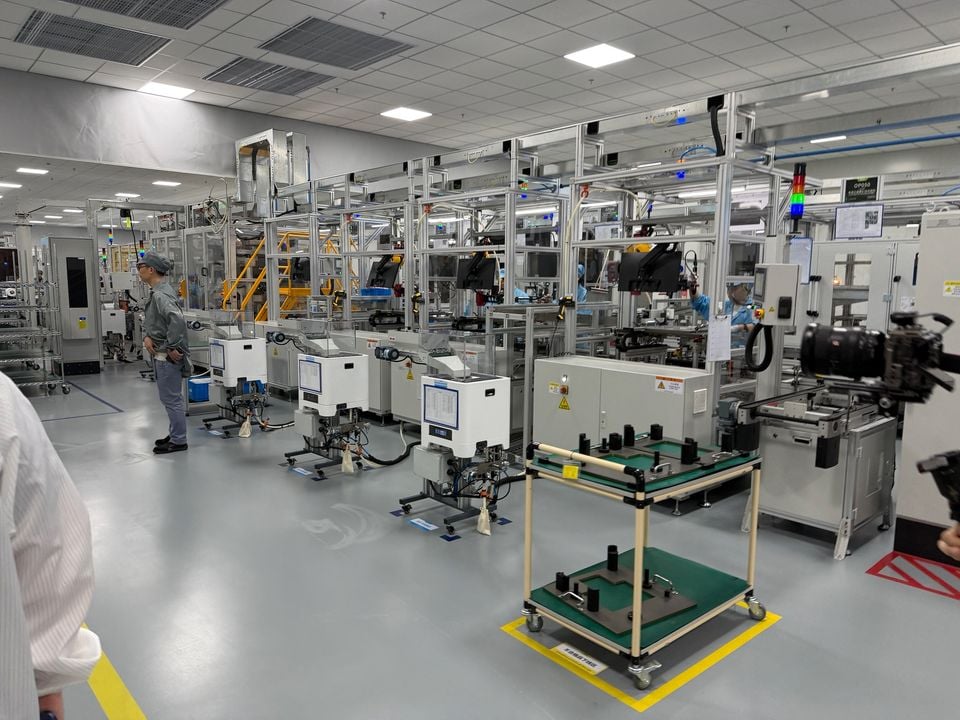
The escalation process moves through 15-minute, 30-minute, 60-minute and longer thresholds, escalating to supervisors, managers, and directors as required. This is a similar process to some Japanese brands.
Leapmotor’s manufacturing strategy sits somewhere between two worlds. On one side, it’s a young automaker trying to scale quickly. On the other, it’s trying to follow parts of the playbook used by vertically integrated giants such as Tesla and BYD.
Tesla remains an obvious benchmark. Its Q1 2026 update lists installed annual Model 3 and Model Y capacity of more than 950,000 units in Shanghai, more than 550,000 in California, more than 375,000 in Berlin, and more than 250,000 in Texas.
Tesla also lists 40GWh of Megapack battery capacity in California and 20GWh in Shanghai, while noting installed capacity is not the same thing as current production rate.
BYD is the most relevant Chinese comparison. BYD says it owns its entire vertical supply chain, including semiconductor production, and has long made batteries, electric motors, and power electronics central to its business model.
Hyundai Motor Group’s Metaplant America in Georgia is a different kind of benchmark. Hyundai says the plant has annual production capacity of 300,000 vehicles, with plans to expand that to 500,000 units. Its associated Hyundai Mobis facility manufactures 300,000 battery systems annually, while a joint battery cell plant with LG Energy Solution is targeting 30GWh of annual capacity.
Toyota’s battery plant in North Carolina provides another point of reference. Toyota says the nearly US$14 billion facility can produce 30GWh annually at full capacity and will house 14 battery production lines for hybrids, battery-electric vehicles, and plug-in hybrids.
Volkswagen’s Anhui EV plant in China is closer to Leapmotor’s China context. Volkswagen says the full-scale factory for pure-electric vehicles has maximum production capacity of 350,000 vehicles per year, while Volkswagen Group China says its 510,000 square-metre MEB plant has 1200 robots and the highest body-shop automation rate among Volkswagen facilities in China.
Its Huzhou battery capacity is smaller than Tesla Shanghai’s vehicle capacity and much smaller than CATL’s cell manufacturing scale. LeapPower's target of one million units annually is component capacity, not vehicle capacity. Its Wuyi battery-pack target of 1.72 million units annually is more ambitious, but production timing and real utilisation remain to be proven.
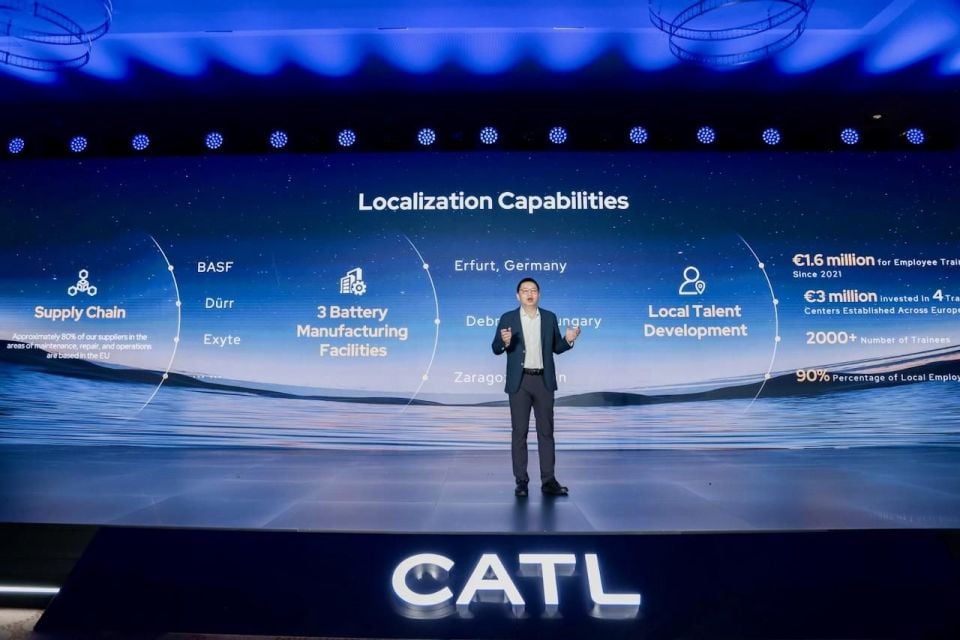
The bigger point is not that Leapmotor has the world’s largest factory. It doesn’t. It's that Leapmotor is trying to control more of the core EV systems such as battery packs, battery controllers, e-drives, manufacturing data, quality analytics, and parts of the battery afterlife.
For an automaker competing hard on price, that will make a huge difference. If done well, vertical integration can reduce cost, shorten development cycles, and give engineers more control over the finished product.
The risk is equally clear though. The more Leapmotor brings in-house, the more it needs to prove it can be world-class in each area.
For Australian buyers, the relevance isn’t whether Leapmotor has the most impressive factory presentation or claims, but whether the company’s in-house battery and e-drive strategy can translate into cars that are affordable, efficient, durable, safe, and properly supported after sale.
Leapmotor’s first Australian products are already competing on price. The C10 REEV brought a range-extender electric vehicle to this market for the first time, while the B10 launched with aggressive drive-away pricing and a 67.1kWh long-range battery option, and will likely also offer an REEV version soon.
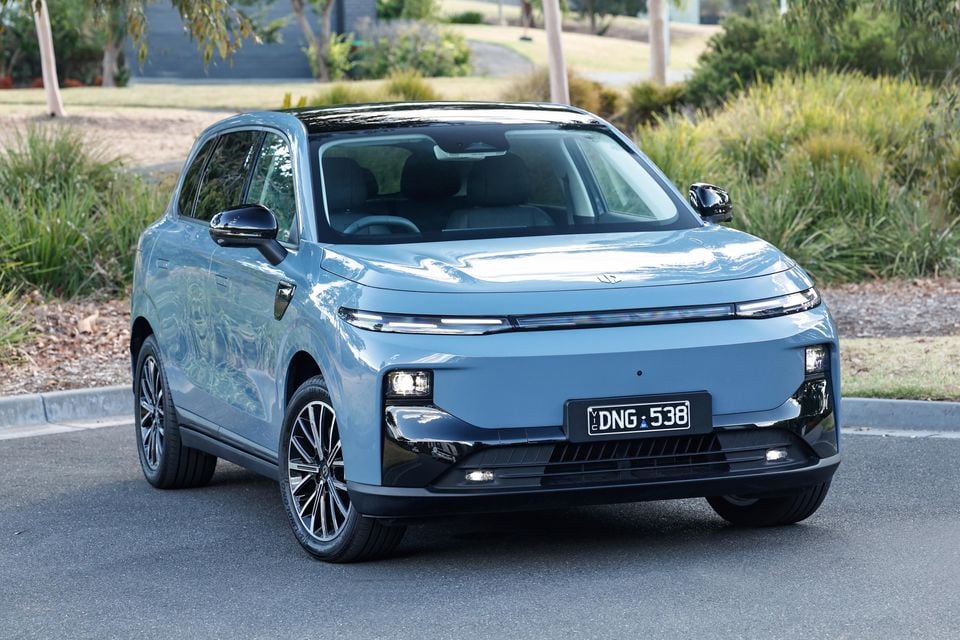
The factory tour suggests Leapmotor’s next step is to convince buyers, dealers, and regulators that it’s not just sourcing cheap EV components and packaging them well. It wants to show it controls the engineering depth behind them.
That’s a more serious story than the brand’s short history might suggest. It’s also a story that still needs proof outside Leapmotor’s own claims.
For now, the factory claims and our quick tour of the best parts should be treated as a window into what Leapmotor is trying to become, rather than proof it has already arrived.
Research cars in our Showroom, compare your options or let our New Car Specialists do the running around to find you a great deal.
Alborz Fallah is a CarExpert co-founder and industry leader shaping digital automotive media with a unique mix of tech and car expertise.
Derek Fung
12 Hours Ago

Ben Zachariah
13 Hours Ago

Josh Nevett
13 Hours Ago

Tace Clifford
14 Hours Ago

Max Davies
21 Hours Ago

James Wong
2 Days Ago
Add CarExpert as a Preferred Source on Google so your search results prioritise writing by actual experts, not AI.