




James Wong
Deepal parent confirms new Chinese brand for Australia – UPDATE
Changan will launch its Nevo brand in Spain next year, and it has plans to expand into other European markets and potentially Australia.
50 Minutes Ago

Publisher
The first interim emissions values under Australia’s New Vehicle Efficiency Standard (NVES) are starting to draw a line between the auto brands sitting on credits and the brands sitting on exposure, with accounting and auditing firm BDO warning the fallout may end up on dealer balance sheets if automakers push electric vehicles (EVs) harder than what the market is ready to absorb.
Presenting at an Australian Automotive Dealer Association (AADA) event this morning, BDO laid out an early scoreboard from the 2025 interim emissions value (IEV) period, and it shows some clear winners.
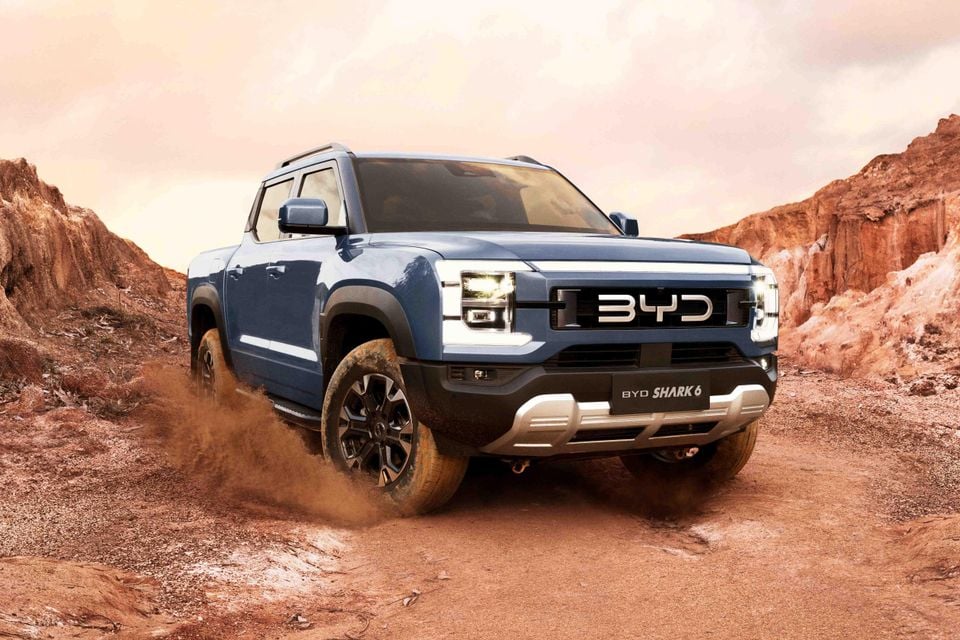
According to BDO’s data, BYD accrued 6,282,824 credits from 39,603 vehicle imports, Toyota accrued 2,890,625 from 115,504 imports, and Tesla accrued 2,212,093 from 13,907 imports.
CarExpert can save you thousands on a new car. Click here to get a great deal.
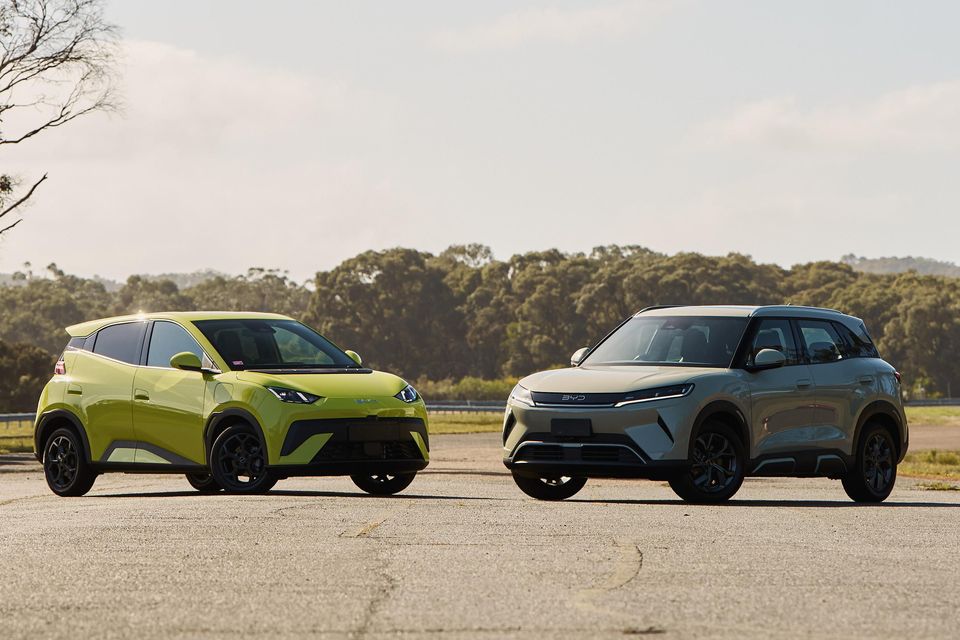
Kia, Geely, Volkswagen, Chery, Ford, GWM/Haval, SAIC, Isuzu Ute, BMW, Polestar, Zeekr and Volvo were also shown on the credit side.
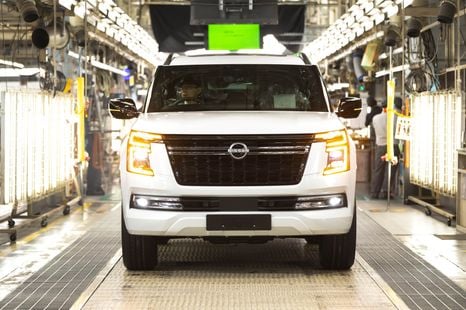
On the other side of the ledger, Mazda was shown with 508,517 liability units, Nissan with 215,261, Subaru with 139,635 and Hyundai with 84,563.
BDO’s table also attached a theoretical per-vehicle exposure figure to that liability, including $661 per vehicle for Mazda, $776 for Nissan, $529 for Subaru and $106 for Hyundai.
Further down the same list were Honda at $144 per vehicle, Land Rover at $273, Mahindra at $597, KGM at $567, Porsche at $1012, and GM at $2122.
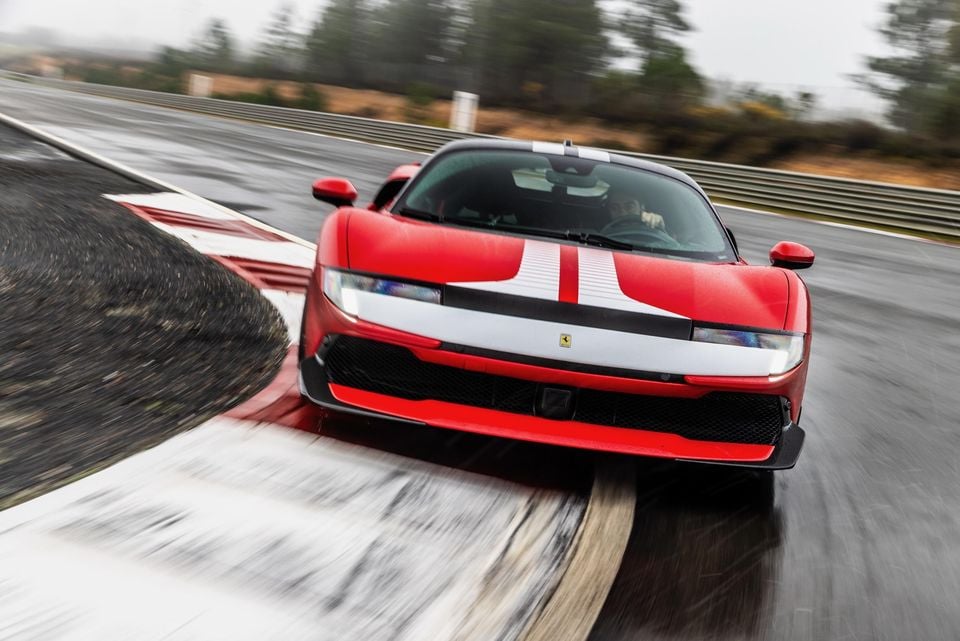
At the exotic end, Ferrari was shown at $7308 per vehicle, Aston Martin at $6608, Rolls-Royce at $6613, Maserati at $2342 and Alfa Romeo at $2081.
Across the liability table, BDO’s average worked out at $471 per vehicle. But that does not mean these brands are being hit with a bill today.
One of BDO’s closing slides stated that non-compliant OEMs have until December 31, 2027 to reduce their 2025 IEV to zero or below. Credits can be banked for up to three years or sold to other brands.
But the direction of travel is obvious.
The 2026 IEV measurement period is already underway and imposes stricter CO2 limits than 2025, before they continue to ramp up until 2029, so the pressure on auto brands is only going to continue.
And BDO’s modelling of the NVES credit market is where things start to get interesting.
On one slide, BDO says the 2025 IEV period generated 17.16 million credit units and 1,217,811 liability units. Using the maximum $50 penalty per liability unit, that works out to $60.9 million in potential NVES fines if brands do nothing to offset their position.
From there, BDO calculates a mathematical floor of $3.55 per credit.
A second scenario assumes not all credits will actually come to market, because some brands will keep them to hedge against future deficits. On that basis, BDO says the total amount of available credits may be closer to 10.3 million, which lifts the implied value to $5.87 per credit.
Using BYD as the example, BDO then calculates the financial advantage from selling credits could land somewhere between $562 and $972 per vehicle imported over the same IEV period.
That is a meaningful number in any market, but especially in one where dealer margins are already under pressure.
And that is the real story here.
BDO is not just saying NVES creates a compliance issue for OEMs. It is saying NVES is now shaping product strategy, stock mix, incentives and pricing, and that the dealer network is the place where those decisions will show up first.
One of the firm’s summary slides showed most OEMs have already pivoted their battery-electric and hybrid vehicle strategies to reduce the impact of NVES, and that market demand for those products will directly connect to dealer profitability.
The problem is the market is not moving evenly.
Another BDO slide showed EV market share reached 12.2 per cent in February, with the year-to-date EV share sitting at 10.5 per cent.
At the same time, hybrids have grown to account for 22 per cent of the market, up from 15 per cent last June, while non-hybrid petrol and diesel vehicles still made up 67 per cent of the market.
That matters, because BDO’s presentation argues that the EV sales growth Australia is seeing is heavily concentrated.
Its slide deck says 81 per cent of EV sales growth is being driven by Chinese brands. Tesla accounts for another 16 per cent, and all other brands combined account for just 3.0 per cent.
A separate BDO slide then goes further, arguing the addressable EV market for everyone outside the Chinese brands and Tesla is effectively closer to 3.0 per cent, despite total EV share sitting at 10.5 per cent.
In plain English, the market for EVs exists, but it is not evenly spread across all brands. That is where BDO sees risk for dealers.
Its “BEV strategies are causing economic imbalance in supply and demand” slide says petrol vehicles are still transacting at strong levels with low average incentives, while diesel vehicle volumes are being supported by higher incentives without blowing out margins.
Hybrids are still holding up too. BDO’s slide shows standard hybrids transacting at 101.96 per cent of recommended retail price on average.
Battery-electric vehicles are a different story.
BDO’s figures show EVs had a sales-weighted RRP of $63,564, an average incentive of $2560, and an average transaction price of $62,743, or 98.71 per cent of RRP.
The same slide says the EV sales-weighted RRP has dropped by 8.0 per cent in six months, while transaction prices have fallen 5.0 per cent, with lower price points from new entrants doing much of the heavy-lifting.
That is a long way from saying EV demand has collapsed. But it does suggest pricing is still doing most of the work.
And if NVES pushes more brands to lean harder into EVs than their own customer base is ready for, BDO’s argument is that dealers could end up staring at higher holding costs, more discounting, and weaker front-end margins just to clear stock.
That warning becomes more relevant when read alongside another BDO slide on dealer performance, which says new-car gross profit per unit is already in a negative trend at between $2250 and $3980, and that inventory management with an EV focus should be a priority.
BDO also argues the brands best placed to handle NVES are the ones with strong market share, mature dealer networks, better profitability, and developed service operations.
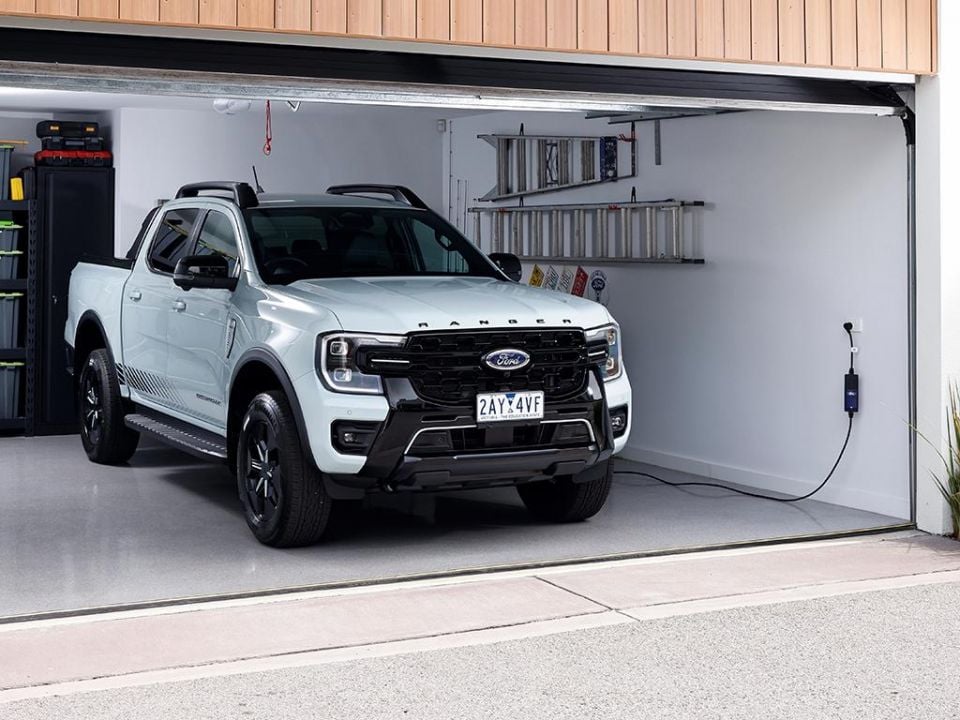
Its slide specifically says large, mature networks such as Toyota’s, Mazda’s and Ford’s, along with dealers that have deeper roots in their primary market area (PMA), will be better placed to defend against price rises and supply constraints.
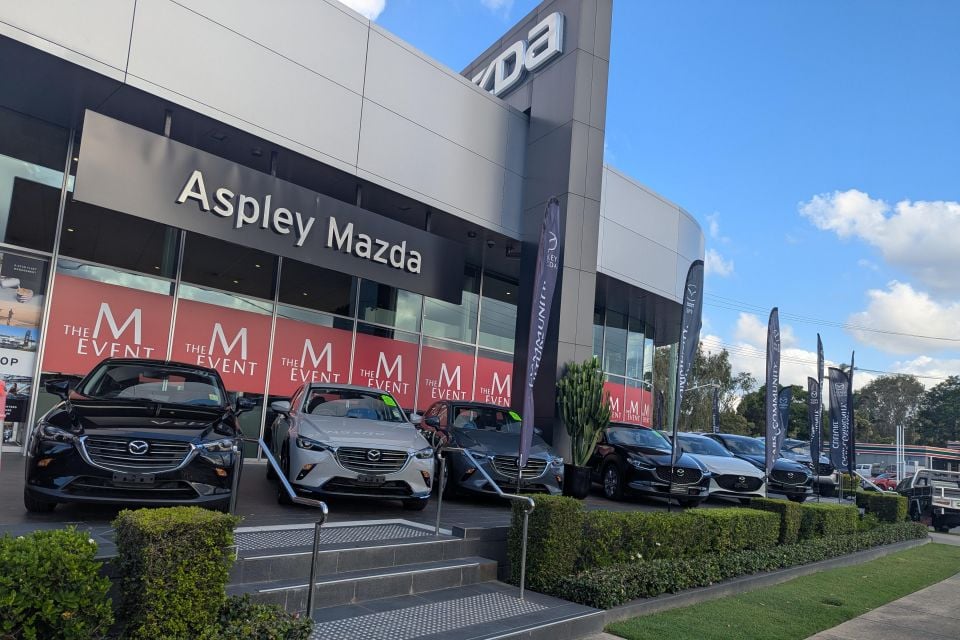
Smaller auto brands with thin market share and immature dealer networks may not be in the same position. That is why the first IEV tables matter. They show the brands with a buffer, the brands with early exposure, and the size of the financial incentive for one group to sell credits to the other.
What happens next is less clear. If the credit market settles near the bottom of BDO’s range, it becomes a manageable cost of doing business.
If it rises materially, the pressure grows to either pay competitors for credits, pay the government, or push even harder on EV and hybrid mix to get back under the line.
None of those options are painless. And for dealers, that means NVES is no longer a policy discussion happening somewhere above them.
It is starting to shape the type of cars being sent to showrooms, the pricing needed to move them, and the profit margin left once they are gone.
MORE: Australia’s new vehicle emissions regulations delivering results, says Bowen
MORE: Almost 20 auto brands missed CO2 targets in Australian Government’s first NVES results
Research cars in our Showroom, compare your options or let our New Car Specialists do the running around to find you a great deal.
Alborz Fallah is a CarExpert co-founder and industry leader shaping digital automotive media with a unique mix of tech and car expertise.
James Wong
50 Minutes Ago

Max Davies
2 Hours Ago

Damion Smy
13 Hours Ago

William Stopford
15 Hours Ago

Dave Kavermann
15 Hours Ago

Matthew Hansen
15 Hours Ago
Add CarExpert as a Preferred Source on Google so your search results prioritise writing by actual experts, not AI.