



Deputy News Editor
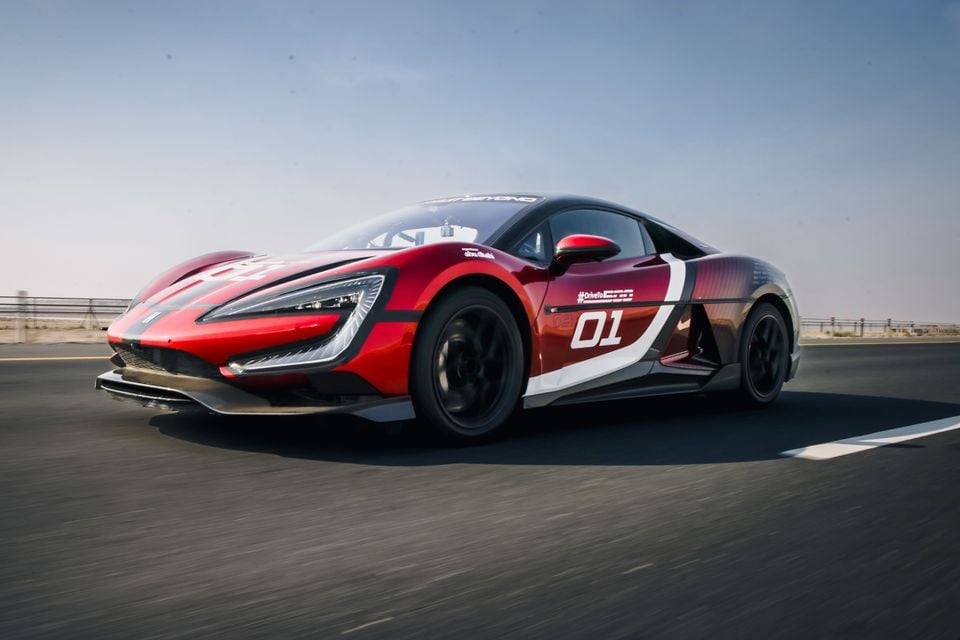
BYD's Yangwang U9 Xtreme has set a world record top speed of 503.17km/h, to become the world’s fastest production car in a single-direction run.
The record speed, recognised by the FIA (Fédération Internationale de l’Automobile), makes the U9 Xtreme the first production car to achieve a speed of more than 500km/h.
It also secured two Guinness World Records: the highest speed achieved by a production car and an electric production car, both in a single-direction run.
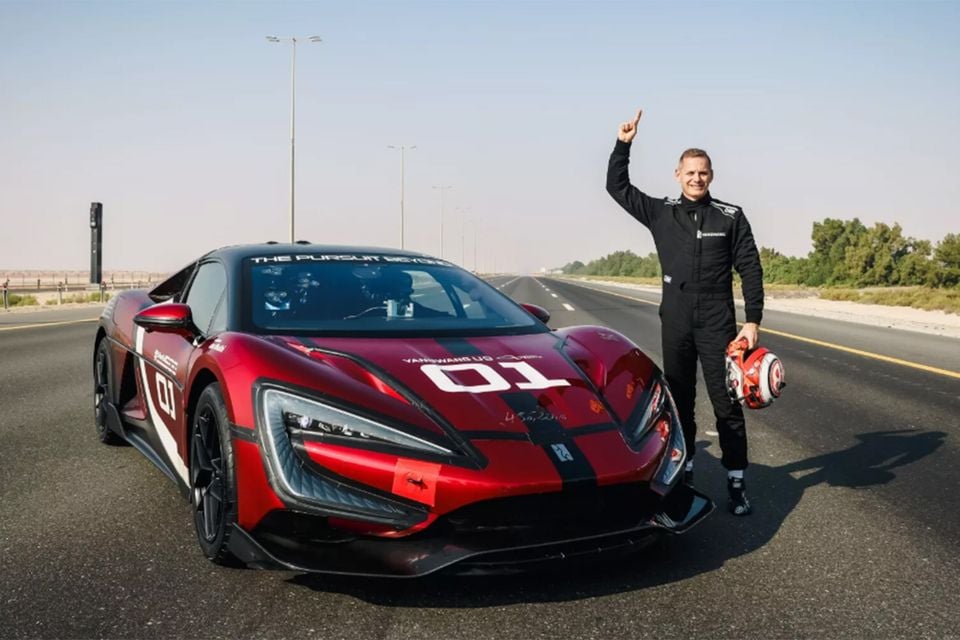
In doing so, it topped its own previous best of 496.22km/h achieved in 2025, with the same driver, German racer Marc Basseng, at the wheel on both occasions.
That speed was achieved on a test track in Germany; however, the 500km/h-plus result was accomplished on November 1, 2026, on a closed 10-kilometre section of road in Abu Dhabi’s Al Dhafra Region.
Two initial attempts on October 31 saw the electric hypercar reach a maximum of 490km/h, before engineers made further adjustments to the car's aerodynamics, suspension settings and tyre pressures.
The new record also further widens the gap to the Bugatti Chiron Super Sport 300+, which posted a top speed of 490.484km/h in 2019.
The Bugatti remains the fastest internal combustion-engined road car on the basis of a single-direction run, while the American SSC Tuatara still holds the two-way production-car speed record, set in 2021, with an average speed of 455.3km/h.
“I always tell people that our engineers are young, bold and maybe a little crazy – but in a good way!” said BYD executive vice-president Stella Li in a statement.
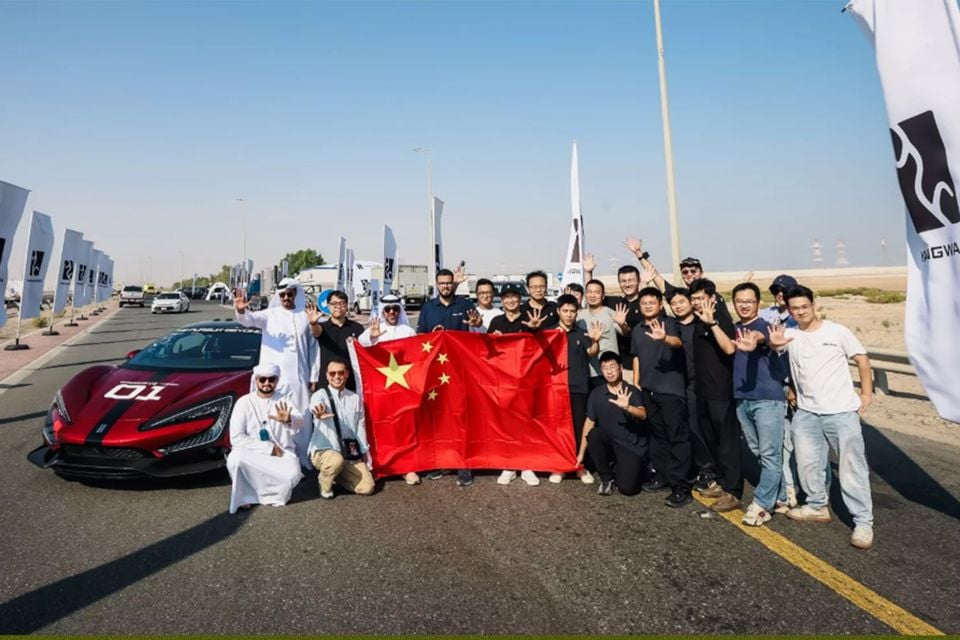
“Even as the team celebrated the astonishing 496.22km/h in Germany last year, they were looking through the data and discussing how to take U9X to its next level.
“503.17km/h is a fantastic achievement, and it moves the benchmark for pure electric power even further ahead of where others might dream.”
The Yangwang U9 Xtreme (previously known as the Track Edition) is the flagship version of the two-door electric hypercar from BYD’s Yangwang brand, with production limited to 30 vehicles, each costing more than ¥20 million ($4.36 million) compared to ¥1.8 million ($392,000) for the regular U9.
Using a 1200V architecture, it has four electric motors – one driving each wheel – delivering a combined 2220kW output.
That’s more than double the 960kW output of the standard U9, which also produces 1680Nm and has a claimed 0–100km/h time of 2.36 seconds and a standing 400m time of 9.78 seconds. BYD hasn't published official acceleration times for the U9 Xtreme.
At launch, the standard U9 had a claimed top speed of 309.19km/h, but subsequently reached 391.94km/h in testing ahead of the U9 Xtreme’s even faster performance.
The record-breaking run adds to the U9 Xtreme's achievements at the Nürburgring Nordschleife, where it recorded a lap time of 6 minutes 59.157 seconds to become the fastest production electric vehicle around the circuit.
While the standard U9 isn't sold in Australia, Nick Politis, a director of Australia’s largest new-car dealer group, Eagers Automotive, ordered a U9 Xtreme in April 2026. It’s expected to be delivered to Mr Politis in early 2027.
MORE: Explore the BYD showroom
Ready to find the right new car at a great deal?
Research cars in our Showroom, compare your options or let our New Car Specialists do the running around to find you a great deal.
Damion Smy is an award-winning motoring journalist with global editorial experience at Car, Auto Express, and Wheels.
You might also like

William Stopford
Hyundai Elexio recalled, deliveries halted
12 Minutes Ago

Dave Kavermann
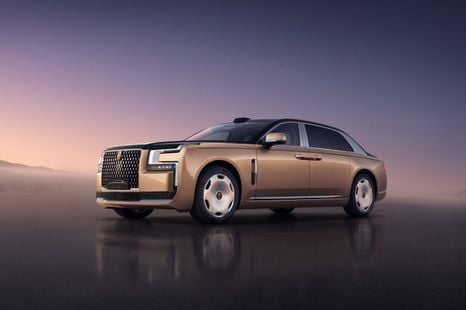
BYD taking on Rolls-Royce with Yangwang Altior ultra-luxury sedan
2 Hours Ago

Ben Zachariah
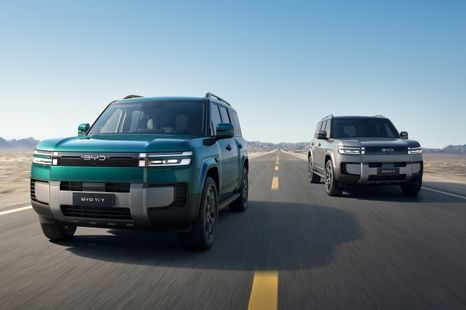
BYD offices raided over copycat design allegations – report
2 Hours Ago
Damion Smy
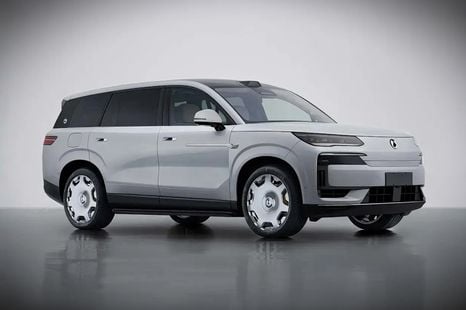
Denza N9: Premium BYD brand's 890kW electric SUV breaks cover
3 Hours Ago
Ben Zachariah
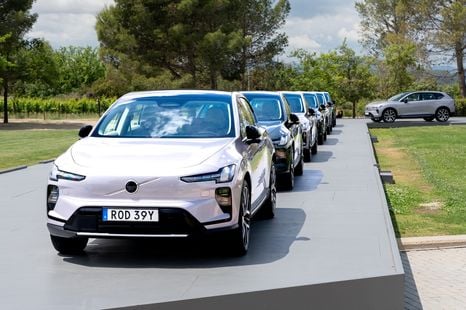
Australian Volvo EX60 deliveries delayed until late 2027
4 Hours Ago
William Stopford
Kia discounts diesels, with savings on Sportage, Sorento and Tasman
6 Hours Ago
Related
Don't let Google decide who you trust
Add CarExpert as a Preferred Source on Google so your search results prioritise writing by actual experts, not AI.