





William Stopford
GWM plans major expansion of its small EV range, including sedan, more budget-friendly hatch
An Uber-friendly sedan and a sub-$30,000 hatch could join the expanding GWM Ora 5 EV lineup in Australia.
42 Minutes Ago
McLaren has confirmed its new W1 hypercar will make its way to Australia, with customer deliveries due in the not-too-distant future.

Journalist
Journalist
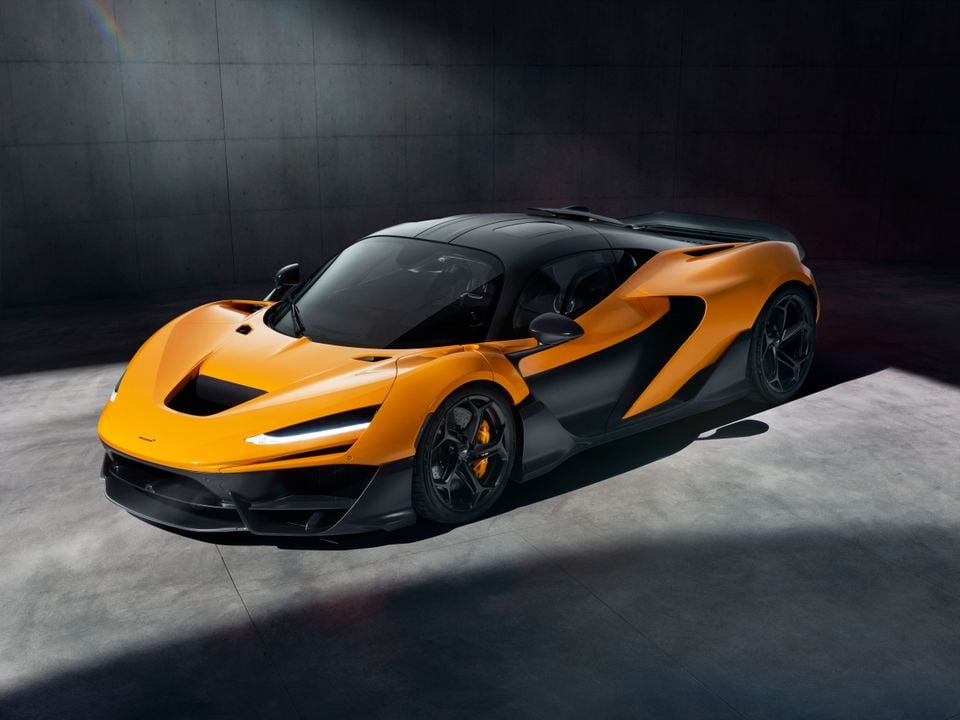
Australia-bound examples of the new McLaren W1 hypercar have been confirmed, though it's unclear how many examples of the exclusive hypercar are heading Down Under.
"We’re unable to provide specific figures, however, we can confirm that, as with other highly exclusive McLaren models, local clients have commissioned bespoke W1 examples through McLaren Special Operations (MSO)," said a spokesperson for McLaren in Australia.
This follows McLaren confirming New Zealand deliveries commencing in early 2027.
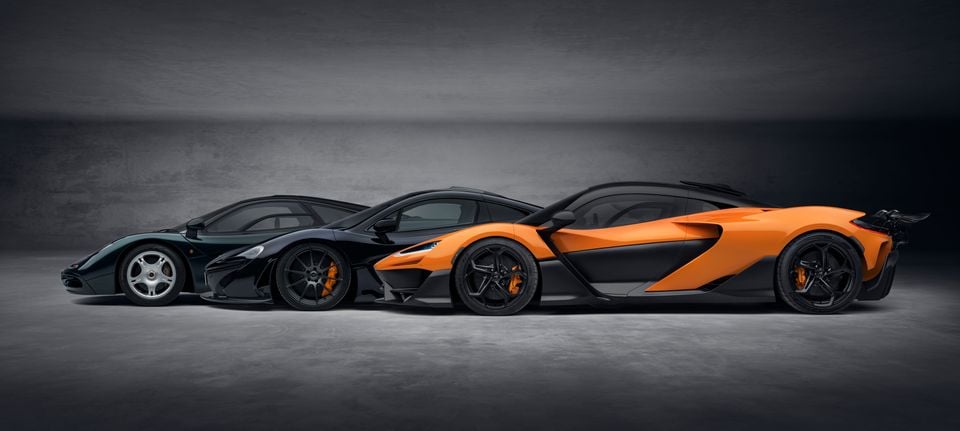
The W1 is the successor to the McLaren P1 and the pioneering F1, continuing the British marque’s flagship ‘1’ car lineage first established with the F1 in the 1990s.
Only 399 examples of the W1 will be produced globally, with McLaren confirming all build slots were allocated shortly after the car was revealed in October 2024.
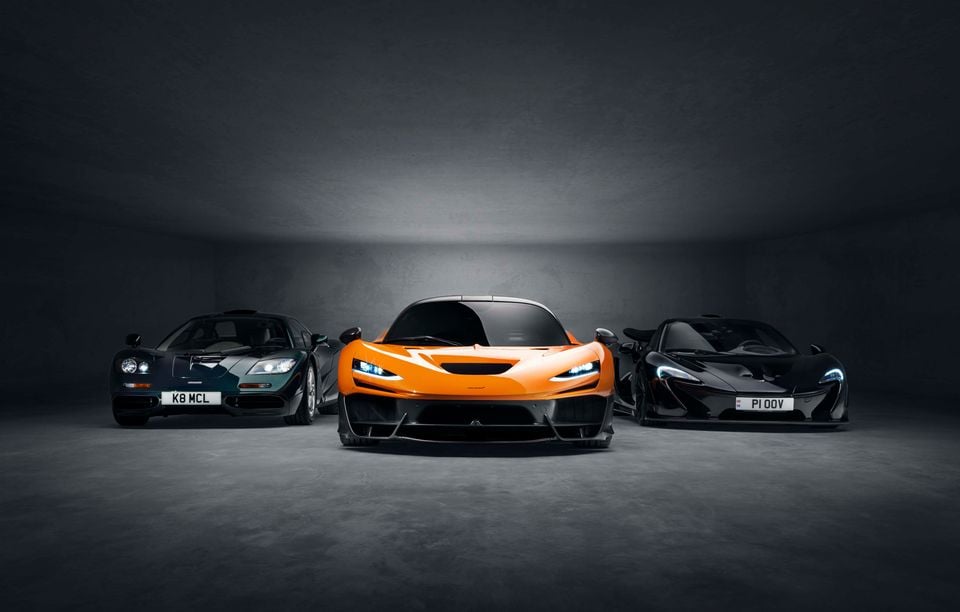
The W1 is powered by a new 4.0-litre twin-turbocharged petrol V8 paired with a motorsport-derived electric motor, producing a combined 938kW and 1340Nm.
The petrol engine alone produces 683kW and 900Nm – more than the combined output of the P1 – while the electric motor contributes up to 255kW and 440Nm. Unlike many of its closest rivals like the Ferrari F80, the W1 sends all of its power exclusively to the rear wheels.
The hybrid system uses a relatively small 1.384kWh battery, with McLaren prioritising power density and weight reduction rather than electric range. The W1 can travel for up to 2km on electric power alone.
Power is sent through an eight-speed dual-clutch transmission and hydraulic electronic differential, allowing the W1 to accelerate from 0-100km/h in 2.7 seconds, 0-200km/h in 5.8 seconds and 0-300km/h in less than 12.7 seconds, says McLaren. Its top speed is electronically limited to 350km/h.
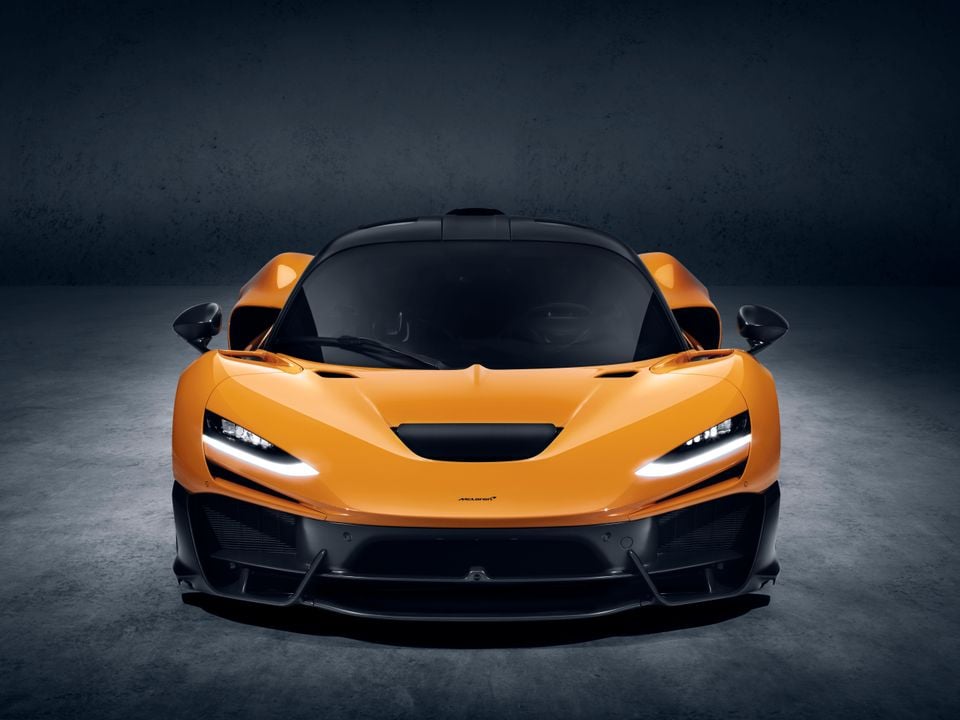
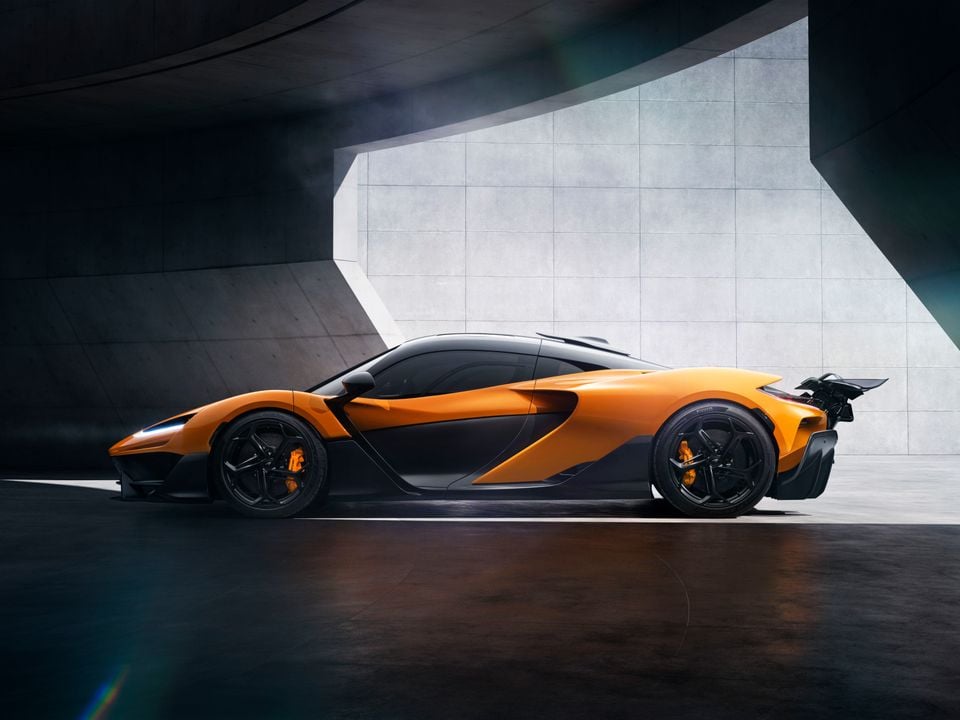
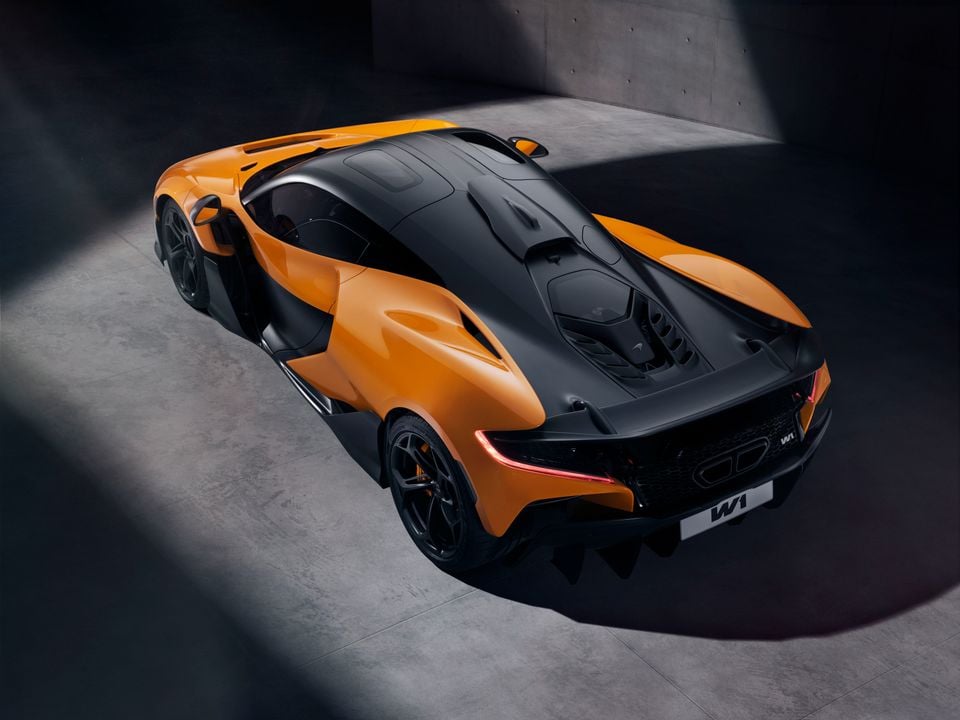
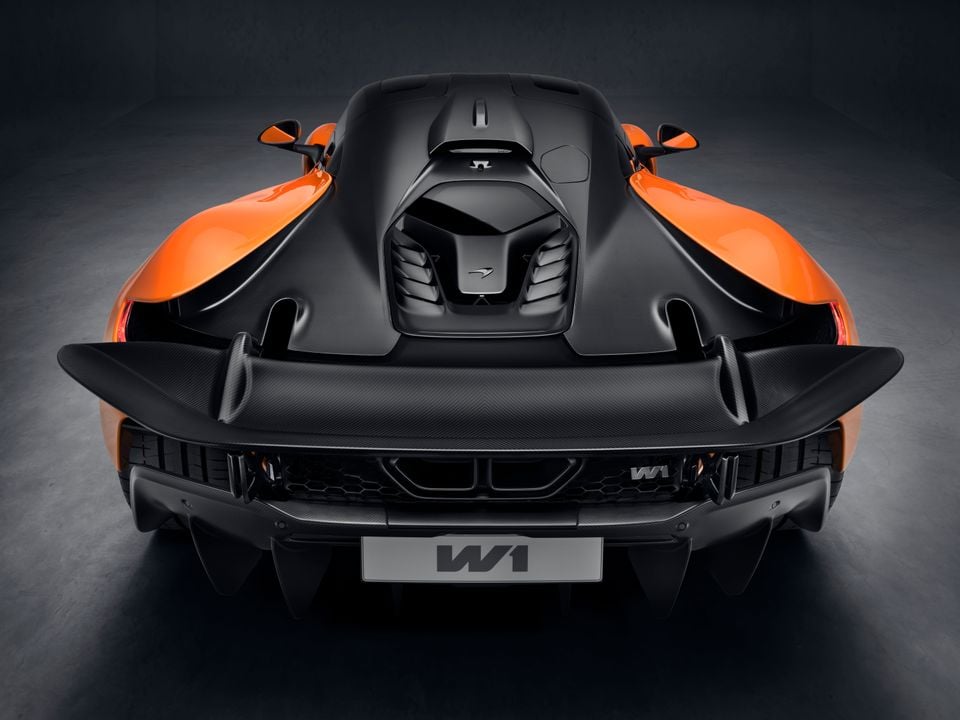
Despite its enormous power output, the W1 weighs just 1399kg in its lightest dry configuration. That gives it a power-to-weight ratio of 670kW per tonne, which McLaren claims is the highest of any road-legal McLaren.
However, much of the W1's performance comes from its aerodynamics rather than its engine bay alone.
Its carbon-fibre Aerocell monocoque incorporates ground-effect aerodynamics, while Race mode lowers the ride height by 37mm at the front and 17mm at the rear.
The car's active aerodynamic system includes a front wing and McLaren Active Long Tail rear wing, with the latter capable of extending rearwards by 300mm.
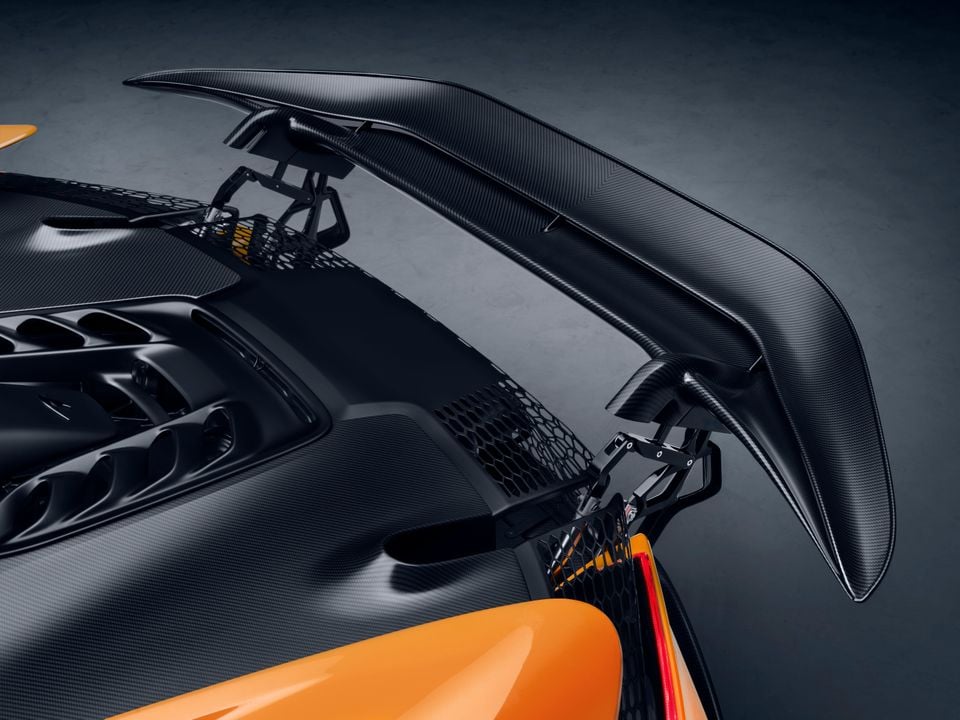
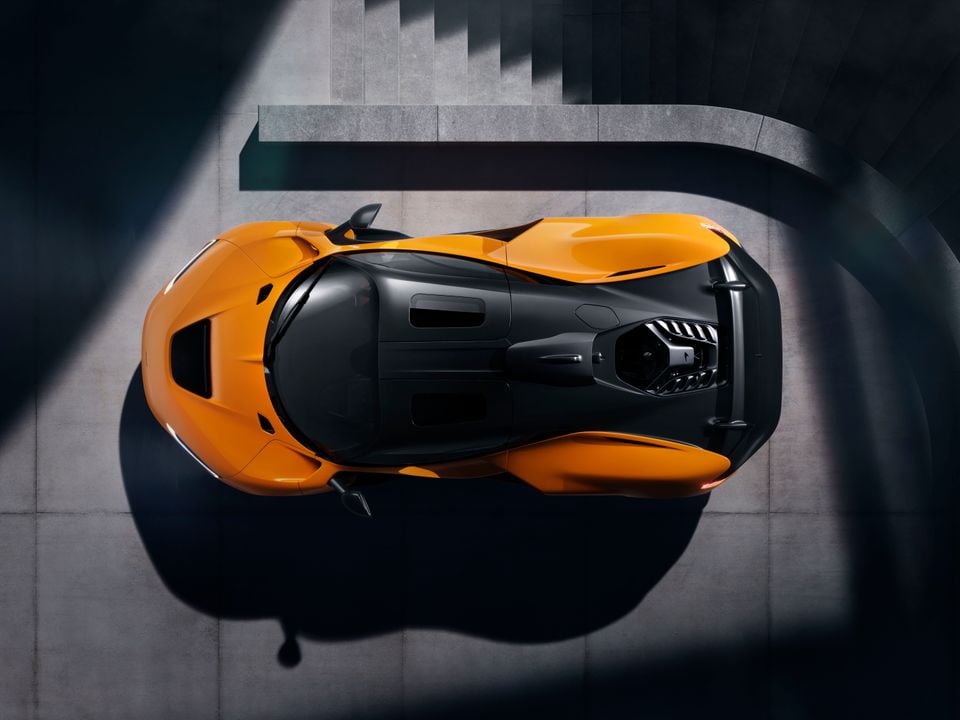
In its most aggressive configuration, the W1 can generate up to 1000kg of downforce, split between 350kg at the front and 650kg at the rear.
McLaren claims the W1 is both its fastest-accelerating and fastest-lapping road-legal car yet, with the company recording a lap time around its Nardo reference circuit three seconds faster than the McLaren Senna.
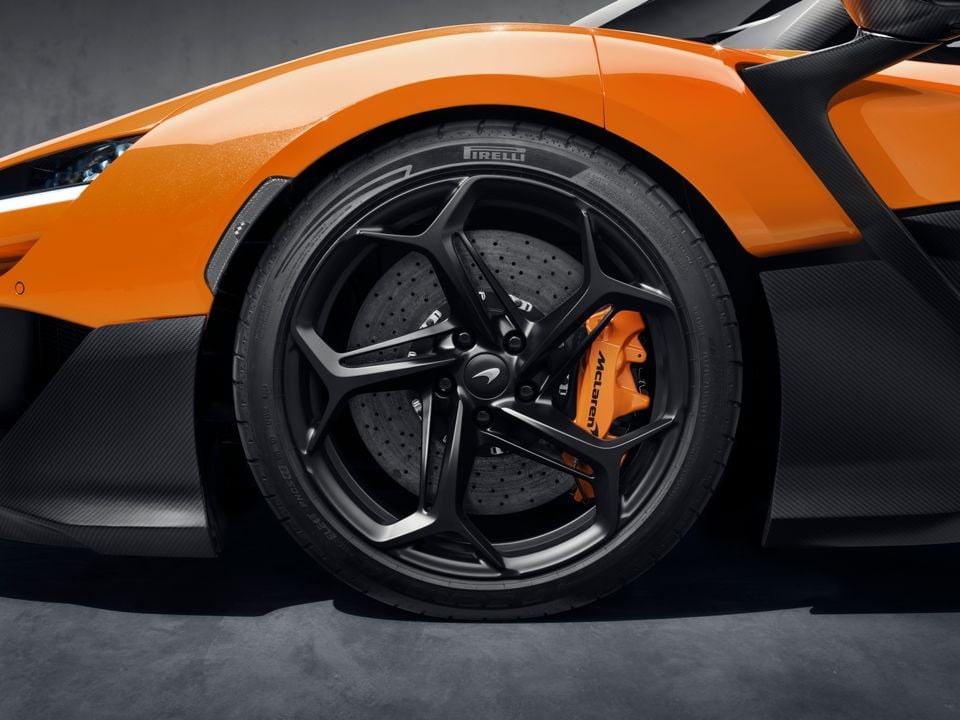
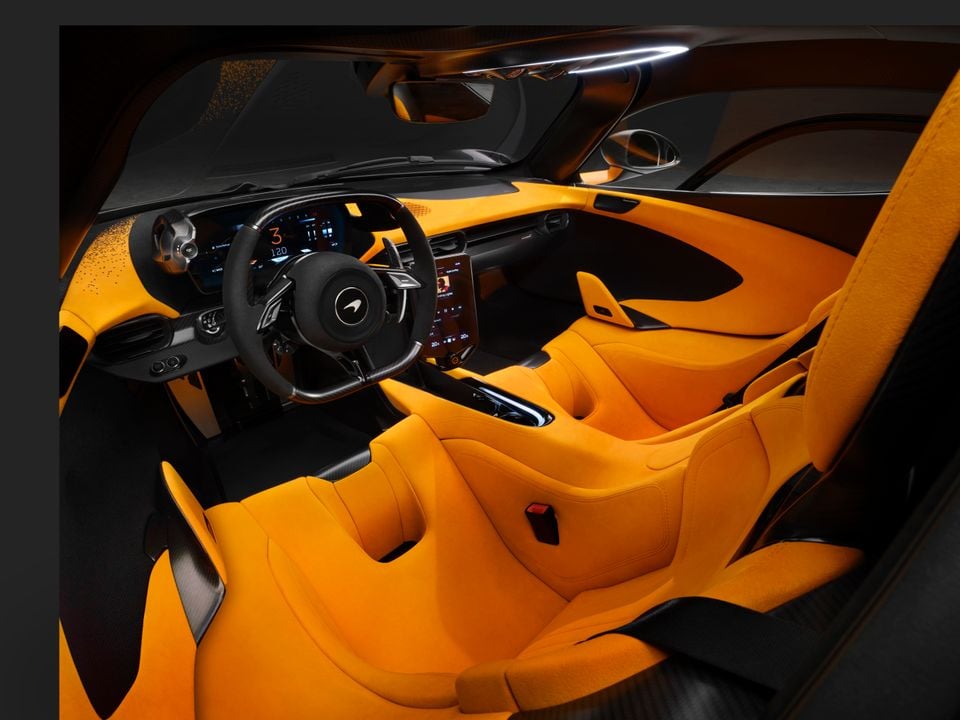
The W1 also uses a Formula 1-inspired suspension system, hydraulic steering and carbon-ceramic brakes, while its integrated seats are built into the carbon-fibre monocoque.
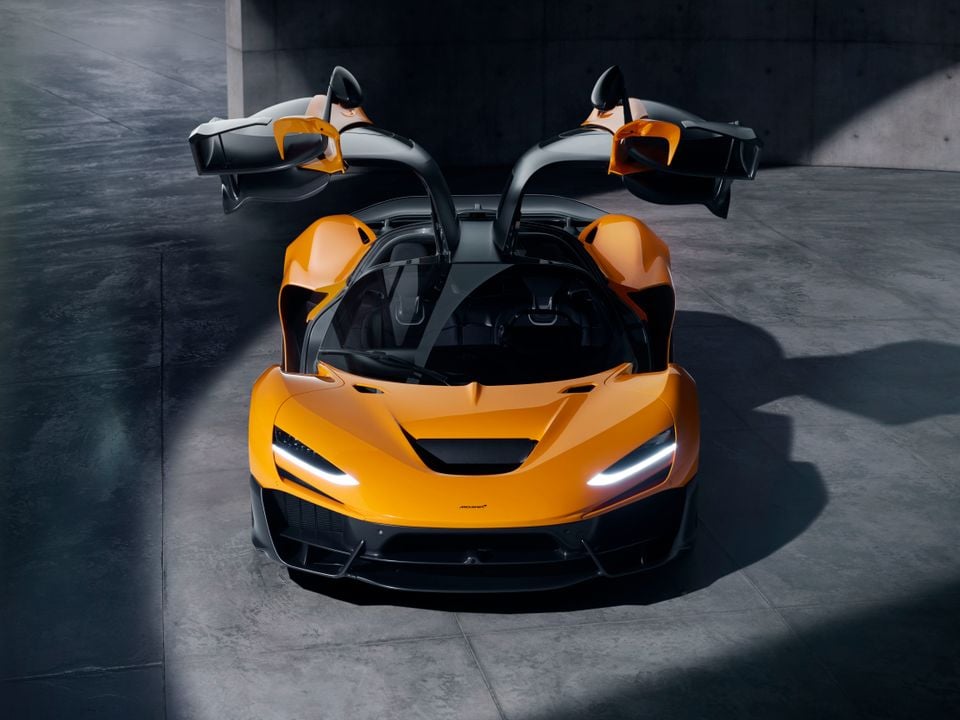
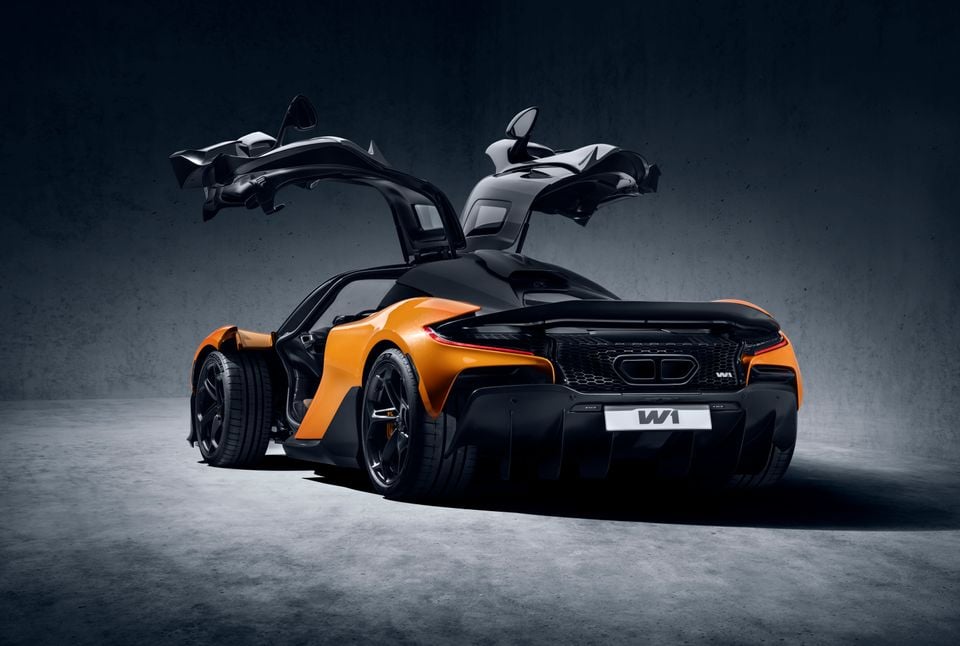
The car's 390mm carbon-ceramic brake discs use six-piston calipers at the front and four-piston units at the rear.
Despite its track-focused technology, McLaren says the W1 was designed to remain usable on the road, with Comfort, Sport and Race modes and a cabin featuring an 8.0-inch infotainment screen with Apple CarPlay.
Pricing for the W1 started at around £2 million in the UK including taxes, although the final cost varies substantially depending on the level of McLaren Special Operations personalisation. New Zealand pricing was never announced.
| Specification | McLaren W1 |
|---|---|
| Engine | 4.0-litre twin-turbo petrol V8 hybrid |
| Engine capacity | 3988cc |
| Petrol engine output | 928PS / 683kW |
| Electric motor output | 347PS / 255kW |
| Combined output | 1275PS / 938kW |
| Combined torque | 1340Nm |
| Drivetrain | Rear-wheel drive |
| Transmission | Eight-speed dual-clutch |
| 0-100km/h | 2.7 seconds |
| 0-200km/h | 5.8 seconds |
| 0-300km/h | <12.7 seconds |
| Top speed | 350km/h |
| Lightest dry weight | 1399kg |
| Power-to-weight | 911PS/tonne |
| Battery | 1.384kWh |
| EV-only range | Up to 2km |
| Battery charge time | 22 minutes to 80% |
| Downforce | Up to 1000kg |
| Length | 4635mm |
| Width (mirrors extended) | 2191mm |
| Height | 1182mm |
| Wheelbase | 2680mm |
| Front brakes | 390mm, six-piston |
| Rear brakes | 390mm, four-piston |
| Wheels | 19-inch front / 20-inch rear |
| Production | 399 examples |
Dave is a Kiwi motoring journalist with experience in motorcycle racing, new car sales, radio and communications.
William Stopford
42 Minutes Ago


Marton Pettendy
53 Minutes Ago

Marton Pettendy
1 Hour Ago

Damion Smy
2 Hours Ago
William Stopford
2 Hours Ago

James Wong
5 Hours Ago
Add CarExpert as a Preferred Source on Google so your search results prioritise writing by actual experts, not AI.